
TOP NEWS AFFECTING THE STOCK MARKET THIS WEEK:
Trillions of Dollars Are Being Shifted Around In The Stock Market: Here Are The 3 Names That Are Benefiting and The 3 That Are Being Punished ... (Source)
Stocks mentioned: $BE, $P, $ILMN, $TAP, $TTD, $BLDR
Let me start with the basics, because the term "S&P 500" gets thrown around so often that most people never stop to ask what it actually is. It's a list. Specifically, it's a list of roughly 500 of the largest publicly traded companies in the United States. When someone says "the market was up today," 9 times out of 10 they're really talking about this list. What makes it powerful is that trillions of dollars sit in funds whose only job is to own exactly what's on the list, in the same proportions. This is why whenever there is a change to the index, we need to pay attention because a lot of money can be made or lost depending on those changes. This is the reason we're writing this article, because 6 stocks were just added/removed from the S&P 500, and we're going to cover each one.
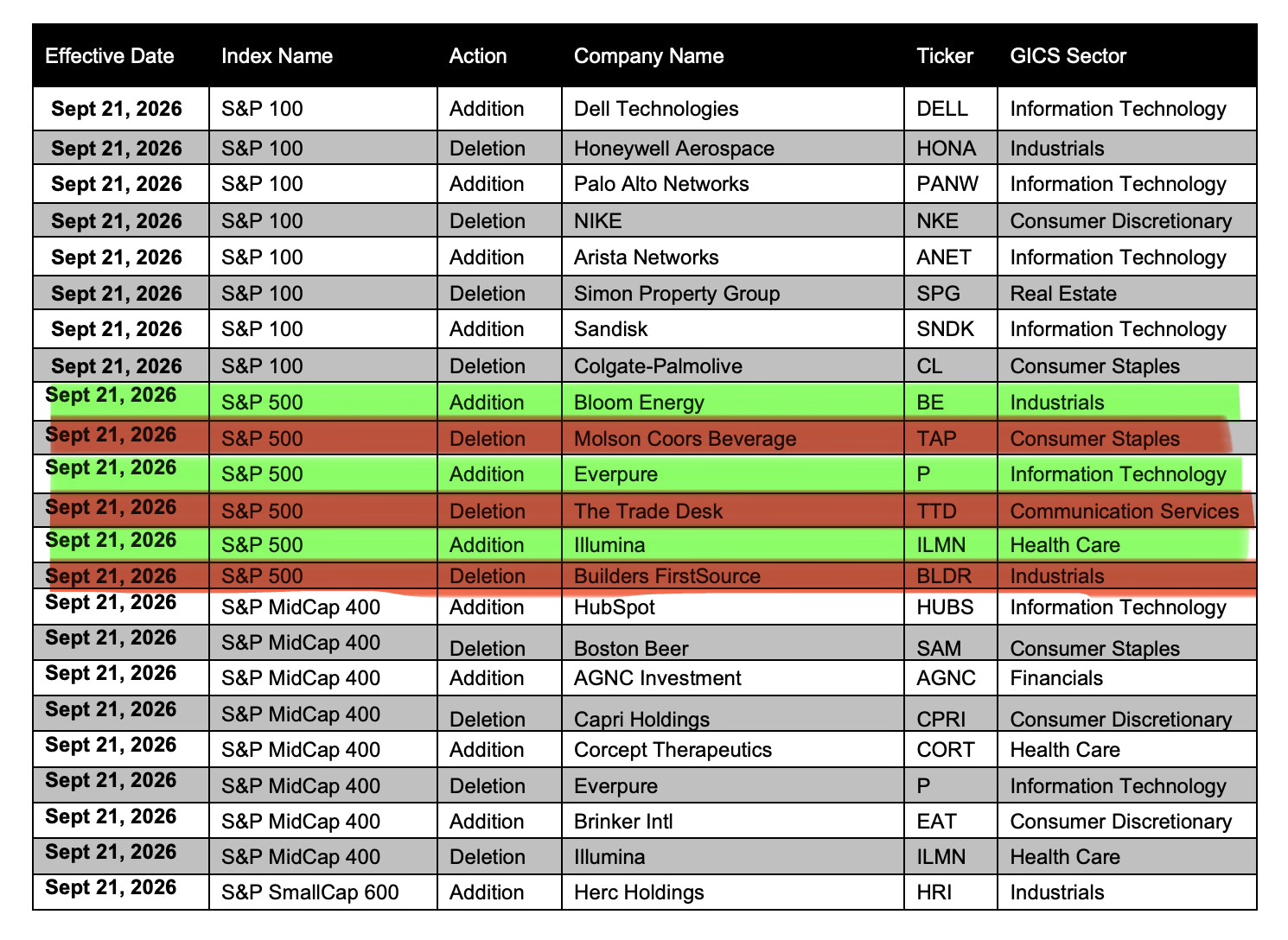
Here is some important background information first. A few times a year, the S&P 500 does something called a "rebalancing". Companies that have grown large and impressed the markets get invited in, and the companies that have shrunk or lagged the market get shown the door. It runs on a predictable schedule, with changes typically taking effect around the third Friday of March, June, September, and December. This latest batch was announced this past Friday, on September 4th, and takes effect before trading opens on Monday, September 21. Here's the part that matters to me: because all the index funds that are mimicking the S&P 500 are legally required to buy and/or sell the stocks that were added/removed. The moment a name gets added, every passive fund tracking the index has to go buy it, and every name that gets removed faces forced selling from those same funds. It's not a suggestion. It's a mandate.
With that said, in this last S&P 500 rebalance, 3 stocks are being added and 3 are being removed. Bloom Energy (BE), Everpure (P), and Illumina (ILMN) are being added, while Molson Coors (TAP), The Trade Desk (TTD), and Builders FirstSource (BLDR) are being removed. Here's how I'm reading it, name by name:
- Bloom Energy (BE) – A company that makes fuel cells, which are basically boxes that generate clean electricity on-site without plugging into the traditional grid. It's classified as an industrial, and its promotion fits the market's growing appetite for companies tied to power generation and energy infrastructure for AI data centers. This one is personal for us, because we actually flagged Bloom Energy for our private Investment Club over a week ago, well before this announcement hit, as you can see below:
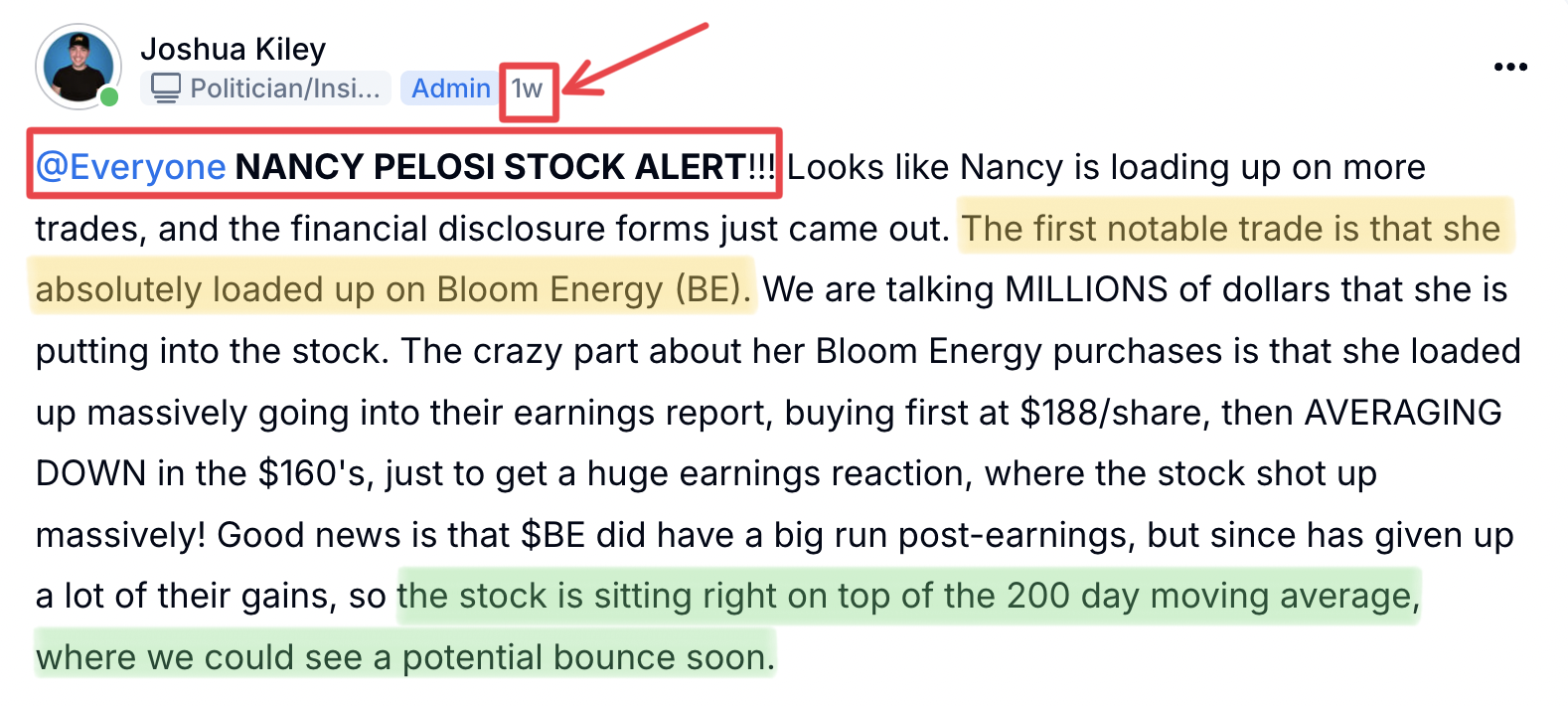 Thanks to the S&P 500 inclusion, this stock rallied over 15% on Friday (including the after-market move). Needless to say, we already liked the stock and were positioned ahead of time, but even if we weren't, we still like the name here. This is why it's so important to be in the CEO Watchlist Investment Club so you can stay ahead of these moves before they happen. If you've been thinking about joining, we currently have a special for Labor Day [CLICK HERE] to grab your Labor Day discount!
 - Everpure (P) – This is actually another stock we like a lot, as an under-the-radar tech play. Its addition continues a long-running pattern of information-technology names graduating into the big leagues while older consumer brands step aside. So far, we're 2 for 2 because we also alerted this name to our Investment Club Members back in April of this year, when Everpure was trading at roughly $70 per share. As you can see below, we highlighted it as our top pick:
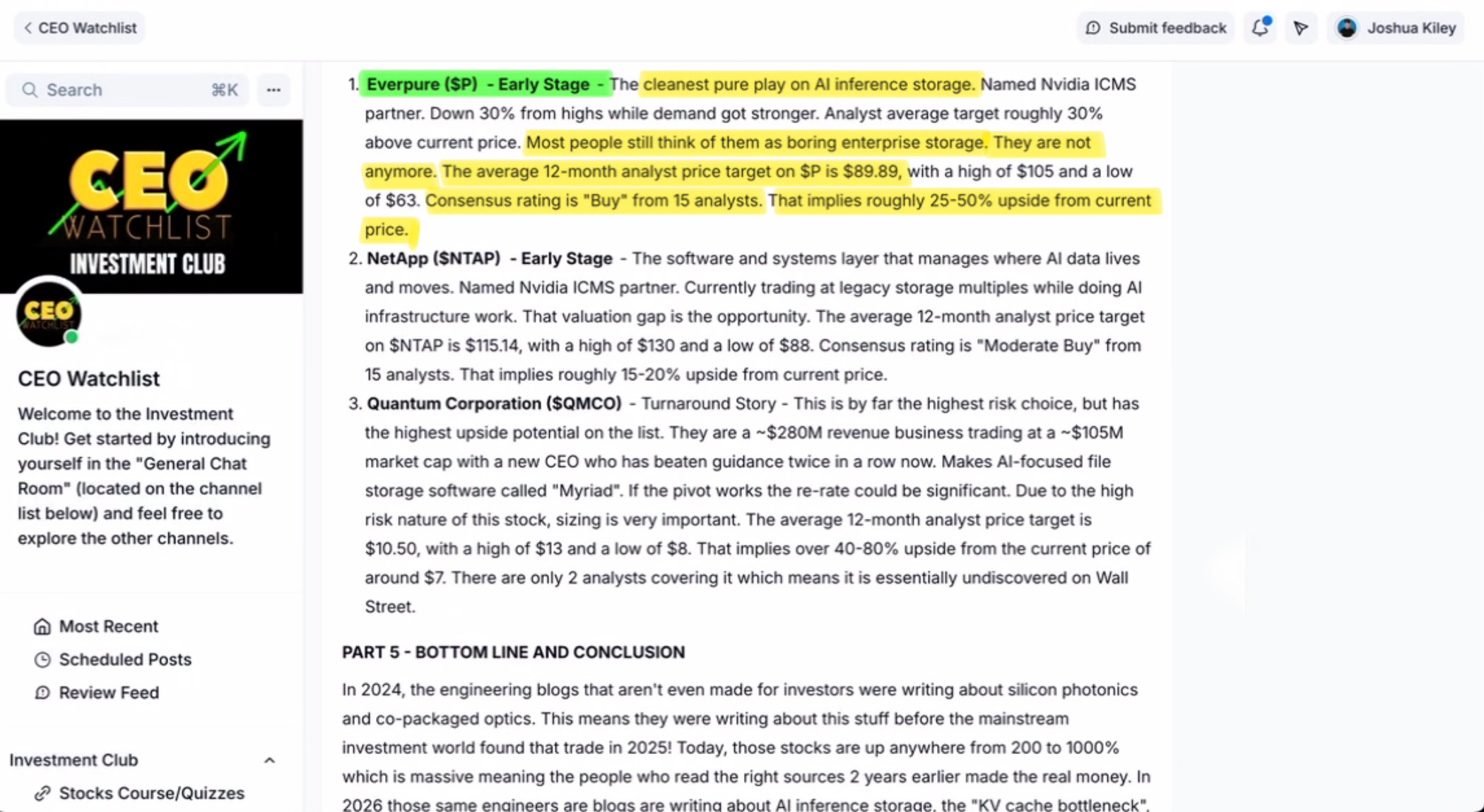 Since alerting the stock to the Investment Club Members, it is now up roughly 50% in just a few months.
 - Illumina (ILMN) – A gene-sequencing company, meaning it builds the machines that read DNA for medical and research labs. It's a health-care name reclaiming a large-cap seat, a reminder that the index isn't only an AI-and-chips story. Again, this is another name that we brought up to Investment Club Members just a couple weeks ago. Needless to say, we support all 3 additions to the S&P 500 as they are all very strong companies.
- Molson Coors (TAP) – The beer company behind Coors and Miller. It's being removed from the S&P 500 simply because its underperformed its peers. We're not personally fans of this stock, and wouldn't own it in our personal portfolios.
- The Trade Desk (TTD) – A digital advertising platform that helps brands buy ad space online. We've never been big fans of The Trade Desk, and are happy to see it removed.
- Builders FirstSource (BLDR) – A supplier of building materials to home construction. An industrial name moving down, which tends to happen when a sector cools relative to the rest of the market. This is not a stock we have researched in the past or even have on our radar, but from superficial research, the name doesn't excite us much.
Why does getting added tend to be a good thing, and getting removed a bad one? For additions, it comes down to that forced buying I mentioned. Companies getting added typically see their share prices rise in the days leading up to the effective date as index funds pile in, and companies getting dropped tend to experience the mirror image, facing a wall of guaranteed sellers. On top of the raw money flow, inclusion works as a kind of stamp of legitimacy that pulls in more analyst coverage and big-institution attention. That said, I want to be fair here, because this is where a lot of people get burned. The so-called "index effect" is not what it used to be. As more traders learned to see these moves coming, the average bump across all additions has narrowed a great deal, and the pop often happens before the official date, which sets up a classic "buy the rumor, sell the rebalance" fade once the last forced buyer is done. In other words, the mechanical push is real, but it's frequently priced in early, and a company still has to deliver actual earnings to keep the gains. Inclusion is a spotlight, not a guarantee.
So here's where I land. The S&P 500 isn't a static trophy case, it's a living list that constantly swaps in companies on the way up and swaps out ones that have shrunk or stumbled, and because trillions of dollars are chained to it, those swaps move real money in real time. This cycle, with Bloom Energy, Everpure, and Illumina coming in while Molson Coors, The Trade Desk, and Builders FirstSource step down, spreads the story across energy, tech, and health care rather than pointing in one clean direction. Additions generally get a tailwind and removals generally get a headwind, but the smart money knows that edge has narrowed and often shows up before the calendar date. What I take from all of this is less about any single ticker and more about the direction of the current: the list is quietly rewriting itself around where the economy is actually heading, and watching what it lets in and what it kicks out is one of the clearest maps we have of that shift.
More Earnings Are Coming: Here Are The Top 3 Stocks We Are Watching This Week... (Source)
Stocks mentioned: $DELL, $AVAV, $ORCL, $ADBE, $CHWY, $CASY, $ORCL, $M, $KR
Before I get to this week's names, we want to look back at what just wrapped up, because the read on the AI trade could not have been louder. Dell (DELL) reported a genuinely stunning quarter this past week. Revenue came in at roughly $47 billion, up 58% year over year, with adjusted EPS of $7.04, up 203% from a year ago. The number that stopped me was the order book: Dell booked a record $60.9 billion in AI server orders in a single quarter and exited with a record $95 billion AI backlog, which prompted management to raise full-year revenue guidance by about $25 billion. To me, that is a direct signal that the AI infrastructure trade is not just alive, it is still accelerating, and demand is outpacing what these companies can even supply right now. But that was last week, and now we look forward to this week and the 3 stocks we're watching the closest:
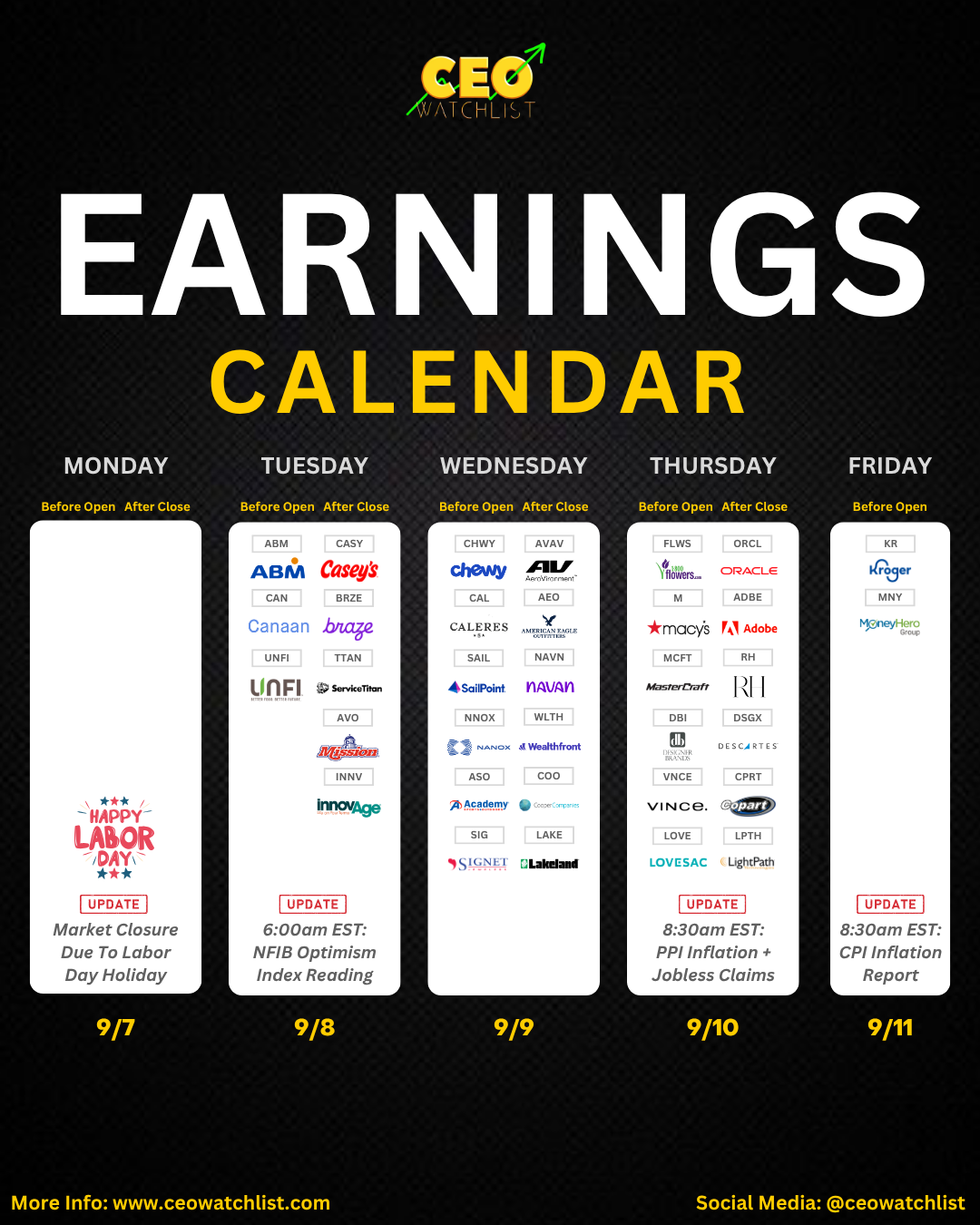
- AeroVironment (AVAV) - Reports Wednesday, September 9, after the close. AeroVironment is our defense-tech name for this week. It is one of the leading suppliers of drones and unmanned systems to the U.S. military, and it has been expanding hard into counter-drone and directed-energy systems, including a high-energy laser platform called LOCUST built to shoot down drone targets. The stock has had a genuinely rough year, down sharply from where it started 2026 on the back of a contract termination, some accounting issues, and related litigation, which resets the expectations bar heading into this print. That said, the last quarter was a blowout: revenue more than doubled to about $642 million, funded backlog jumped 65% to $1.2 billion, and the company secured a $500 million U.S. Army contract for counter-drone systems. Management raised fiscal 2026 EPS guidance above where the Street had been. We are watching the backlog and book-to-bill more than the headline number, because that is what tells me whether the demand surge from conflicts in Ukraine and the Middle East is still feeding the pipeline.
- Oracle (ORCL) - Reports Thursday, September 10, after the close. Oracle is the most direct AI infrastructure read of the three, and it is the one we are most locked in on. The company has transformed itself into a serious cloud player, with Oracle Cloud Infrastructure now the engine of the whole story. Analysts are looking for Q1 fiscal 2027 revenue around $19.1 billion. Last quarter, Oracle's remaining performance obligations (RPO), which is contracted-but-not-yet-recognized revenue, hit a staggering $638 billion, up 363% year over year, and OCI revenue grew 93%. Management has guided cloud revenue to grow 58% to 64% this quarter, so the demand side is not in question. The whole debate we are watching is whether that record backlog converts into profitable, cash-generating revenue or whether the financing burden and rising yields keep pressuring the stock. This is the print that tells us the most about how the market is willing to fund the AI buildout.
- Adobe (ADBE) - Reports Thursday, September 10, after the close. Everybody should be familiar with Adobe at this point. It's the company that owns Photoshop and Acrobat. AI has been a clear disrupter for this name, with a ton of increased competition coming from the likes of Google, Chat GPT, and a multitude of other cheap (or even free) editing platforms. We have been extremely bearish on this name for a long time and we don't believe this quarter is going to change anything. The reason why we care so much about this report though, is because we want to understand the impact that AI is having on legacy software companies. This is important because it gives us a read-through into other software names and how they may report, thus allowing ourselves to position accordingly.
Beyond these 3 big names, the calendar this week carries a mix of consumer and retail names that give a secondary read on spending. Chewy (CHWY) and Casey's General Stores (CASY) report Tuesday, Macy's (M) hits Thursday morning as a department-store read, and Kroger (KR) closes the week Friday on the grocery side. None of those move the AI narrative, but they add color on the consumer heading into the inflation print. Here is the entire earnings calendar, along with all the economic updates coming out next week. Make sure to remember that the markets are closed on Monday due to the Labor Day Holiday. Once again, we are offering a $200 OFF discount code for our Labor Day Sale! If you've been thinking about joining the CEO Watchlist Investment Club, now is the time to take advantage of this sale by [CLICKING HERE] and joining today!
"Super Investor" Spotlight: Nvidia (Source)
Stocks mentioned: $NVDA, $INTC, $SPCX, $CRWV, $NBIS, $COHR, $NOK, $SNPS, $GENB
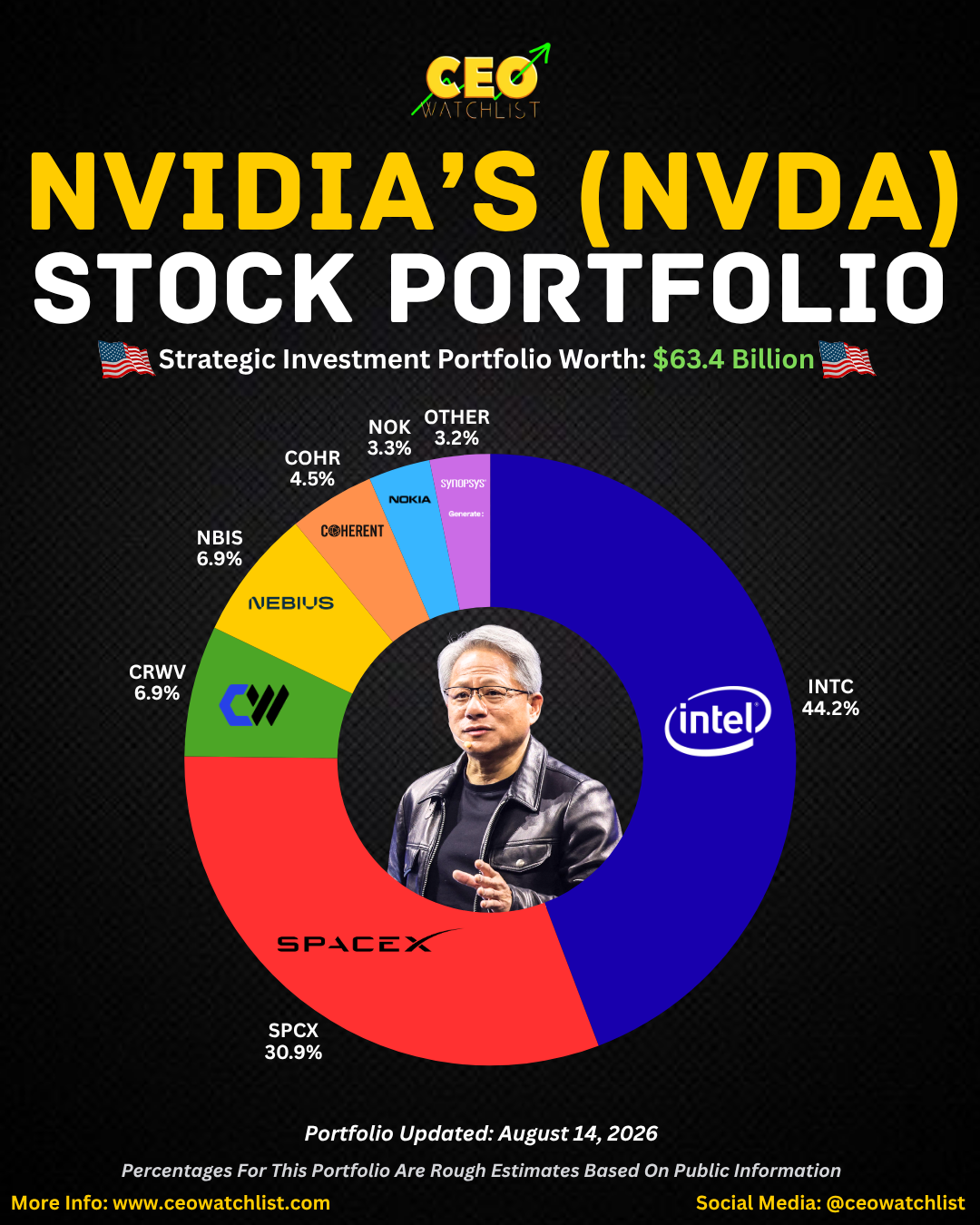
Most "Super Investor" spotlights cover hedge funds or billionaire money managers, but every now and then a company's own strategic investment portfolio tells a story just as compelling as anything running out of a Park Avenue office. Nvidia (NVDA) is one of the most valuable companies on the planet, and beyond the chips and the data centers and the AI hype, they're quietly deploying a $63.4 billion strategic investment portfolio that reveals exactly where Jensen Huang and his team think the future of technology is heading. This isn't a passive index fund. Every position in here is a deliberate bet on the infrastructure, ecosystems, and companies that Nvidia believes will define the next era of computing.
Here are the holdings in Nvidia's strategic investment portfolio:
- Intel (INTC) - 44.2%
- SpaceX (SPCX) - 30.9%
- CoreWeave (CRWV) - 6.9%
- Nebius (NBIS) - 6.9%
- Coherent (COHR) - 4.5%
- Nokia (NOK) - 3.3%
- Synopsys (SNPS) - 3.17%
- Generate Biomedicines (GENB) - 0.06%
What makes this portfolio so interesting in the current environment is that it reads as a complete vision statement for where Nvidia sees the world going. AI compute, satellite connectivity, semiconductor manufacturing, and optical networking are all represented here. For a company already sitting at the center of the AI buildout, this portfolio suggests they have no intention of staying in their lane. We will continue to monitor Nvidia's strategic investments alongside dozens of other institutions and super investors, and will keep reporting back every week with any notable updates.
INSIDER STOCK TRADES FROM THE WEEK:
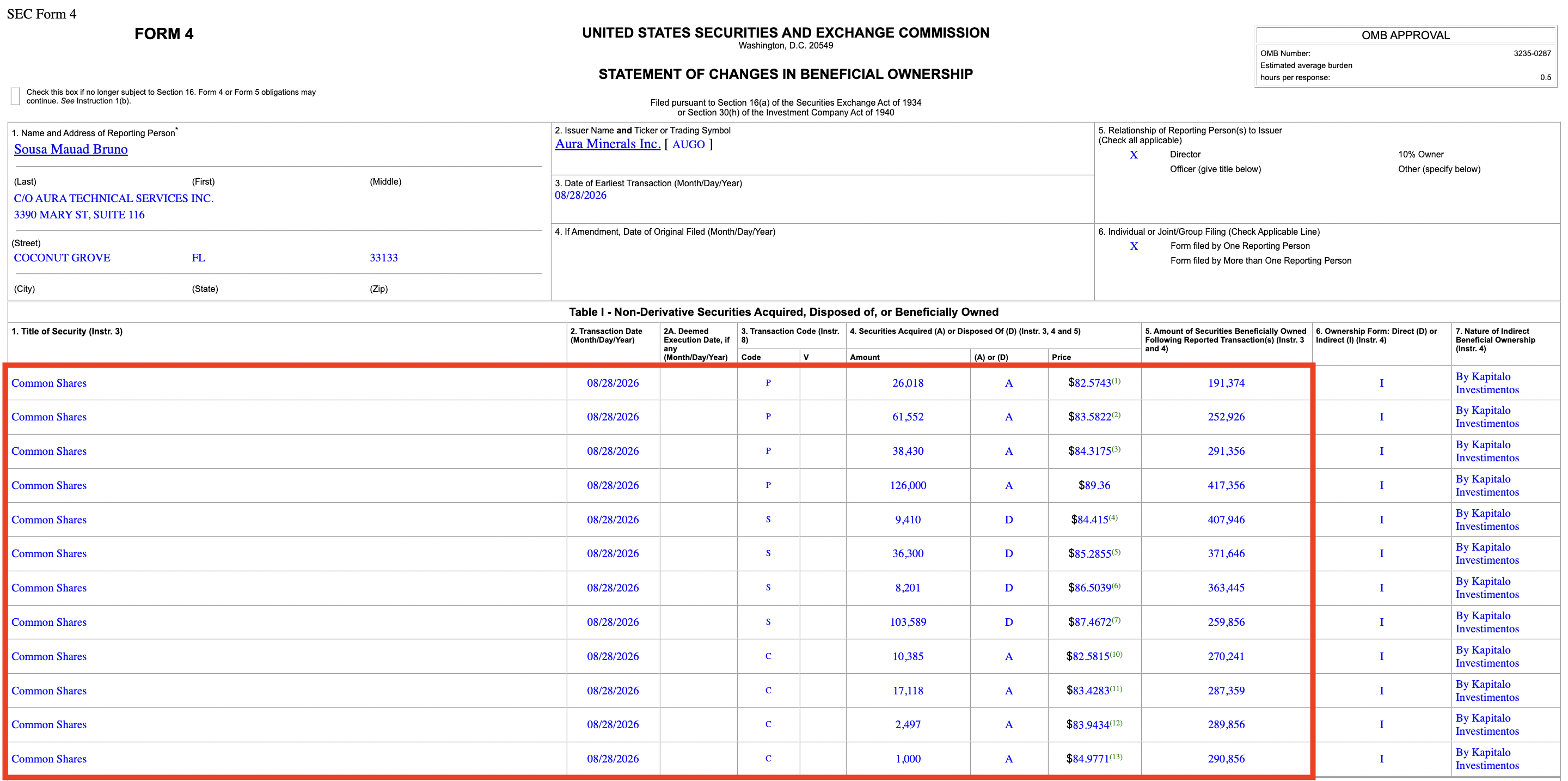
1. Aura Minerals (AUGO) - Bruno Sousa Mauad (Director) bought roughly $22,000,000 of AUGO at an average price of $86.48/share on August 28, 2026, but it wasn't reported to the public until September 1, 2026. (Source)
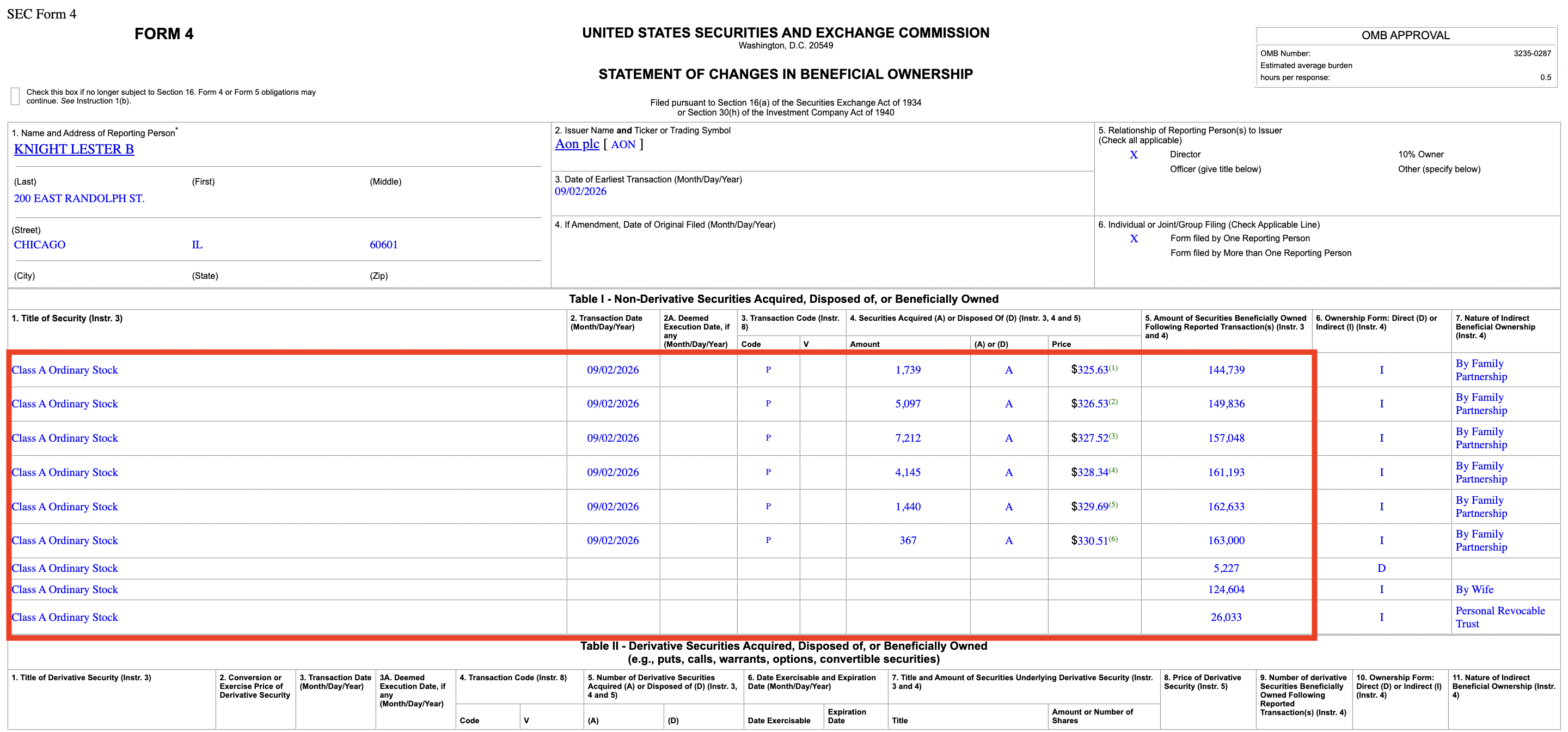
2. Aon (AON) - Lester Knight (Director) bought roughly $6,500,000 worth of AON at an average price of $327.48/share on September 2, 2026, but it wasn't reported to the public until September 3, 2026. (Source)
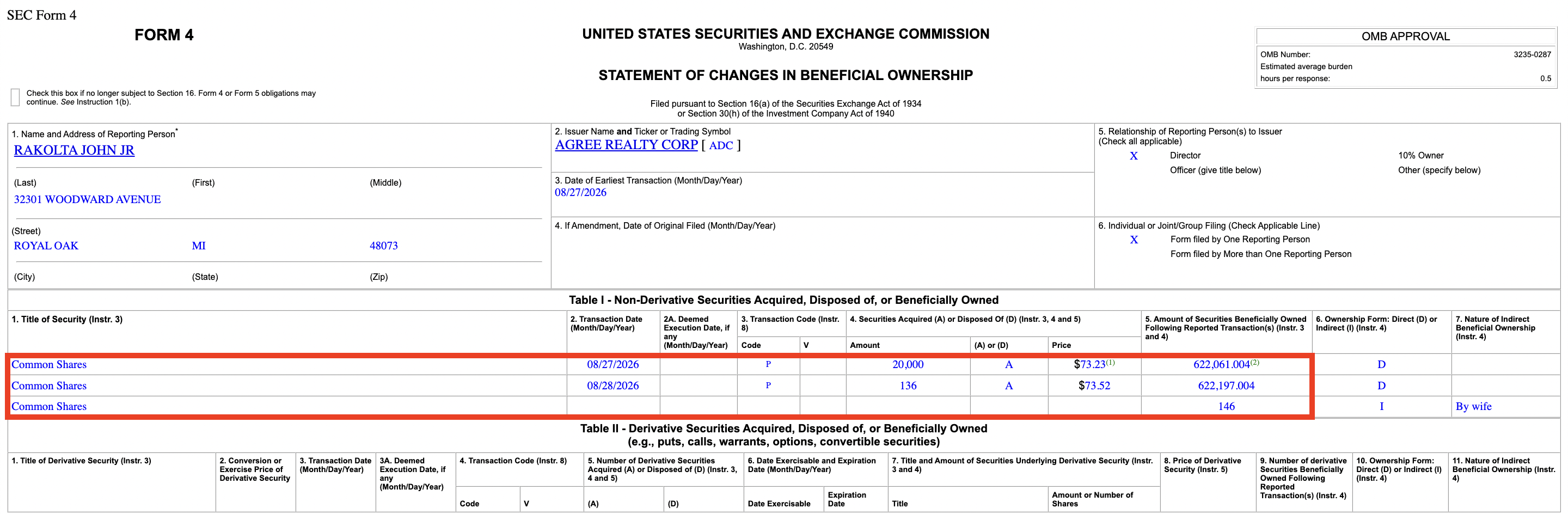
3. Agree Realty Corp (ADC) - John Rakolta (Director) bought roughly $1,500,000 of ADC at an average price of $73.23/share on August 27, 2026, but it wasn't reported to the public until August 31, 2026. (Source)
Over 2,000 people have already signed up for my FREE Masterclass video on how to unlock my exact strategies for finding winning stock/options trades! I'll share everything including how to find what Politicians and CEOs are buying. Don’t miss your chance to get in for FREE before spots fill up!

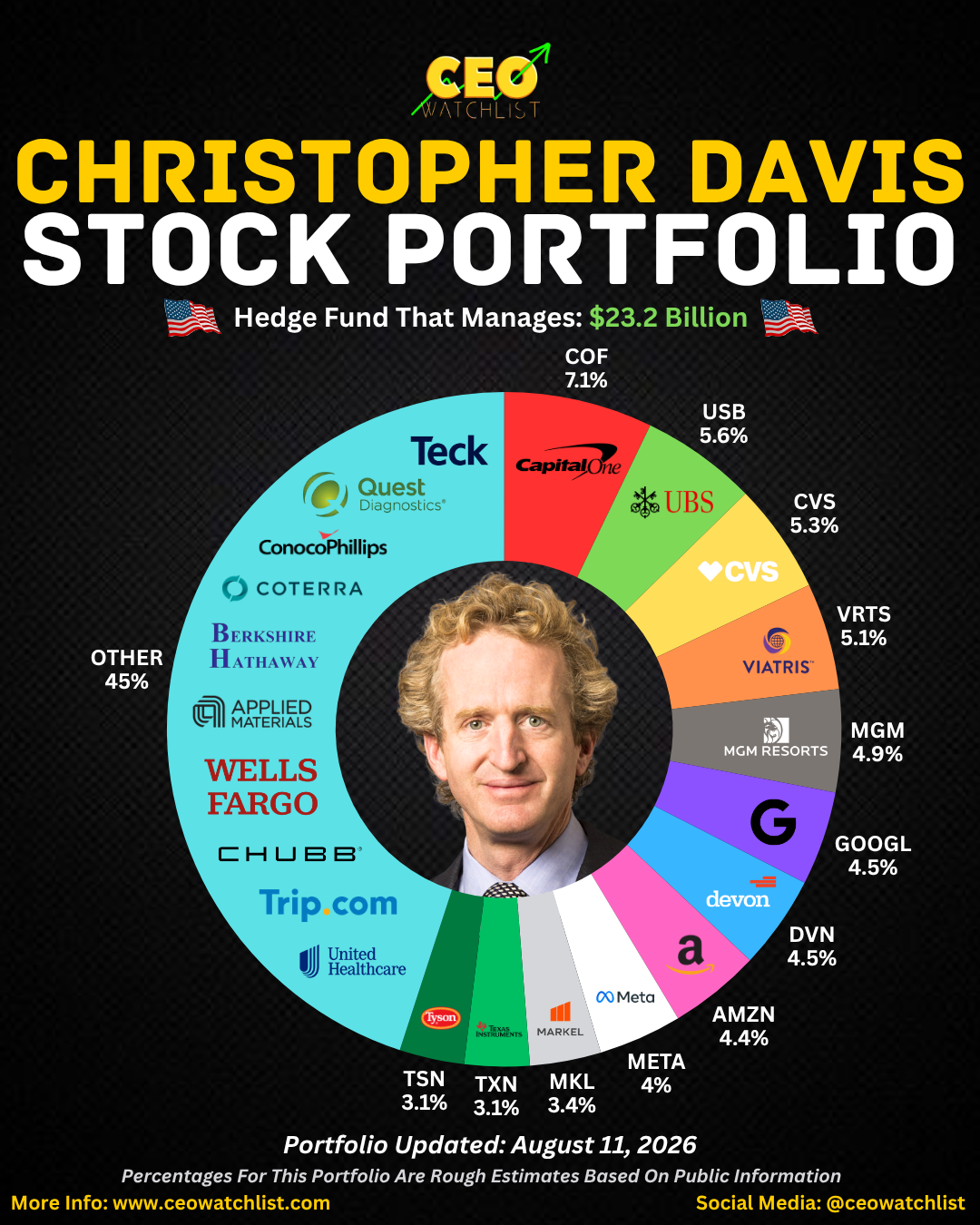
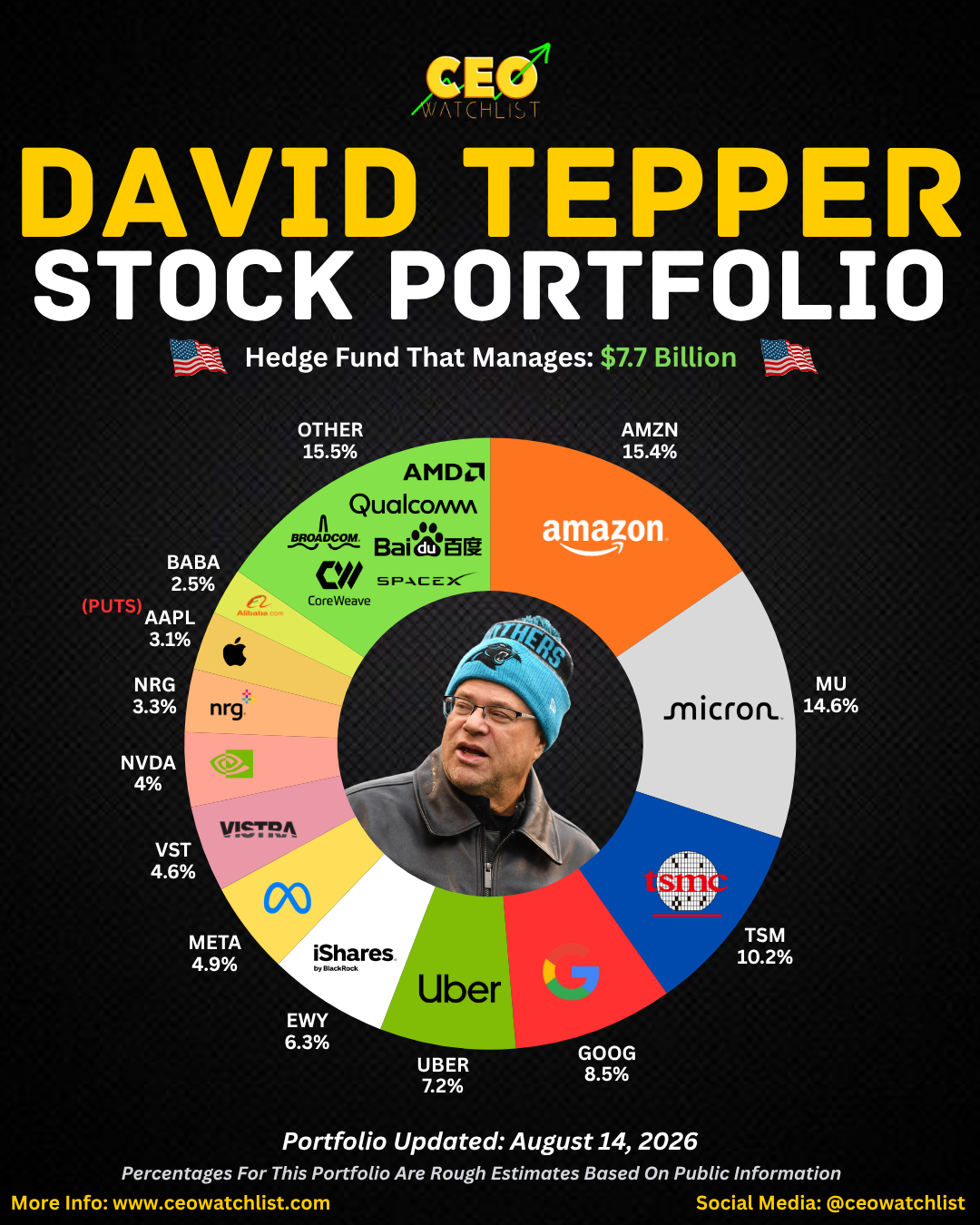
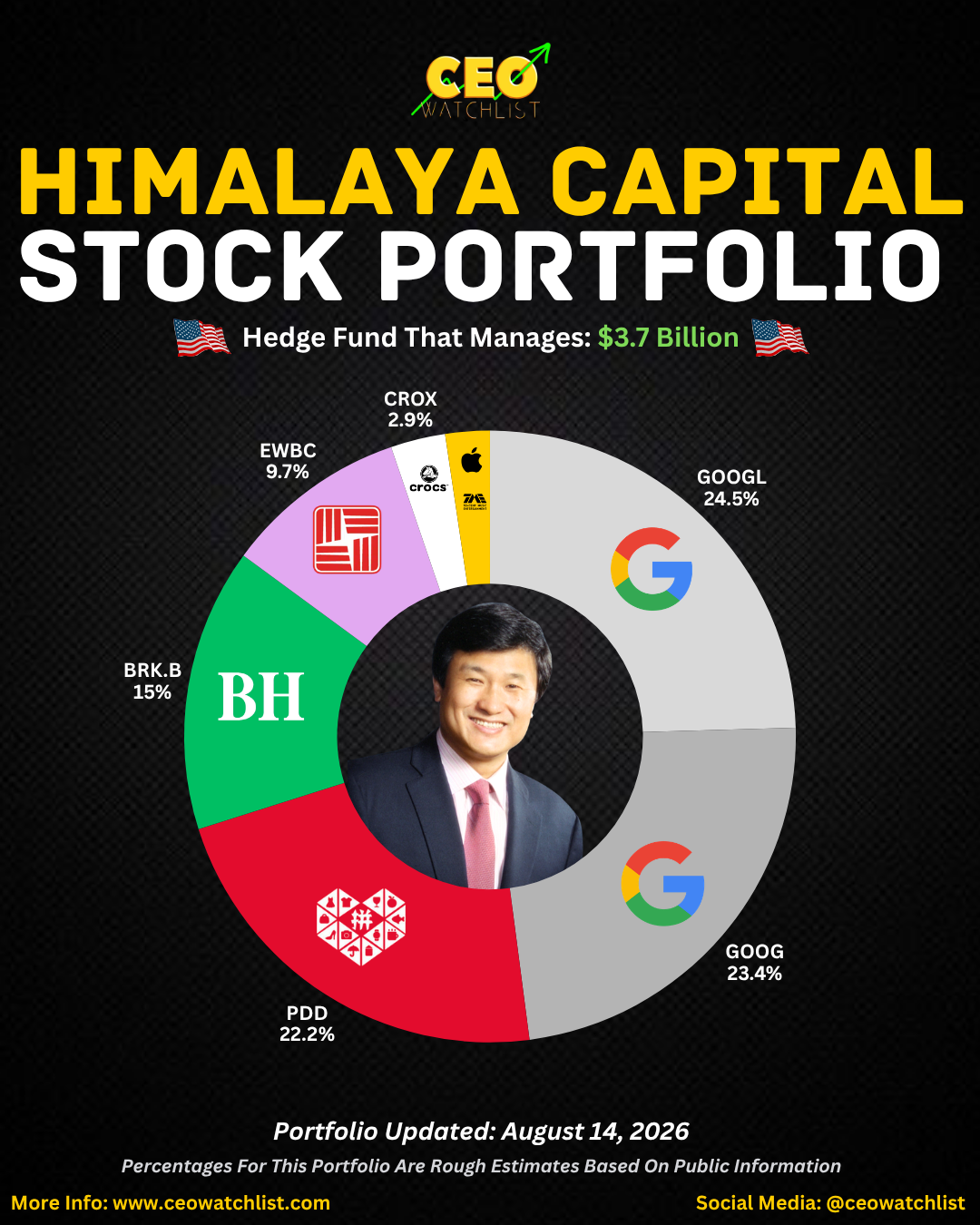
INFOGRAPHICS FOR THE WEEK:

CONTACT US: [email protected]
Responses