
TOP NEWS AFFECTING THE STOCK MARKET THIS WEEK:
Is Meta The New AI Darling? What Happened This Past Week and Their New Products... (Source)
Stocks Mentioned: $META
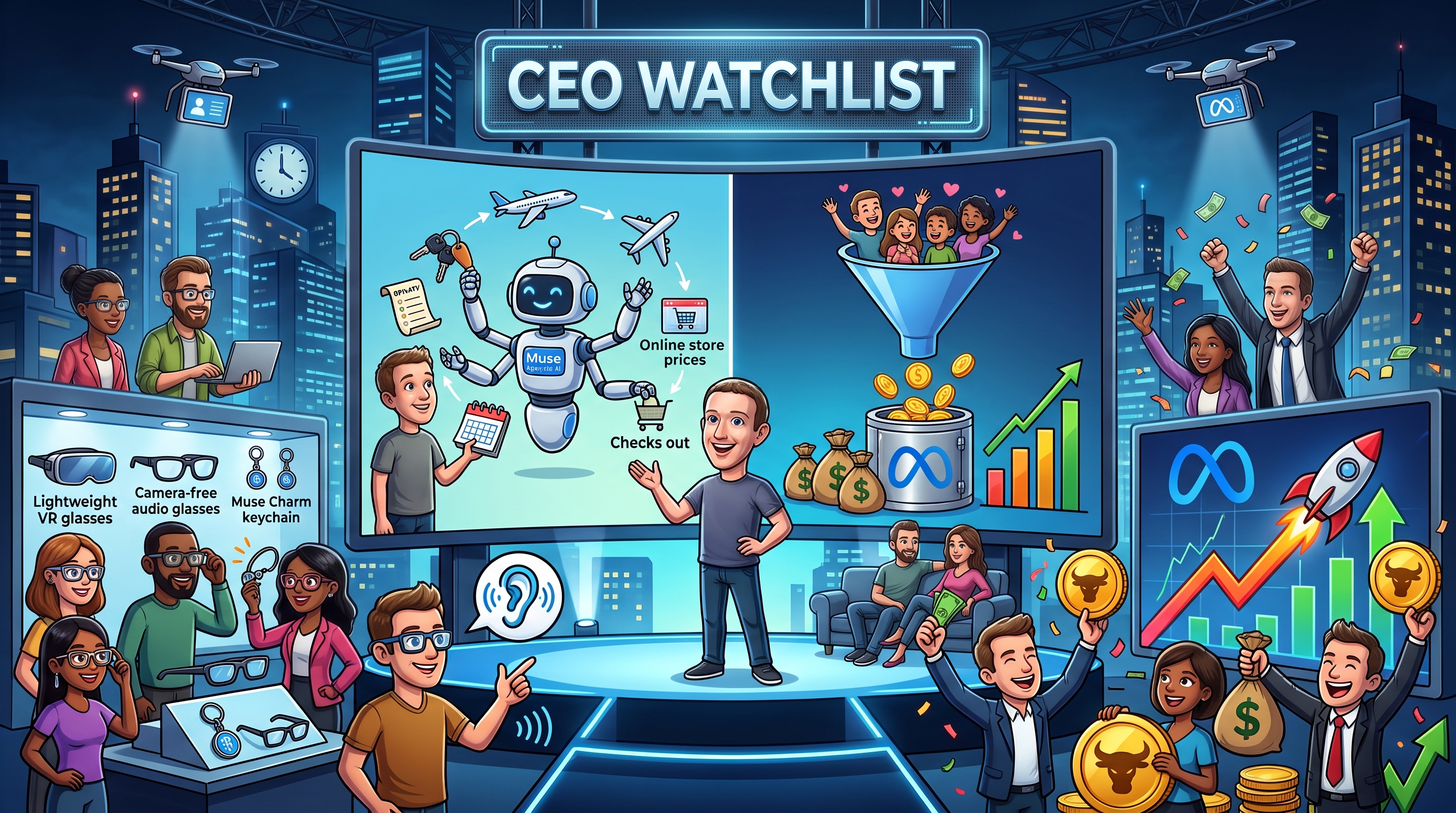
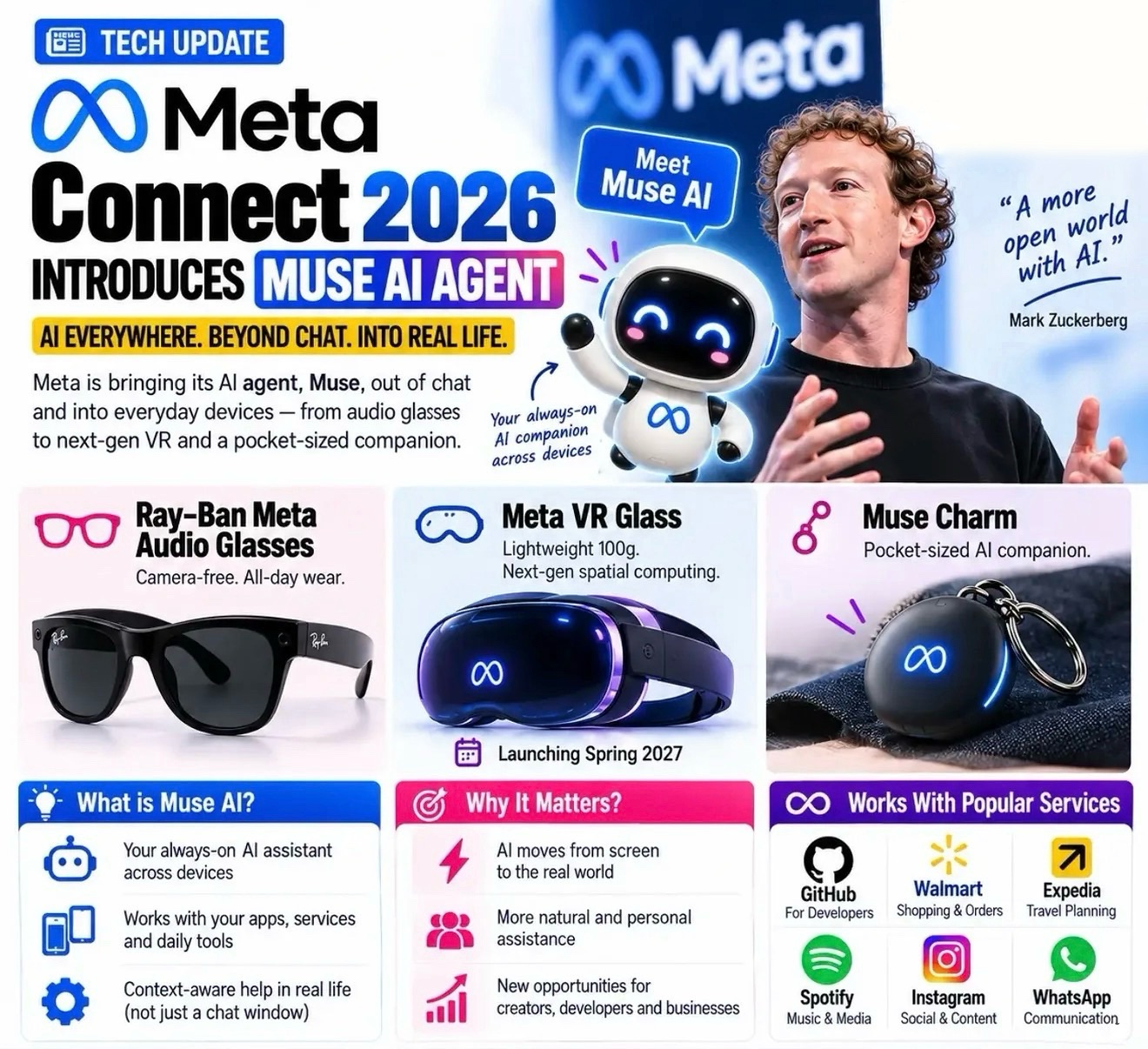
This past week, Meta (META) threw their "Meta Connect" event, which is the company's big annual showcase every year. This year's edition ran for two days, September 23rd and 24th, with the first day built around new product reveals for regular consumers and the second day handed off to developers who build on top of Meta's platforms. Day one is where the fireworks happened. Mark Zuckerberg took the stage in Menlo Park and used the keynote to lay out what he's now calling the "centerpiece" of the entire company, an agentic AI app called Muse. If you're not familiar with the term "agentic AI," think of it this way: a regular chatbot like ChatGPT is like calling a really smart friend on the phone for advice. You ask a question, they give you an answer, and then it's on you to go actually do something with that information. Agentic AI is different. It's less like a phone call and more like handing someone your car keys, your grocery list, and your calendar and saying "just handle it." Muse can actually go out and complete tasks on your behalf, like comparing prices, booking a flight, or checking out at an online store, without you having to do the legwork yourself. That's a meaningfully bigger leap than what most people have experienced with AI chatbots so far, and it's why this announcement carried so much weight.
Here's where it gets interesting from a business model standpoint, and honestly, it's a page straight out of Meta's oldest playbook. Zuckerberg said it plainly on stage: "We believe that Muse will make you money and we are standing behind this by making Muse free for a huge number of tokens with the expectation that, over time, we will profit by taking a small fee from transactions." Translation, they're giving away the technology for free right now, betting that once people and businesses are hooked and making money through it, Meta can quietly take a cut of those transactions down the road. Sound familiar? It should. That's the exact same formula that built Facebook, Instagram, and WhatsApp. Get billions of people using something for free first, then figure out monetization once you've got the scale nobody can compete with. It's a strategy that has worked for them three times already, though it's fair to point out the skeptical side too. Amazon has already blocked Muse from browsing its store, and according to a Forrester survey only 8% of people have actually tried Muse so far. Giving something away is easy. Getting a critical mass of people to actually trust an AI agent with their money is the harder part, and that part is still unproven.
The other half of the announcement was hardware, and this is where Zuckerberg's long term bet on glasses really came into focus. Meta rolled out a new lineup that includes lightweight VR glasses, a camera free audio version of their Ray-Ban Meta glasses, and a keychain sized device called the Muse Charm for talking to your AI agent without pulling out your phone. But the announcement that stood out most to us was a new feature called Hearing Enhancement, which turns select Meta Glasses into an FDA cleared, over the counter hearing aid for adults with mild to moderate hearing loss. No prescription needed, no clinic visit, just a guided test through the app. Zuckerberg's reasoning for going all in on glasses comes down to one simple stat he keeps repeating: nearly two billion people worldwide already wear glasses for vision correction. His bet is that most of those people eventually upgrade to a version with AI built in, the same way flip phones eventually all became smartphones. If even a fraction of that two billion person base upgrades over the next several years, that's a hardware revenue stream measured in the tens of billions, layered right on top of whatever Muse eventually generates in transaction fees.
Taking a step back, this is exactly why we've been highly bullish on META, and honestly we're not surprised at all by the run the stock has been on lately. Rewind a few months and the story was pretty rough. Meta's Q2 earnings disappointed on guidance, management raised their capital expenditure outlook into the hundred billion plus range, and investors were nervous the company was burning enormous piles of cash without a clear path to getting it back. That fear knocked the stock down hard for a stretch. What Connect did was give investors an actual, tangible answer to the question "what are we getting for all this spending?" Muse and the new glasses lineup are the first real, visible proof that the AI investment can turn into products people will pay for and businesses will pay Meta a cut on. With the company sitting in the neighborhood of a trillion and a half dollars in market value and pushing toward that two trillion dollar mark, we see a real path for this stock to work its way well north of a thousand dollars a share over the coming months and years, assuming Muse adoption and glasses sales continue building the way Meta is projecting.
Now, Inside of the CEO Watchlist Investment Club, we warned our members that we were doubling our META position, as you can see below:
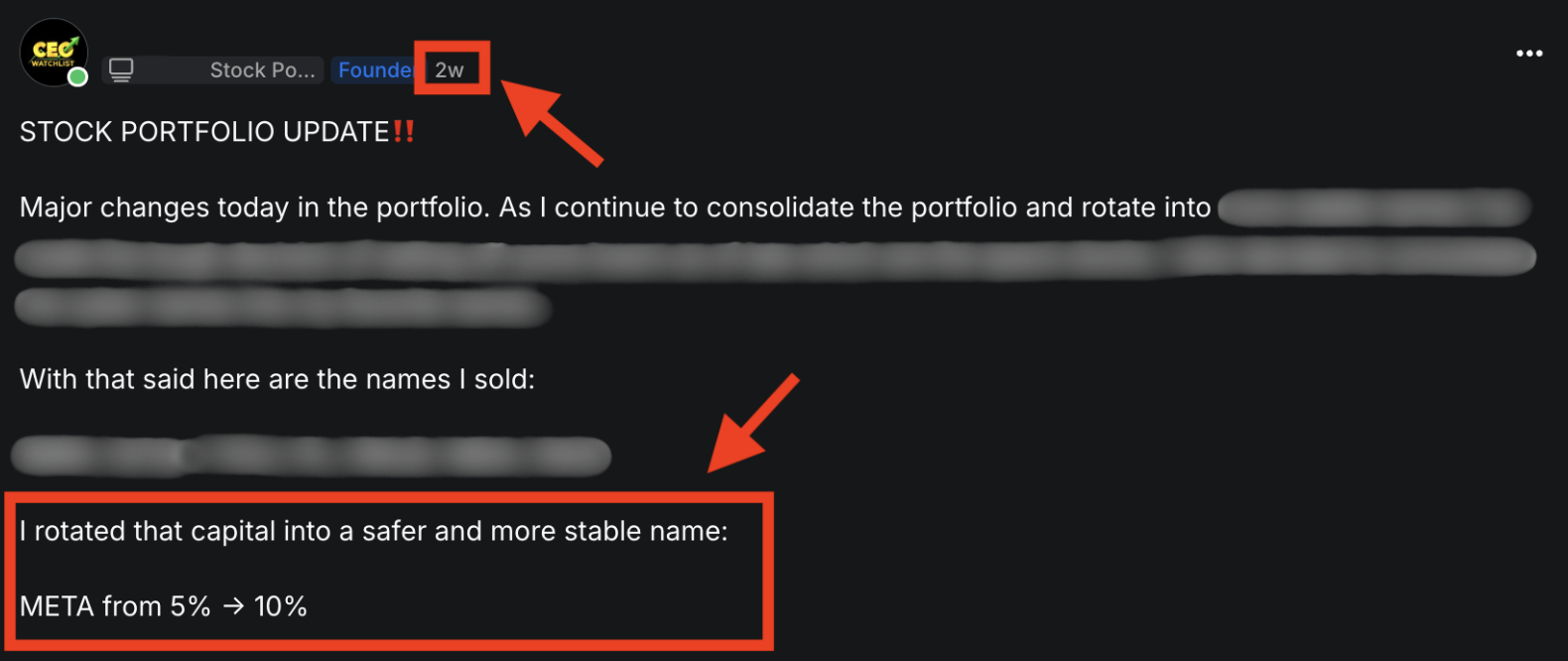
After making that key rotation, this stock went on an absolute tear over the past few weeks! These are the exact kind of setups our members get inside the CEO Watchlist Invesment Club, which is why we highly recommend joining. Plus, you'll get access to our entire stock and options portfolios, daily live trading classes, weekly private phone calls, 1 on 1 coaching, and much more! For newsletter readers only, we're even offering a $200 OFF discount code to join the Investment Club today so take advantage of this offer while you can! Just [CLICK HERE] and you'll get $200 OFF today!
Wrapping it all up, Meta Connect 2026 was two days of Meta essentially telling the market "here's how we monetize everything we've been spending on." Day one gave us Muse, an agentic AI that can take real action on your behalf instead of just chatting with you, backed by a classic Meta strategy of giving it away free now and taking a small cut later once it's generating real income for users. It also gave us a genuinely new hardware category, with VR glasses and AI glasses that double as FDA cleared hearing aids, all aimed at that massive two billion person glasses wearing population Zuckerberg keeps pointing to. Put together, these announcements are the clearest signal yet that all that scary capex spending from earlier this year is starting to point somewhere real. That's the story behind why we remain bullish on META, and why we think this run in the stock might just be getting started.
The End of Earnings Season Is Here: Here Are 3 Stocks We Are Watching Who Report This Week... (Source)
Stocks Mentioned: $SNX, $COST, $JBL, $FDS, $MU
Last week revealed a pattern in how this market is juding stocks based on their earnings, and knowing this pattern can help us predict what will happen during next week's earnings that are coming up quick. For example, stocks like TD Synnex (SNX), who reported their earnings on Thursday, saw a drop of 9% despite the fact that their billings surged 117%. Additionally, Costco (COST) reported a double beat, yet the stock barely moved! So the pattern we're noticing is this: A beat on the headline number is now close to worthless on its own. What the market is actually pricing is the quality of that beat, meaning whether the growth arrived with margins and cash flow attached or whether it arrived by spending more to get it. That framing is the lens we are carrying into next week, which happens to be one of the densest fiscal-quarter-end weeks on the calendar.
So without further ado, here are the top 3 stocks names we are watching next week, who are reporting their earnings:
- Jabil (JBL) - Reports Wednesday, September 30, before the open. Jabil is a contract manufacturer, meaning other companies design something and Jabil actually builds it. In practice that now means AI server racks, thermal management, and liquid-cooling systems for data centers. The number we care about most is AI revenue. Jabil now expects roughly $13.6 billion in AI revenue for fiscal 2026, up about 50% from $9 billion the prior year, and worth remembering is that the company originally guided to just 25% growth before raising it repeatedly. Jabil has beaten EPS estimates in each of the last four quarters and is expanding its manufacturing footprint by roughly 10% across the USA and India. We like the name, but it has ran a lot already so any misstep could cause the stock to crash. We like to stay nuetral on this name going into the earnings report.
- FactSet (FDS) - Reports Wednesday, September 30, before the open. FactSet sells financial data and analytics software to investment professionals on a subscription basis, so its business is measured in annual subscription value rather than one-time sales. Management has flagged that this quarter faces tough comparisons against a record prior-year period. FactSet is one of the few names where AI cuts both ways, since the company is embedding AI into its platform while the same technology arguably makes it easier for competitors to replicate what it sells. This is a stock that has sold off over 40% from its highs and that definietly makes it more attractive than it was, but this has become a "show me story". I need to see revenue and profitability improving before I could consider entering into this name. That is why I am paying close attention to what is reported on this earnings call.
- Micron (MU) - Reports Wednesday, September 30, after the close, and this is the headliner. Micron makes memory chips, and the specific product driving everything right now is high bandwidth memory, or HBM, which sits next to AI accelerators and feeds them data fast enough to keep up. Guidance calls for $49 billion to $51 billion in revenue, gross margin around 86%, and non-GAAP EPS of $30 to $32. Consensus has drifted slightly above the midpoint at roughly $31.50 in EPS on about $50.9 billion in revenue, which would be more than 350% growth against the $3.03 posted a year ago. The prior quarter set a high bar with record revenue of $41.46 billion, non-GAAP EPS of $25.11, and management noting HBM capacity was largely booked through calendar 2027 and into 2028. Options are pricing roughly a 10% move in either direction. One thing worth flagging is that Micron's last three reactions ranged from a single-digit decline to a mid-teens gain despite beating every time, so the beat itself tells you very little about direction.
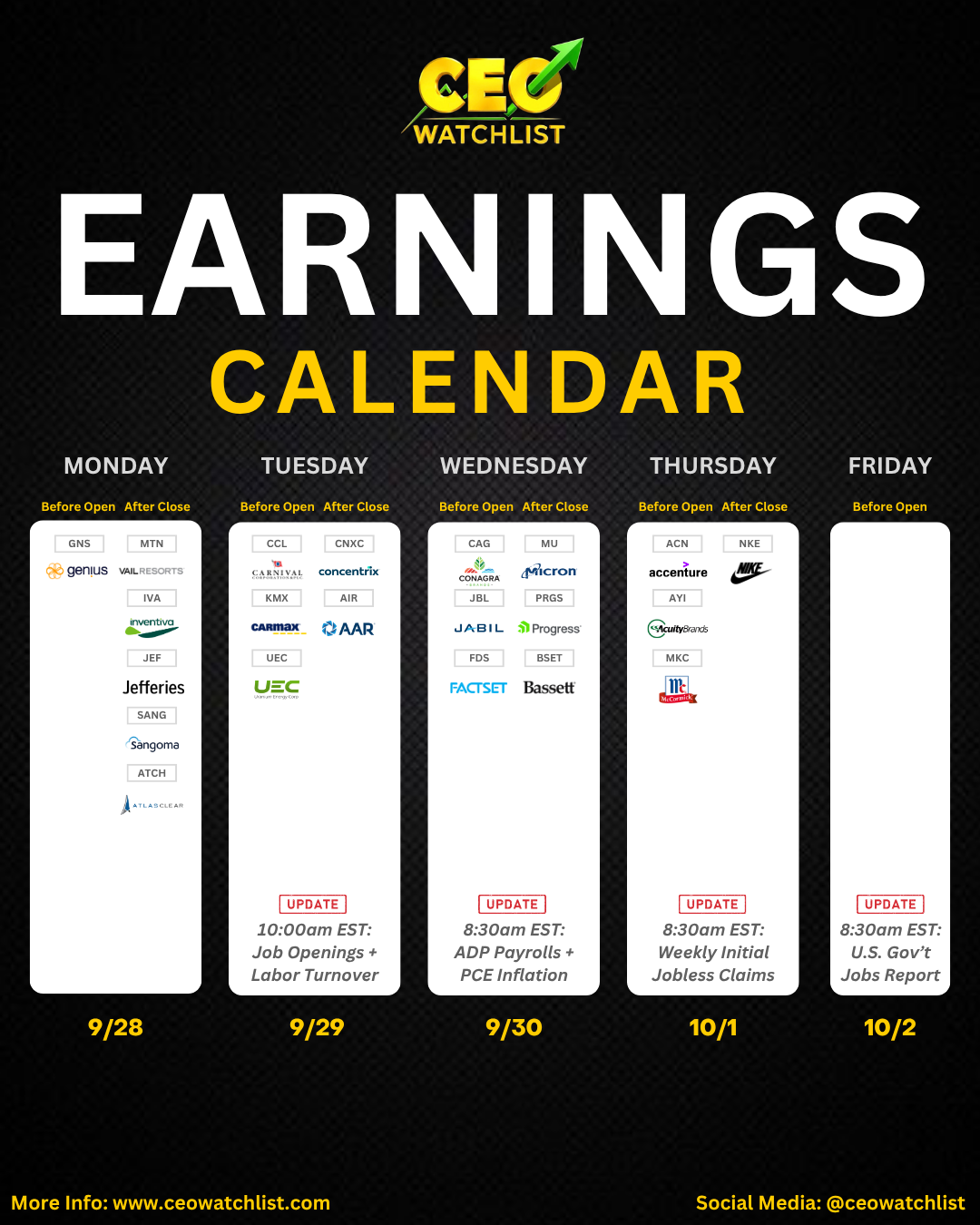
Last week taught us that the market is grading on margin quality rather than headline beats. This week we find out whether that grading curve holds when the companies reporting are the ones actually building the boom. Beyond our top 3, we included an infographic below showing all of the major stocks reporting their earnings this week!
"Super Investor" Spotlight: AKO Capital (Source)
Stocks Mentioned: $ALC, $SUNB, $V, $RACE, $GE, $AMZN, $ADI, $MSFT, $CSCO, $CP, $MCO, $FICO, $ICE
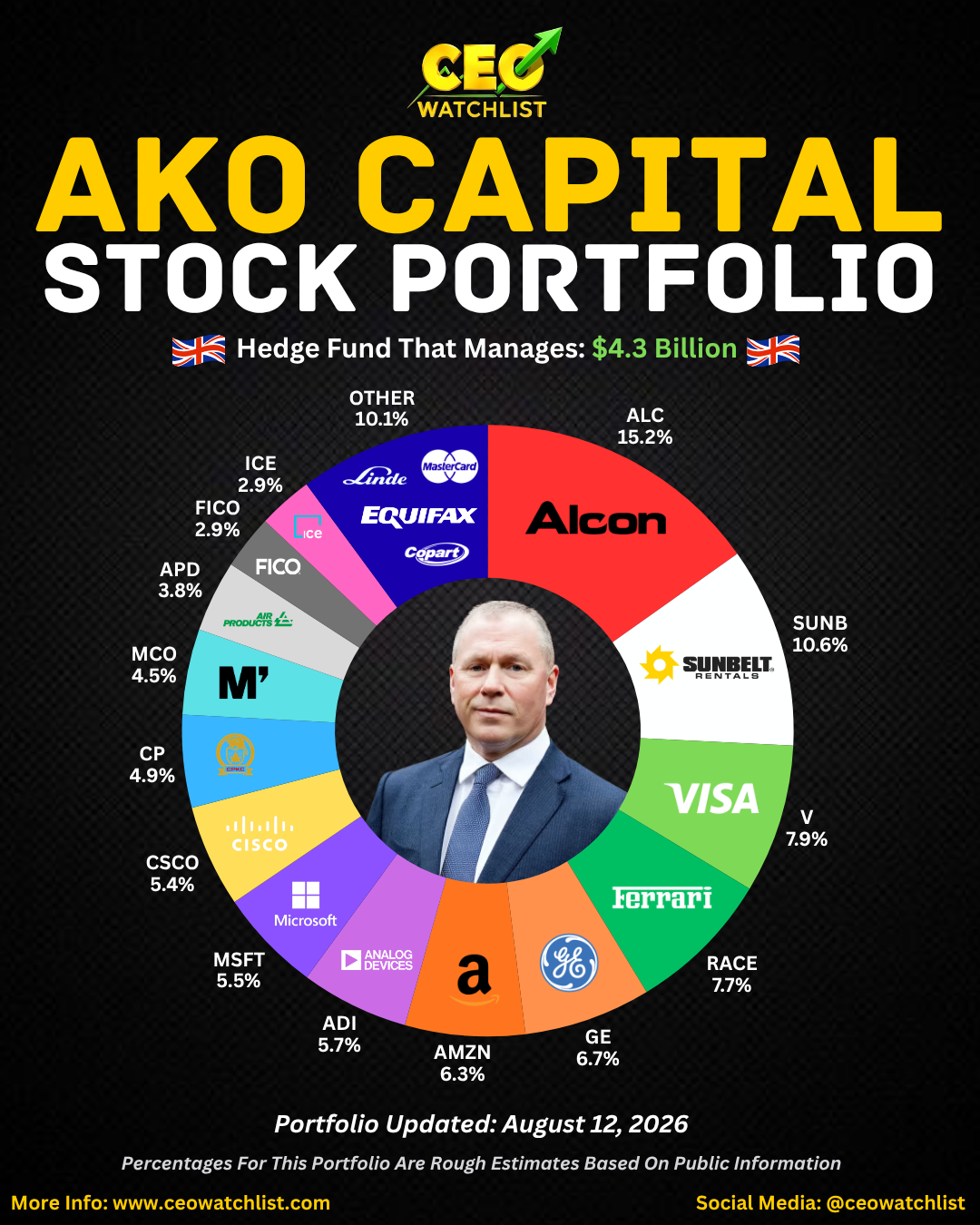
Most people outside of Europe haven't heard of AKO Capital, but in the world of high-quality investing it's one of the most respected shops around. AKO Capital is a London-based firm founded by Nicolai Tangen, who later went on to run Norway's giant sovereign wealth fund, and the firm built its reputation on a disciplined, quality-focused approach to picking businesses. Like every major institutional player with U.S. holdings, AKO is required to disclose its positions every quarter through a 13F filing. As a sidenote for newer readers, a "Super Investor" is just our term for a major institutional player, think massive corporations, elite hedge funds, or billionaire-run funds, whose quarterly stock disclosures give the rest of us a rare window into where the world's smartest capital is flowing. AKO fits squarely in that group, and their filing is a great one to track because it offers a European quality investor's perspective on the market.
AKO's reputation is built on hunting for high-quality compounders with durable competitive advantages, strong pricing power, and the ability to grow steadily over long stretches of time. This portfolio is a clean reflection of that discipline. It's a concentrated, deliberate set of positions leaning heavily into businesses with wide moats and premium brands. What jumps out to me right away is the mix of healthcare, industrials, payments, and luxury names, with minimal exposure to tech. This is a bit different from the tech-heavy books, we usually cover, where tech is a majority of the portfolio. It gives this filing a distinct difference compared to the American hedge funds we track week to week.
That said, let's take a look at AKO Capital's top 10 stock positions in their public portfolio:
- Alcon (ALC) – 15.2%
- Sunbelt Rentals / Ashtead (SUNB) – 10.6%
- Visa (V) – 7.9%
- Ferrari (RACE) – 7.7%
- GE Aerospace (GE) – 6.7%
- Amazon (AMZN) – 6.3%
- Analog Devices (ADI) – 5.7%
- Microsoft (MSFT) – 5.5%
- Cisco (CSCO) – 5.4%
- Canadian Pacific (CP) – 4.9%
The theme running through this portfolio is premium businesses with pricing power. At the top sits Alcon, the eye care leader, followed by Sunbelt Rentals, one of the dominant equipment rental operators. Then you get into the classic quality names AKO loves, from Visa on the payments side to Ferrari, which might be the single best example of pricing power and brand strength in the entire market.
The rest of the book fills out the same quality mold across different sectors. GE Aerospace and Canadian Pacific give it exposure to high-barrier industrials, Moody's (MCO), Fair Isaac (FICO), and Intercontinental Exchange (ICE) represent the financial data and exchange toll-booth businesses that quality investors gravitate toward, and Analog Devices, Microsoft, and Cisco anchor the technology side. We will continue to monitor AKO Capital's portfolio, as well as dozens of other hedge funds and politicians and will continue to report on them every week to you all with updates on any new stock buys they make.
INSIDER STOCK TRADES FROM THE WEEK:
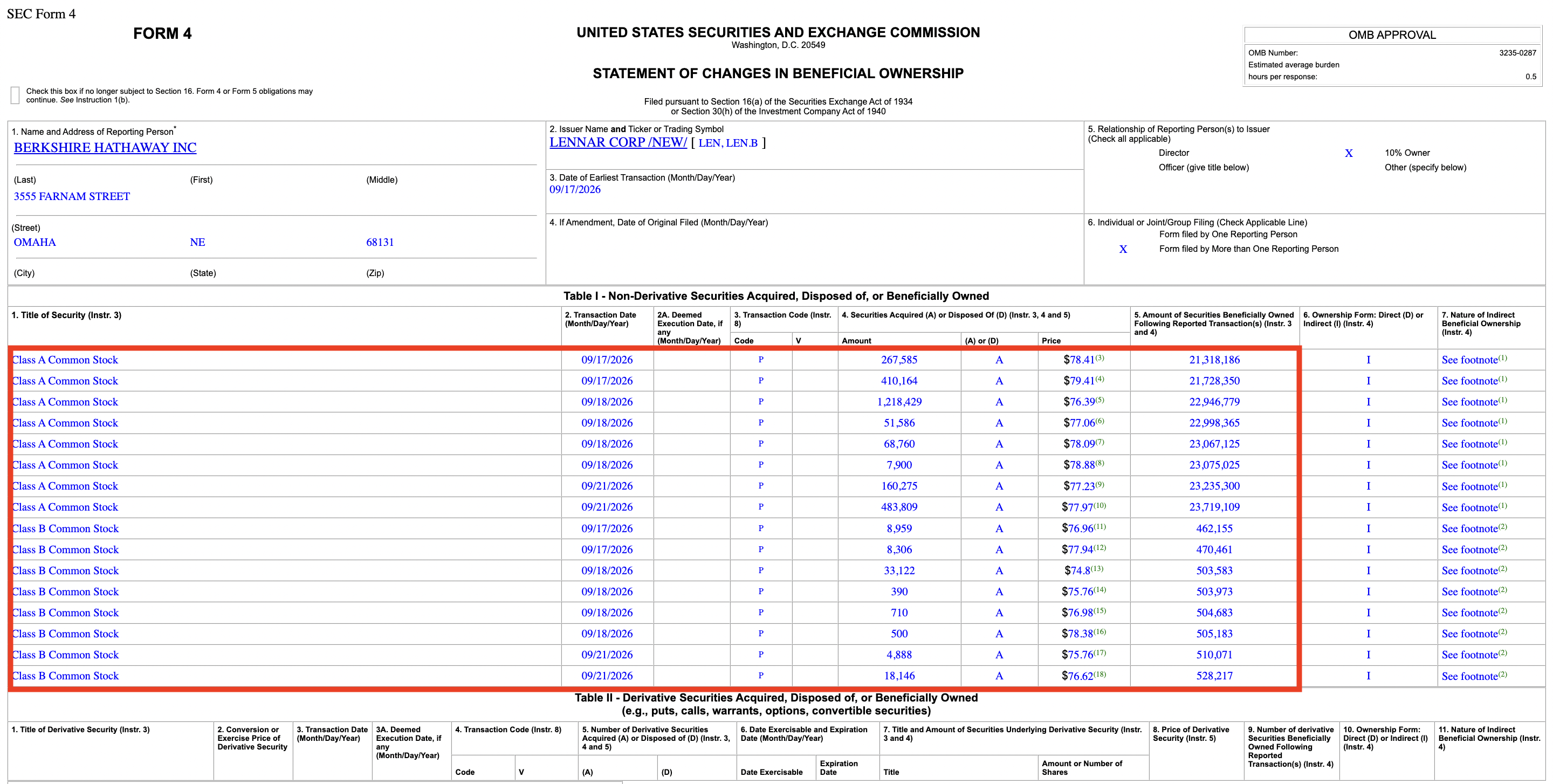
1. Lennar (LEN) - Berkshire Hathaway (10% owner) bought over $212,300,000 of LEN at an average price of $77.42/share between September 17-21, 2026, and it was most recently reported to the public on September 21, 2026. (Source)
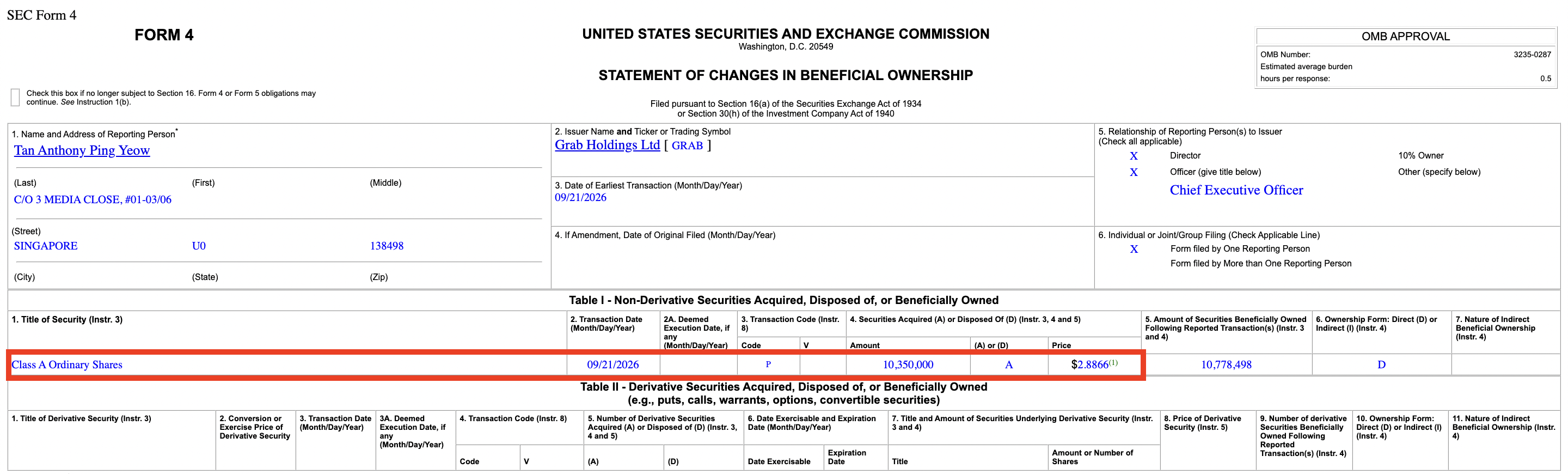
2. Grab Holdings (GRAB) - Anthony Tan (CEO) bought over $29,800,000 worth of GRAB at an average price of $2.89/share on September 21, 2026, and it was reported to the public later that same day. (Source)
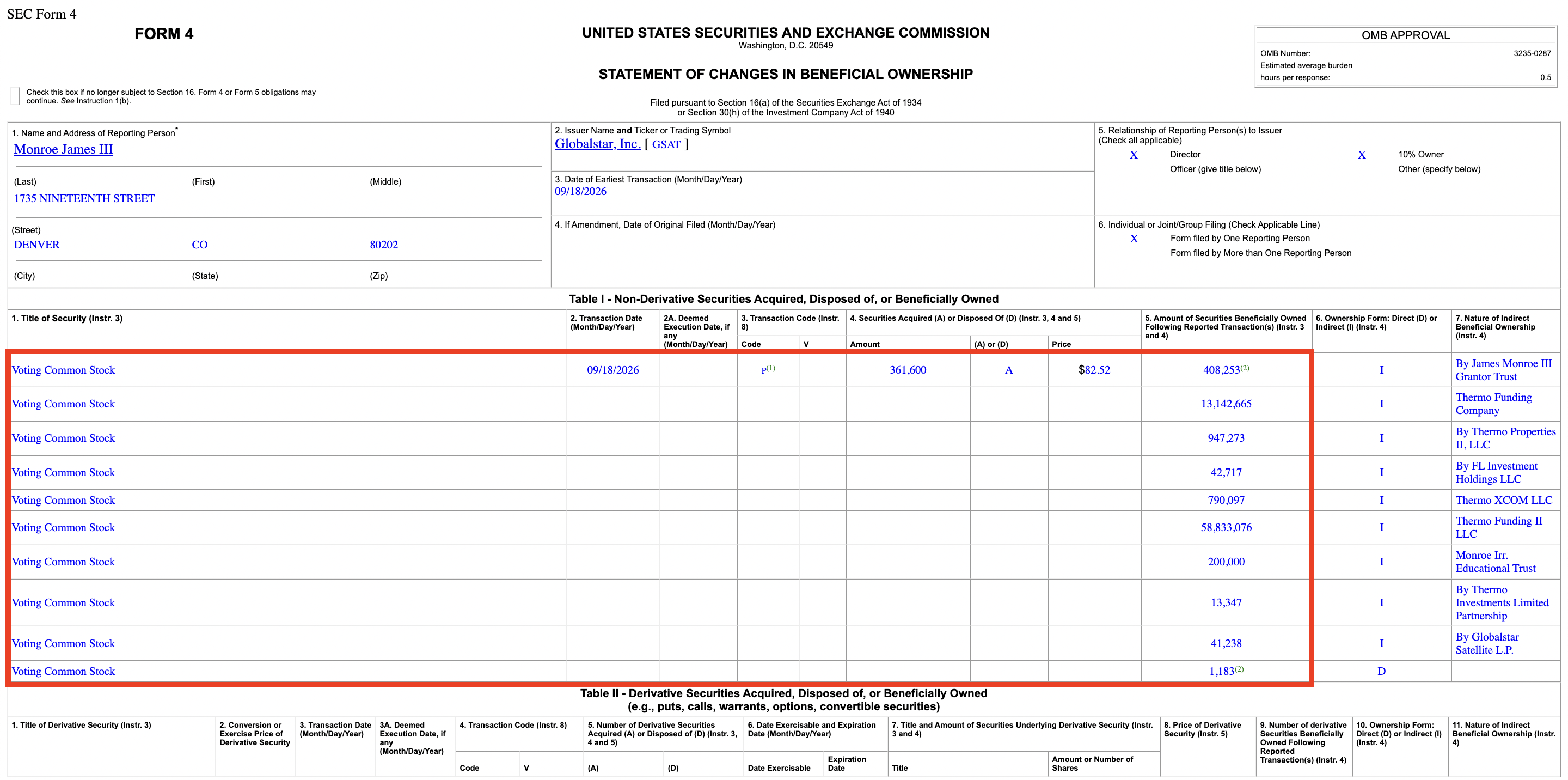
3. Globalstar (GSAT) - James Monroe (Director) bought over $29,800,000 of GSAT at an average price of $82.52/share on September 18, 2026, but it wasn't reported to the public until September 21, 2026. (Source)
Over 2,000 people have already signed up for my FREE Masterclass video on how to unlock my exact strategies for finding winning stock/options trades! I'll share everything including how to find what Politicians and CEOs are buying. Don’t miss your chance to get in for FREE before spots fill up!

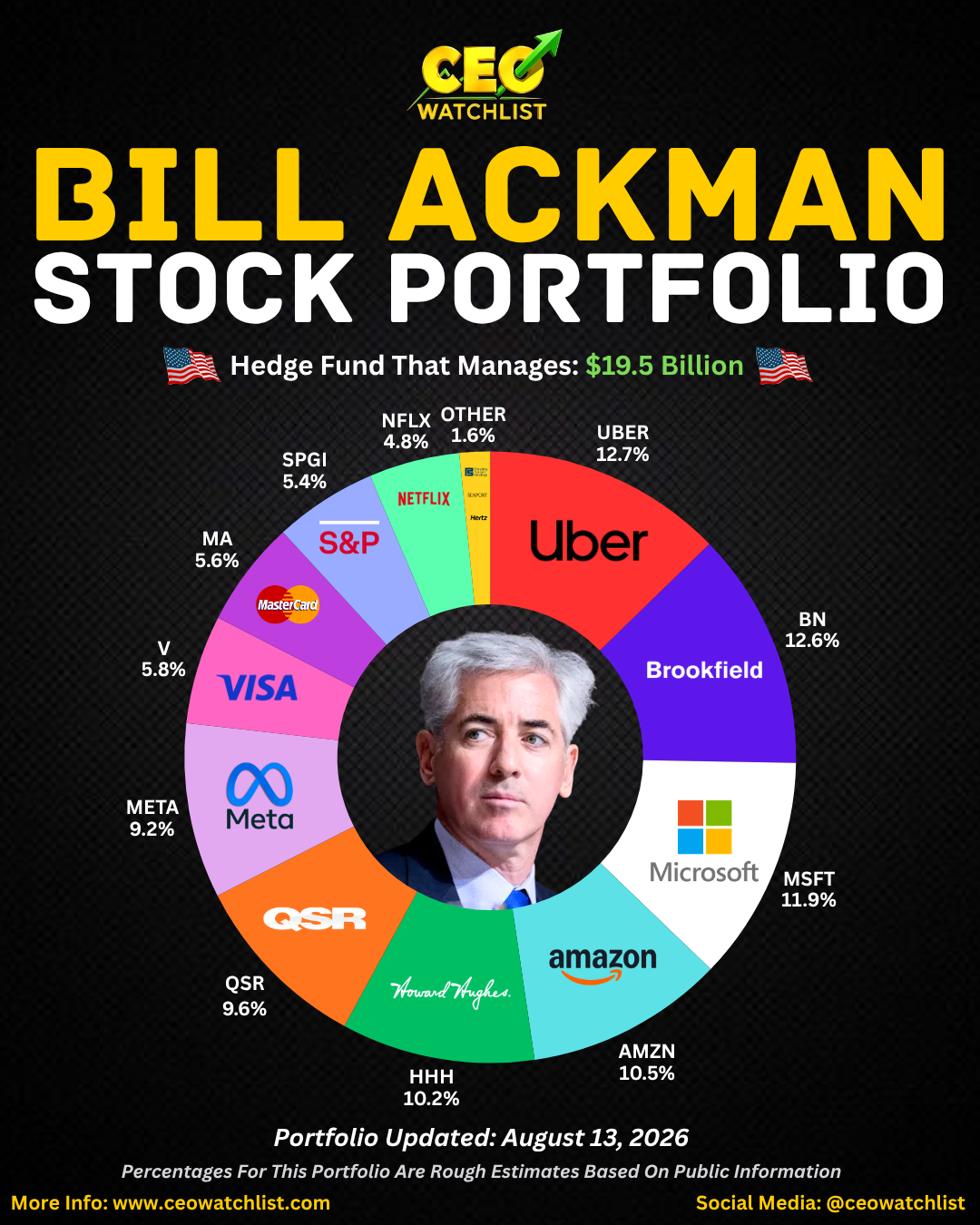
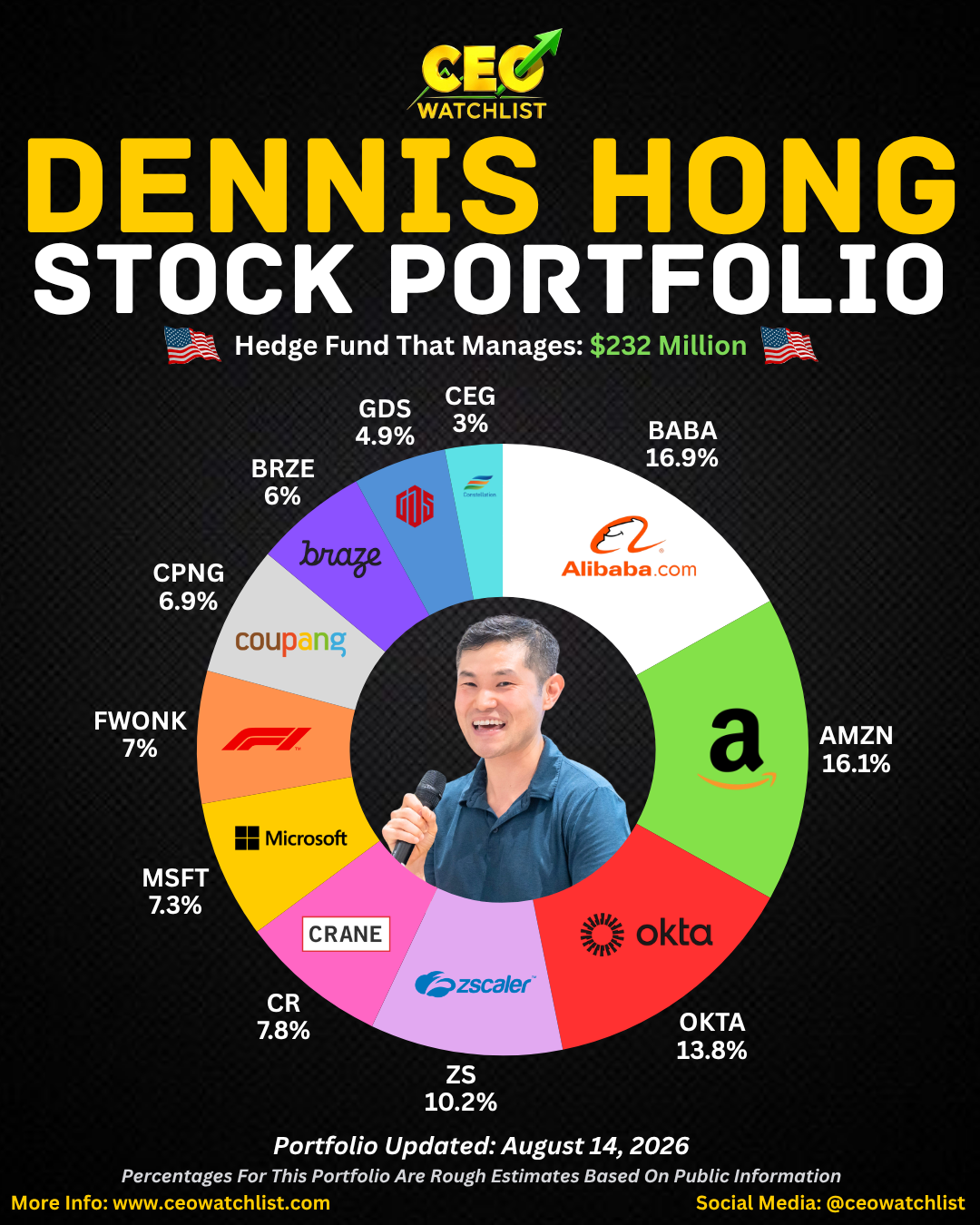
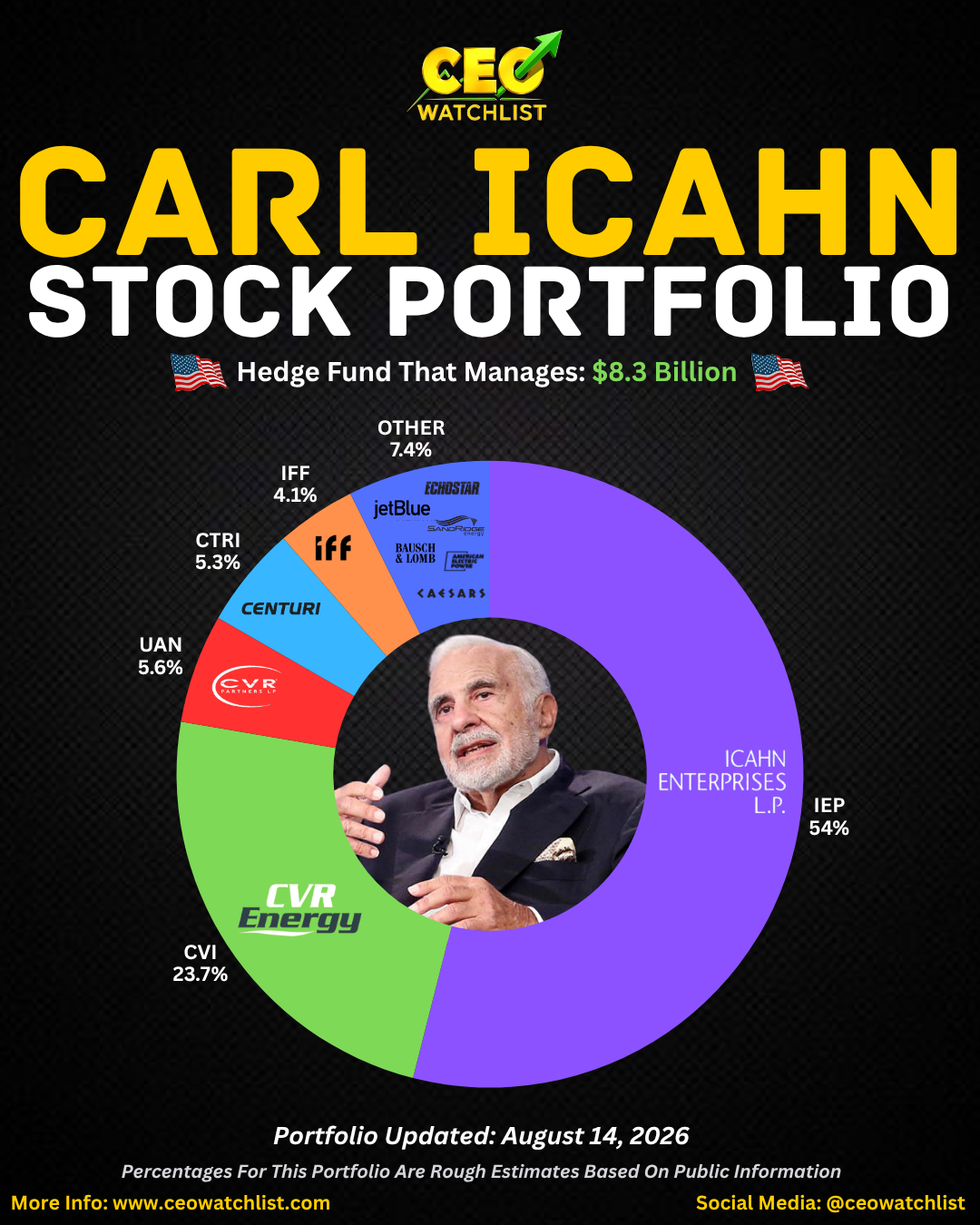
INFOGRAPHICS FOR THE WEEK:

CONTACT US: [email protected]
Responses