Header Logo
Home About Us FREE Training Subscribe Today FAQ Contact
LOG IN
Posts

CEO Watchlist: Week In Review (9/14/25)

September 15, 2025

TOP NEWS AFFECTING THE STOCK MARKET THIS WEEK:
  • Microsoft’s $20 Billion Bet On Nebius And The 4 Other Stocks Poised To Ride The AI GPU Wave! (Source)

    Stocks mentioned: $MSFT, $NBIS, $NVDA, $AMZN, $GOOG, $UBER, $CRWV, $IREN, $WULF, $CIFR

    This past week, Microsoft (MSFT) inked a deal with a little unknown company called Nebius (NBIS). The deal was valued between $17–$20 billion over the next five years, instantly vaulting NBIS into the global spotlight. To put this into perspective, NBIS had a market capitalization of just $15 billion before the news broke. In one stroke, Microsoft effectively pledged a contract larger than Nebius' entire market value, an almost unprecedented signal of conviction in a relatively young player. This is why NBIS jumped over 50% in a single day last week when the news was announced. 

    The macro-thesis here is simple but urgent: the AI arms race has a bottleneck, and it’s GPUs. Nvidia’s (NVDA) chips are the currency of artificial intelligence, and demand has far outstripped supply. Even the world’s largest cloud operators are constrained. Microsoft (MSFT), Amazon (AMZN), and Google (GOOG) have been scrambling to secure more chips, and that desperation is driving them to strike massive partnerships with smaller but strategically positioned companies that have them. NBIS is one of these companies. But, NBIS isn't just a GPU datacenter play, it’s a diversified infrastructure ecosystem. Its core GPU cloud is complemented by the subsidiaries they own, like Toloka (a crowdsourced data-labeling platform critical for training large models), AV Ride (their autonomous vehicle software which is partnered with Uber (UBER)), Clickhouse (an open-source database engine optimized for real-time analytics), and TripleTen (a fast-growing tech education platform). Each of these segments deepens and diversifies NBIS’s moat, making their company well-positioned for growth over the coming years. I mean, who wouldn't want to own a company that's involved in AI, full self-driving, cloud, and data? This is shaping up to be potentially a very strong growth company for years to come. 

    The crazy thing is we believe this is the first of many deals to come. If Microsoft is looking for more GPU capacity, then that means Amazon, Google, and others are looking too. This isn't just our belief, the CEO himself said, “I’m happy to announce the first of these contracts, and I believe there are more to come.” If this is merely the opening act, the market may still be underpricing the sheer scale of capital flows NBIS could capture. For comparison, cloud titans regularly ink multi-billion-dollar multi-year deals, and the AI infrastructure budget is only expanding. 

    This deal also validates an entire ecosystem of GPU infrastructure plays that the market has largely ignored. Including NBIS, these are the 5 stocks poised to make similar deals with the hyperscalers:

    • Nebius (NBIS): The direct beneficiary of Microsoft’s $20B vote of confidence, with diversified subsidiaries and growing credibility.

    • CoreWeave (CRWV): Specializes in AI-driven data labeling and crowd intelligence.

    • IREN Limited (IREN): A data center operator repurposing energy-intensive mining infrastructure into AI compute hubs.

    • TeraWulf (WULF): Leveraging low-cost energy access to build GPU-intensive compute centers.

    • Cipher Mining (CIFR): Transitioning from crypto mining into AI GPU hosting, riding the same infrastructure tailwind.

    We believe all of these stocks are high risk, but with high risk comes high reward. Of the 5 listed above, we really only like Nebius here. That is because we view its diversification and partnerships (Micosoft/Uber) as giving it a level of credibility and safety that we don't see in the others. With that said, the conclusion is clear...Microsoft’s $20B partnership is not an isolated event, it’s a signal flare. The GPU bottleneck is the defining constraint of the AI decade, and hyperscalers will continue to lock in capacity wherever they can find it. NBIS has gone from an under-the-radar $25 stock we highlighted back in May to one of the most talked about AI infrastructure plays in the market. With credibility, capital, and momentum now on its side, NBIS isn’t just another AI stock, it’s a foundational pillar in the emerging AI supply chain. Investors who fail to recognize this shift risk missing what could be one of the most asymmetric opportunities of the decade. If you're an Investment Club Member, make sure to [CLICK HERE] to log in and see our fully updated list of stocks we just bought based on this surging AI momentum. 
  • The $300 Billion Deal Reshaping Tech: 5 Stocks That Could Dominate the AI Future  (Source)

    Stocks mentioned: $AMZN, $MSFT, $GOOG, $ORCL, $NBIS, $NVDA, $AVGO, $ANET, $VRT, $AMD

    The cloud race was supposed to be over. The hyperscale giants Amazon (AMZN), Microsoft (MSFT), and Google (GOOG), had secured their dominance, leaving little oxygen for challengers. But a $300 billion mega-contract with OpenAI has flipped that consensus on its head. Oracle (ORCL), long dismissed as a legacy database giant, has abruptly vaulted into the AI arms race as a front-runner, proving that in the new era of AI-driven compute, yesterday’s underdog can become tomorrow’s trillion-dollar winner.

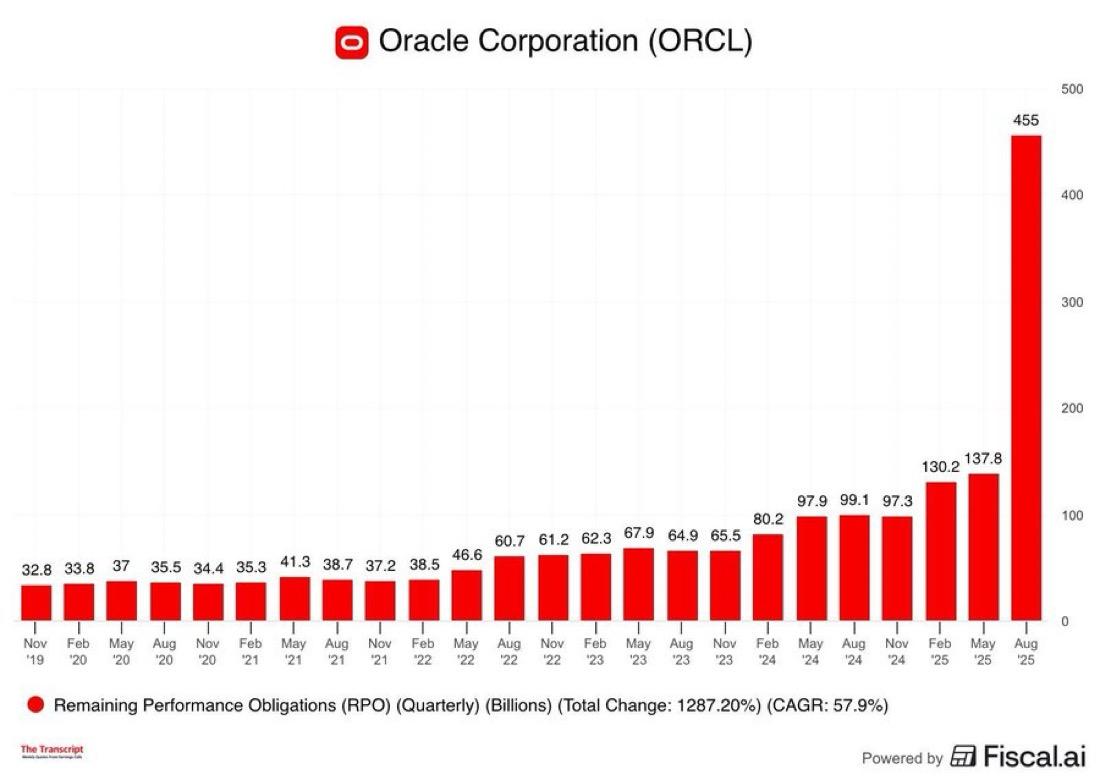
    Oracle reported earnings this last week, and missed on the top and bottom line. But they shocked the investing world when it was announced that their remaining performance obligations (RPO) jumped 359%! Yes, you read that right...359%! We haven't seen a jump like this since Nvidia began its run-up almost 5 years ago. Needless to say, the market sent this stock soaring higher by 40%. It was revealed that $300 billion of that RPO was committed by a single company called Open AI, the owners of Chat GPT. Oracle, by locking in OpenAI’s next phase of compute scaling, has demonstrated that the most valuable resource in the AI economy is not code, but compute contracts. This changes the power dynamic of the cloud leaders. 

    Skeptics argue that Oracle’s $300 billion deal with Open AI may not actually come to fruition though. When we look at Oracle's remaining performance obligations (RPO), this shows its future revenue that is locked in by contracts but not actually delivered or billed yet. So, it's concerning that a company like Open AI, who is making roughly $10 billion per year in revenue, can somehow afford $300 billion over 5 years. The math doesn't really add up, even if we factored in debt and their own cash on hand. Assuming we look beyond that, we can see what a big deal this $300 billion commitment is, as this is what makes up a majority of Oracle's jump in RPO's from $137.8 billion last quarter to $455 billion this quarter:

    RPO's are never guaranteed, and plenty of times they fall through, and that can then be negative for the stock in the future if those obligations aren't fulfilled. BUT, if Open AI can somehow come up with the capital, this will skyrocket Oracle into the leadership position alongside Amazon, Google, and Microsoft, justifying the 40% increase in stock price we saw after their earnings this past week. One other concern is this win could be a one-off, driven by OpenAI’s urgent need for scale outside Microsoft’s Azure platform. Incumbents like Amazon and Google remain structurally advantaged with larger developer ecosystems and broader platforms. But, in a world where AI workloads are doubling every few months, demand is so explosive that secondary providers can suddenly become primary winners, similar to what we saw with Nebius (NBIS). Oracle is not stealing scraps; it’s capturing contracts on par with the GDP of small nations.

    And it’s not just Oracle. A wave of companies are positioned to benefit from this investment into Oracle:

    • Nvidia (NVDA) – The GPU kingpin that continues to dictate the cost and availability of AI compute.

    • Broadcom (AVGO) – A critical supplier of networking chips enabling high-throughput AI clusters.

    • Arista Networks (ANET) – Providing the switching infrastructure that makes hyperscale AI data centers function.

    • Vertiv Holdings (VRT) – Specializing in power and cooling systems, the hidden chokepoints in every AI facility.

    • Advanced Micro Devices (AMD) – Oracle has made it clear that they are using AMD chips, so an investment into Oracle will have the capital trickle down into a company like AMD.

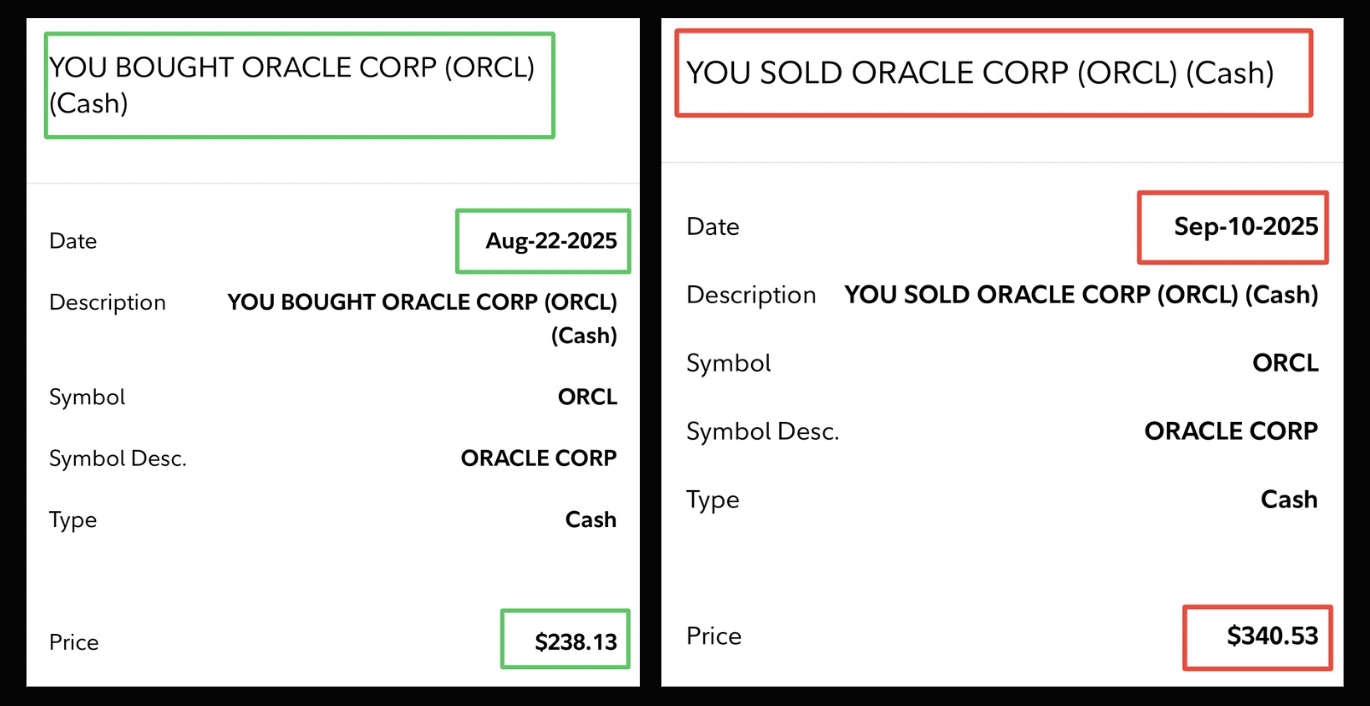
    The takeaway is unavoidable: the cloud market is being reordered in real time. Oracle’s trillion-dollar ascent is not a fluke, it’s a signal that AI demand is tearing through old hierarchies, reshaping who matters in tech. The market still prices Oracle like a legacy laggard. But in the AI era, compute pipelines are destiny, and Oracle just secured one of the most valuable pipelines on earth. The shift is already underway, and investors who don’t recalibrate now are underpricing the inevitable. We informed our Investment Club members back on August 22, 2025 that we were buying the stock as you can see in the image below:

    We believe Oracle will eventually reach that $1 trillion valuation, giving it more upside potential from here. But because of the massive 40% pop in a single day, we believe portfolio management is important and since we bought Oracle just 3 weeks ago, for $238.13 per share, we are taking some profits here. We sold at $340.53 per share for a return of just over 43% in 3 weeks. This is why it's important to follow the fundamentals and technicals when investing in stocks. In the Investment Club, we've been able to find stocks before they run up, and sell them before they fall. If you struggle with buying a stock too late and then it crashes, or selling a stock too soon right before it jumps up, then it might be time to learn the strategies we teach in the Investment Club. If you're not an Investment Club Member, and you're tired of missing out on the next big stock, consider using this as an opportunity to finally make a change. We are going to give you $200 OFF when you join today. [CLICK HERE] to take advantage of this discounted offer. We will see you in the Investment Club soon!

    Ask ChatGPT,
  • "Super Investor" Spotlight: Harvard University (Source)

    Stocks mentioned: $MSFT, $AMZN, $BKNG, $META, $IBIT, $BMNR, $GOOGL, $NVDA, $GLD, $LNW
    This week we’re continuing our “Super Investor Spotlight” series, where we break down the moves of the world’s top investors and the stocks they’re betting big on. For new readers, “Super Investors” are elite money managers who oversee billions of dollars and consistently generate outsized returns. While many think of names like Warren Buffett or Bill Ackman, few realize that institutions like Harvard University also qualify. Harvard Management Company oversees more than $50 billion in endowment assets, making it one of the largest and most sophisticated investors in the world. Every quarter, they file a 13F with the SEC, public disclosures of their U.S. stock holdings.

    Harvard’s case is unique because most people don’t realize universities own stock portfolios at all. Harvard’s endowment invests in stocks, alternatives, and private equity to fund operations and scholarships. With decades of steady growth, Harvard’s portfolio deserves the same attention we give billionaire hedge funds. Their latest Q2 2025 filing highlights a portfolio deeply concentrated in mega-cap tech, AI, and alternative assets like gold and Bitcoin ETFs.

    Here’s the full lineup of Harvard’s top holdings:

    Microsoft (MSFT) – 21.6%: Harvard’s largest bet, leaning heavily into Microsoft’s AI-first strategy and its relationship with Chat GPT. Harvard increased their position in Microsoft by roughly 50% in their recent filing. This position reflects confidence in Azure and Microsoft’s dominance across enterprise software.

    Amazon (AMZN) – 16.4%: A massive new allocation for Harvard as they finally enter into Amazon, making it their 2nd largest position. They're taking a bet on e-commerce and AWS cloud, showing conviction in Amazon’s dual role as both consumer titan and infrastructure backbone of AI.

    Booking Holdings (BKNG) – 12.7%: Harvard is betting on global travel’s long runway. BKNG’s pricing power and platform dominance in online travel make it a resilient growth name even through economic cycles.

    Meta Platforms (META) – 8.4%: A strong position in Meta shows Harvard’s willingness to back AI-driven social platforms, while also gaining exposure to virtual reality and immersive technologies.

    iShares Bitcoin Trust (IBIT) – 8.1%: A surprising but notable addition. By holding a regulated Bitcoin ETF, Harvard signals belief in digital assets as a legitimate hedge and long-term growth theme. One stock we like better as a bet on crypto is Bitmine Immersion (BMNR) which is a play on Ethereum, rather than Bitcoin. 

    Alphabet/Google (GOOGL) – 7.9%: A cornerstone of AI and search dominance. Harvard’s allocation to Google shows conviction in ad revenue stability and its growing AI compute ecosystem.

    Nvidia (NVDA) – 7.3%: No AI portfolio is complete without Nvidia. Harvard increased their position by 50% signalling a continued conviction in the AI narrative.

    SPDR Gold Trust (GLD) – 7.1%: Harvard has taken a new defensive hedge against inflation and volatility. Harvard balances its growth-heavy portfolio with the stability of gold exposure.

    Light & Wonder (LNW) – 4.2%: A gaming and entertainment technology play, giving Harvard exposure to consumer discretionary and digital leisure growth.

    Harvard owns a few other stocks, but they are a very small allocation in their overall portfolio. This doesn't show much conviction in those names due to Harvard's sizing of them, but what does stand out is Harvard’s tilt towards concentrated conviction, much like the top hedge funds. While some critics might argue this exposes the endowment to tech volatility, Harvard has the luxury of playing the long game. By balancing high-growth AI bets with gold and Bitcoin exposure, they’ve built a portfolio that’s both offensive and defensive. The heavy weighting in Microsoft and Amazon, meanwhile, signals a clear call: Harvard is betting that AI-driven cloud and platforms will be the defining growth engines of the next decade.

    The lesson is clear: Harvard invests like the best hedge funds in the world. They concentrate where conviction is highest, balance with hedges, and aren’t afraid to adopt new asset classes like crypto. For everyday investors, the takeaway isn’t to copy Harvard trade-for-trade, but to learn from the strategy. Focus on leaders, hedge intelligently, and align your portfolio with the biggest secular trends of our time. If you want to see the dozens of other Portfolio Circles, Infographics, and Cheat Sheets for Investing, then [CLICK HERE] to access them if you have an Investment Club Membership.


INSIDER TRADES FROM THE WEEK:

1. Summit Therapeutics Inc. (SMMT) - Mahkam Zanganeh, Co-CEO, bought ~$5,000,000 of SMMT stock between Sep 10-11, 2025, and it was most recently reported to the public on Sep. 11, 2025 (Source) 

2. Hycroft Holding Corp (HYMC) - Eric Sprott, Director, bought ~$40,000,000 of HYMC stock on Sep 10, 2025, but it was most recently reported to the public on Sep 12, 2025 (Source)

3. Smithfield Foods (SFD) - Wan Long, Billionaire/Director, bought $42,000,000 of SFD on Sep 8, 2025, but it was most recently reported to the public on Sep 9, 2025 (Source)

Over 2,000 people have already signed up for my FREE Masterclass video on how to unlock my exact strategies for finding winning stock/options trades! I'll share everything including how to find what Politicians and CEOs are buying. Don’t miss your chance to get in for FREE before spots fill up!


INFOGRAPHICS FOR THE WEEK:


FREE Masterclass

Instagram 

Twitter (X) 

Facebook 

YouTube 

CEO Watchlist Website 


CONTACT US: [email protected]

Responses

Join the conversation
t("newsletters.loading")
Loading...

CEO Watchlist Weekly Newsletter

Keep up to date with stock market news and information

Footer Logo
About Us Subscribe Today FAQ Contact Disclaimer Terms & Conditions Privacy Policy

Join The FREE Challenge

Enter your details below to join the challenge.