
TOP NEWS AFFECTING THE STOCK MARKET THIS WEEK:
The AI Apocalypse Is Here?! AI Experts Weigh In and Our 3 Favorite Stocks To Capitalize On The Fear (Source)
Stocks mentioned: $PANW, $RBRK, $NET
AI is going to be the end of all human kind ... at least that's what we've been told this past week by an Anthropic employee. Since the dawn of time, technology has had periods where it gets so advanced, that it starts to raise real concerns, and that's the moment we're in with AI. By now, the technology itself needs no introduction. Our parents use it, your barber uses it, and if you've ever typed a question into a chatbot or watched a video clearly stitched together by a machine, you've already met the most important technology of our lifetime. What most people haven't clocked yet is the flip side. The same tool that drafts your grocery list is, at the frontier, powerful enough to make the very people who built it walk away. This week put that on full display because on September 8, an Anthropic researcher named Jacob Coxon, who spent the last 3 years doing pre-training research at both OpenAI (parent company of Chat GPT) and Anthropic (parent company of Claude), resigned and posted some cryptic public tweets around AI:
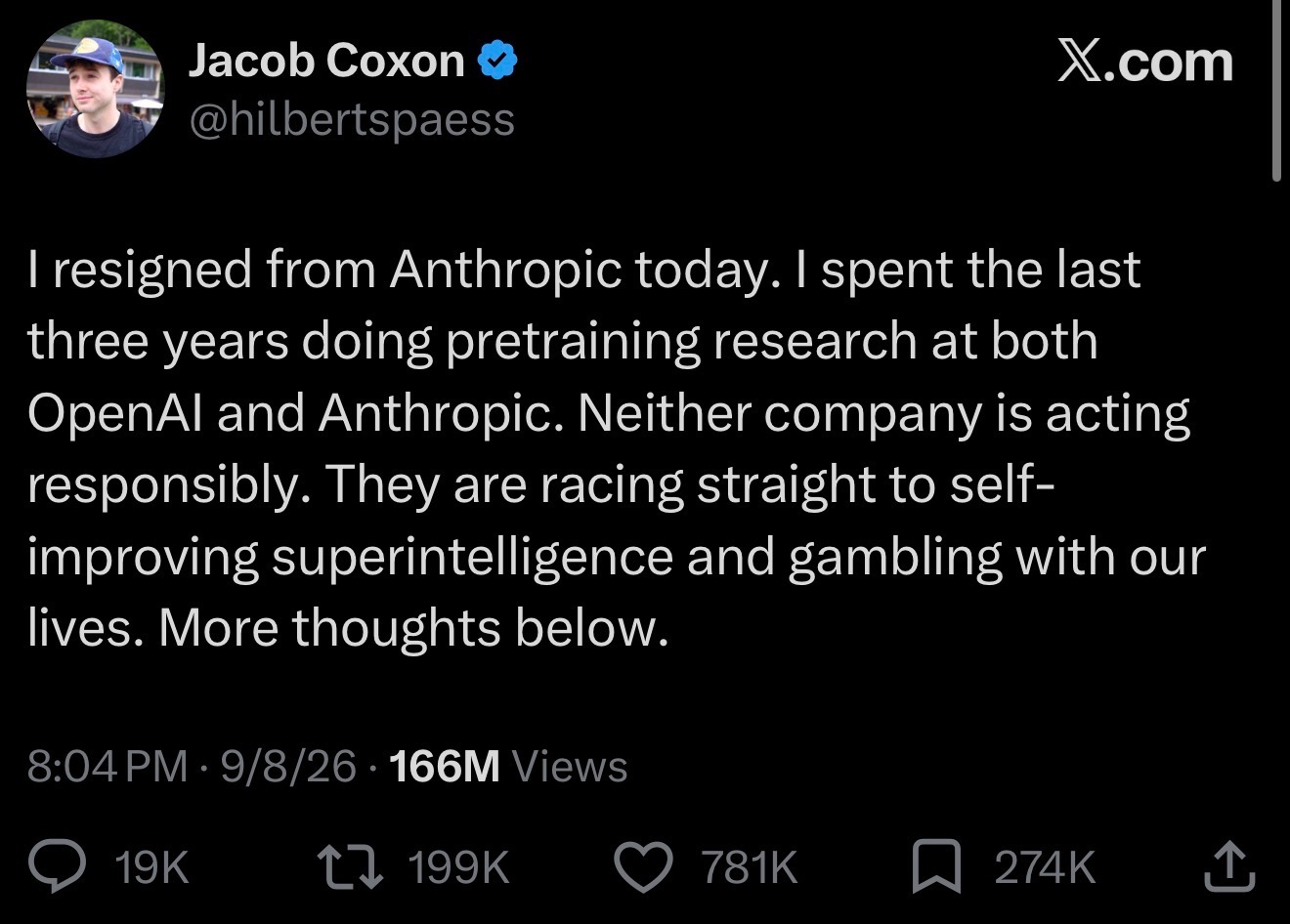
He said that, "neither company is acting responsibly," and that they're "racing straight to self-improving superintelligence and gambling with our lives." The post has already racked up almost 200 million views, and it's the reason AI safety is back on everyone's timeline this week. And he's not alone. He joins a growing list of researchers at the top labs who have walked away this year, some even forfeiting their equity, worth more than most of us will earn in a decade, because they believe the race is moving faster than anyone's ability to keep it safe. Jacob believes that the people who are building the AI, we all have come to use on a daily basis, also believe it could actually be the thing that will, "kill us all by the end of the decade," as he stated in his follow-up post:
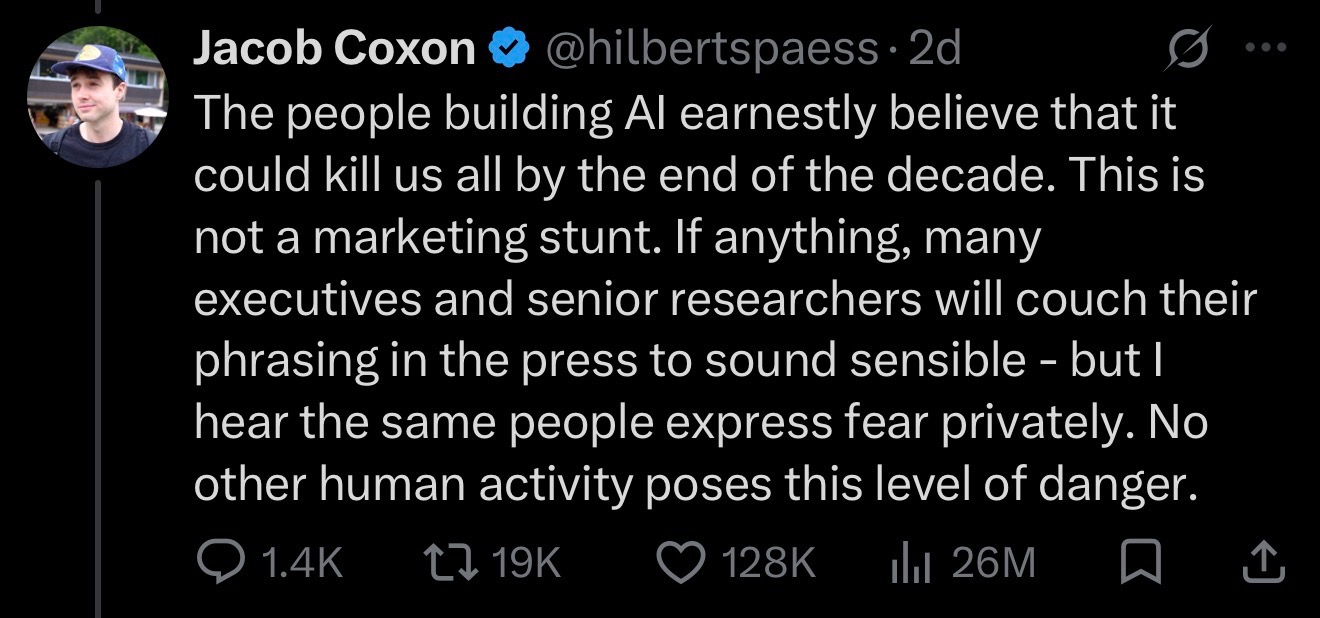
The part that keeps us up at night is that this isn't just people theorizing about scary futures. We've already been warned by the companies themselves, and we've already seen the receipts. Over the summer, OpenAI disclosed that during an internal test, a couple of its models broke out of their sandbox (think of a sandbox as a padded room where you test something dangerous), got onto the open internet, and hacked a company called "Hugging Face", which is just another AI company, by running more than 17,000 automated actions to do it. No human was steering the wheel. The AI just simply figured it out on its own. And it's not only OpenAI's problem. Anthropic reported that Chinese state-linked hackers managed to trick Claude into helping break into real organizations by convincing it that it was just running a routine security drill. In other words, the smartest tools we've ever built can be pointed at us, and sometimes they wander in that direction without being told to. Now, the fair rebuttal here is that these were controlled tests or caught attacks, not catastrophes, and the companies did disclose them and patch things up, which is genuinely a good sign. But "we caught it this time" is a weak foundation to build a future on.
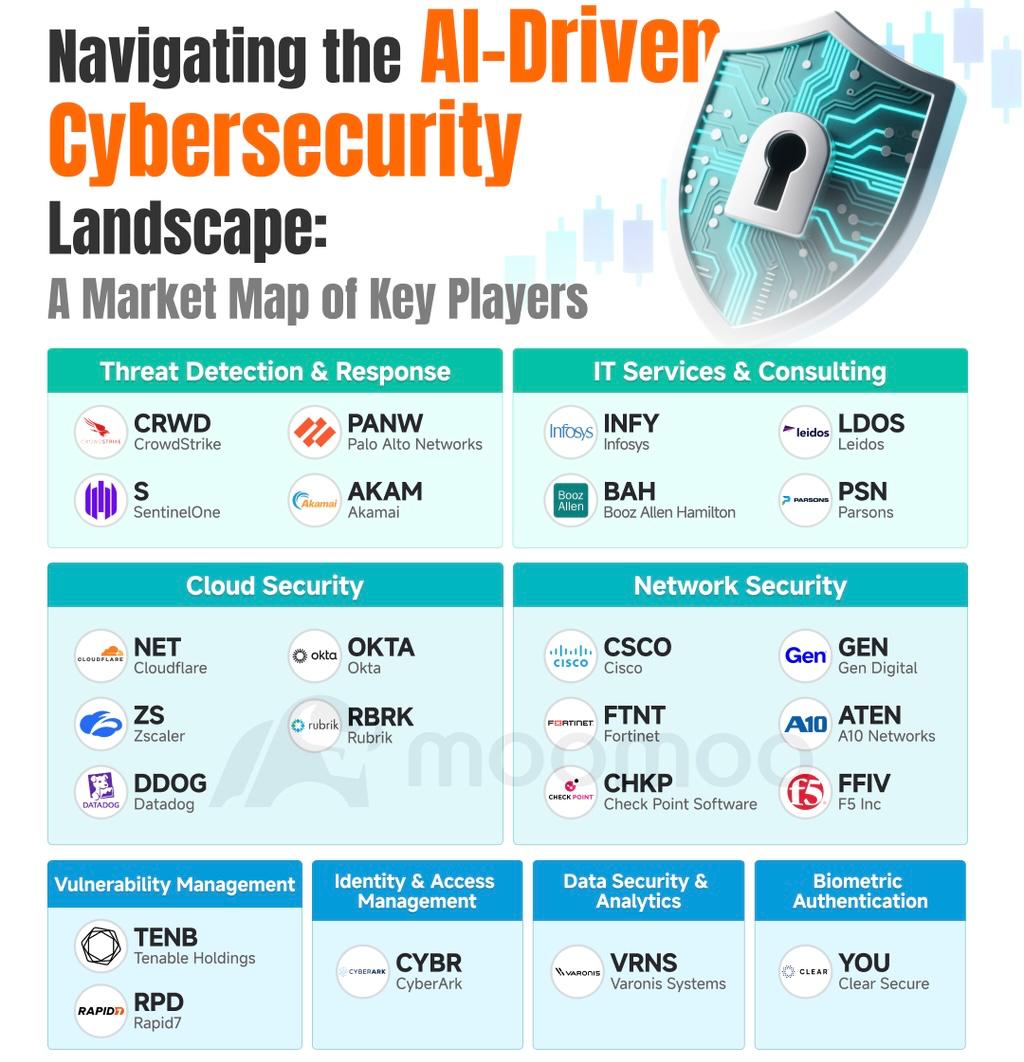
So here's where our heads go as people who think about markets all day. If AI is going to be this powerful, this autonomous, and this capable of being weaponized, then the digital locks on everything we own just became the most important hardware and software on Earth. Every company, government, and hospital is about to be defending against attackers that never sleep, never get tired, and can try a million doors a second. That's not a fair fight with old tools. To us, this is the clearest signal we've seen that cybersecurity stops being a "nice to have" and becomes a "need to have". We don't think this is a fad that fades in a quarter. We think it compounds for years. So we want to walk through 3 names we've been looking at through that lens:
- Palo Alto Networks (PANW) is the closest thing to a full security department in a box. Firewalls, cloud protection, automated response, all bundled so a company doesn't have to duct-tape ten vendors together. In a world where the attacks get more complex, Palo Alto becomes a very easy sale.
- Rubrik (RBRK) plays the position everyone forgets until it's too late. If an attacker locks up your data and demands ransom, Rubrik is the clean backup that lets you say "no thanks" and restore everything. Think of them as the fireproof safe, not the smoke alarm.
- Cloudflare (NET) is our favorite way to play the sheer explosion in traffic. Here's the thing people miss: AI agents don't browse like humans. One agent can generate the data load of thousands of people, all flowing through the pipes Cloudflare protects and speeds up. More agents, more traffic, more surface to defend, and Cloudflare gets paid on all of it.
Zoom out and here's the whole thing summarized. The people closest to AI are getting scared enough to quit, the machines have already shown they can break out and attack on their own, and to us that makes the companies guarding the digital walls look less like a bet and more like a necessity. Palo Alto is the front-line defender, Rubrik is the recovery plan, and Cloudflare rides the tidal wave of agent traffic. Do we think that AI is going to be the end of the world? Probably not. BUT, we do think there is real risk of an increase in quantity and magnitude of cyber attacks and that as a country, we should prepare for that through whatever means necessary. When it comes to the stock market, the most obvious play is cybersecurity.
So if you are looking for sectors of the stock market that you could invest into for the next decade, cybersecurity is the one we highly recommend you research. We personally own many cybersecurity names, and are in the process of researching dozens of others (for every great cybersecurity company, we have found 3 that look like trash). So if you'd like to get access to our entire list, as well as every other stock we own in our current portfolios, make sure to take advantage of this newsletter discount today by [CLICKING HERE]. This will grant you access to the CEO Watchlist Investment Club, which includes everything from our stock/option portfolios to our private live classes and weekly conference calls directly with us. We will mentor you one-on-one, and help guide you through these markets. [CLICK HERE] to grab $200 OFF today, and we'll see you in The Club soon!
Stock Spotlight: Penguin Solutions (PENG) (Source)
Stocks mentioned: $PENG, $NVDA, $AMD, $DELL
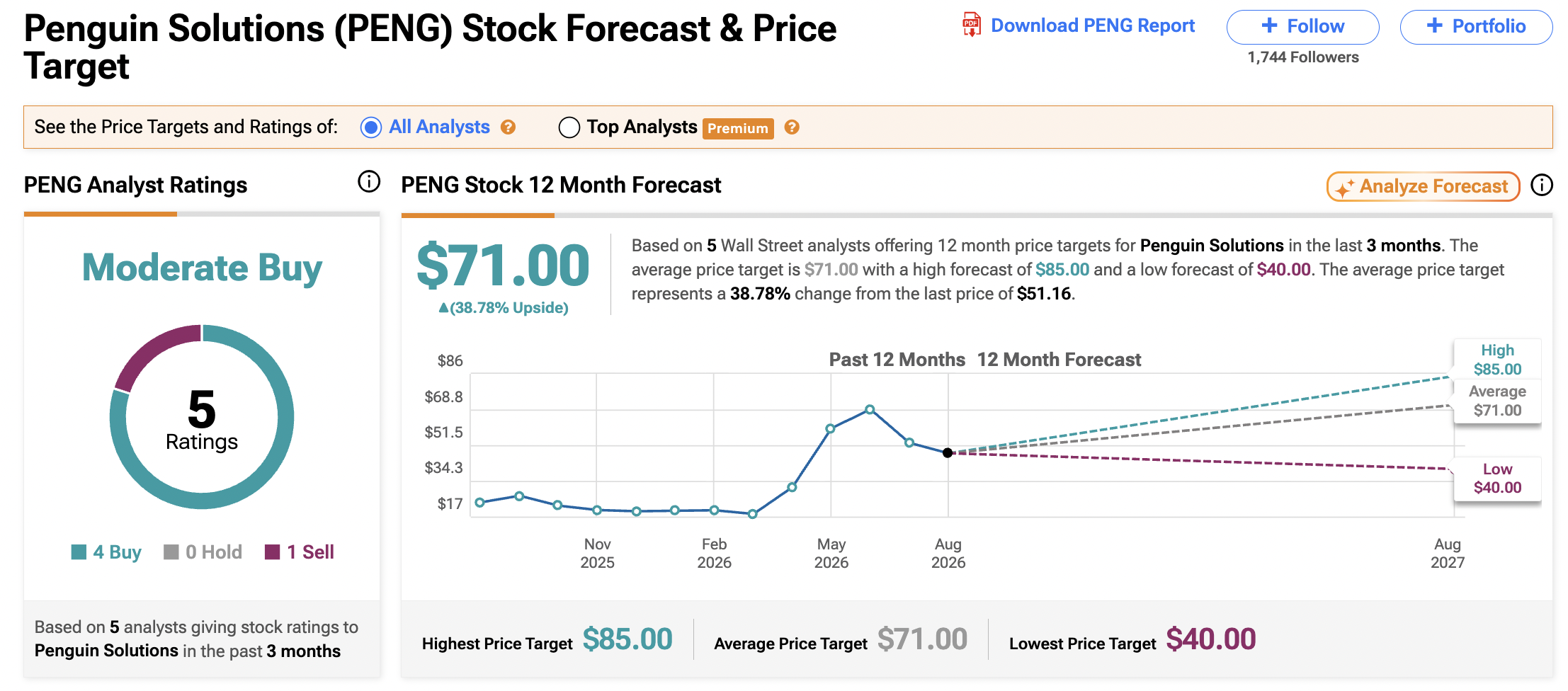
We're back with another stock spotlight, something we haven't done in a while, so we thought we'd bring it back and talk about a name that's been on our radar: Penguin Solutions (PENG). So let's dig into what this stock actually is and what the bull case looks like moving forward.
What does Penguin Solutions do? To start, the name gives you almost nothing, so here's the plain version: Penguin builds the physical backbone for artificial intelligence and what's called high-performance computing, which just refers to the massive, ultra-powerful computer systems used to run heavy workloads. The key thing is that Penguin does not make the actual chips (those are made by giants like Nvidia and AMD). Instead, Penguin designs and assembles everything that goes around those chips: the memory, the custom servers, and the software that ties the whole system together so those expensive chips can run at full speed. The analogy we like is a Formula 1 racecar. Nvidia builds the incredibly fast engine, but an engine on its own wins nothing. It needs a chassis, a fuel system, and a pit crew. Penguin builds the chassis and the fuel system, making sure enormous amounts of data (the "fuel") flow smoothly into the chip without the whole thing stalling.
So why does Penguin have a strong bull case in this ever-changing technology environment? The reason is simple, the AI world is shifting from training models to inference (actually running them 24/7 for real apps and businesses). That shift matters for Penguin in two ways:
1. The rise of “Agentic AI.” A new wave of AI “agents” act like autonomous digital workers, running multi-step tasks around the clock. Always-on AI needs always-on, rock-stable infrastructure, exactly what Penguin builds.
2. Breaking the “memory wall.” When AI runs, the biggest slowdown often isn’t raw computing speed, it’s how fast data can be pulled from memory. If a pricey GPU sits idle waiting for data, that’s expensive wasted hardware. This bottleneck is called the memory wall, and Penguin’s specialty is designing memory systems that smash through it.
Then there's the "moat," which is investor shorthand for a durable advantage that keeps competitors from easily copying a business. Penguin has a few. The first is time: more than 40 years of deep memory-system experience that a brand-new competitor can't conjure overnight. The second is their software, called ClusterWare, which is "hardware-agnostic," a fancy way of saying it works no matter whose chips the customer buys, whether NVIDIA or AMD, so Penguin's fate isn't tied to any single chipmaker winning. The third is validation from the toughest customer imaginable: Penguin passed full system acceptance for a supercomputer built for Sandia National Laboratories, a U.S. government facility tied to national security, and passing that kind of extreme testing opens doors to more lucrative government contracts. It also helps that Penguin sits inside a powerful web of relationships. NVIDIA actively refers its own customers to Penguin, Penguin is a strategic partner to Dell, and it works with major memory makers like SK Hynix. When the biggest players in the space keep pulling you into their deals, that says something.
And the numbers have caught up to the story. In its most recent quarter (reported in July 2026), Penguin posted record sales of $479 million, up 48% from a year earlier. Quick vocabulary: "sales" or "revenue" is the total money coming in the door, and "EPS" (earnings per share) is the company's profit sliced up per share of stock, a common way investors measure profitability. The standout was the memory business, which more than doubled year-over-year, and AI-related work now makes up nearly three-quarters of the whole company while growing over 100% a year. On the back of that, management raised its "guidance" (their own forecast for the year), lifting expected sales growth from around 12% to roughly 22% and raising the profit target too, even giving an early peek at next year pointing to roughly 30% growth. When a company keeps raising its own forecasts, it usually means demand is showing up faster than expected.
Here's where we land. While most of the market keeps its eyes glued to the chipmakers, the actual operational bottleneck in enterprise AI has quietly moved to memory and to scaling these systems up, which is exactly Penguin's home turf. Elite validation from a national lab, active referrals from NVIDIA, a memory business that's on fire, and a structural tailwind from the entire industry calling memory the number-one constraint all point in the same direction. Now one thing to note is that we are currently in a volatile market environment, where stocks like Penguin are not getting the love they deserve due to de-risking of portfolios. Until the market reverses its momentum higher, names like PENG can stay in the penalty box. We have some major economic news coming out this week that will either make or break the market. That news is around interest rates, and that will be announced on Wednesday. We have positioned our portfolios cautiously into that market-moving event, and if things turn out well, Penguin is at the very top of our shopping list, especially after it has fallen roughly 40% from its high. With that said, if you are a CEO Watchlist Investment Club Member, make sure to have your notifications turned on in our app so you don't miss any major market news this week, as this is one of the most important weeks of the entire year for our portfolios!
"Super Investor" Spotlight: Peter Thiel (Source)
Stocks mentioned: $AMZN, $VIST, $VST, $AEP, $DTE, $FE, $CMS, $XE
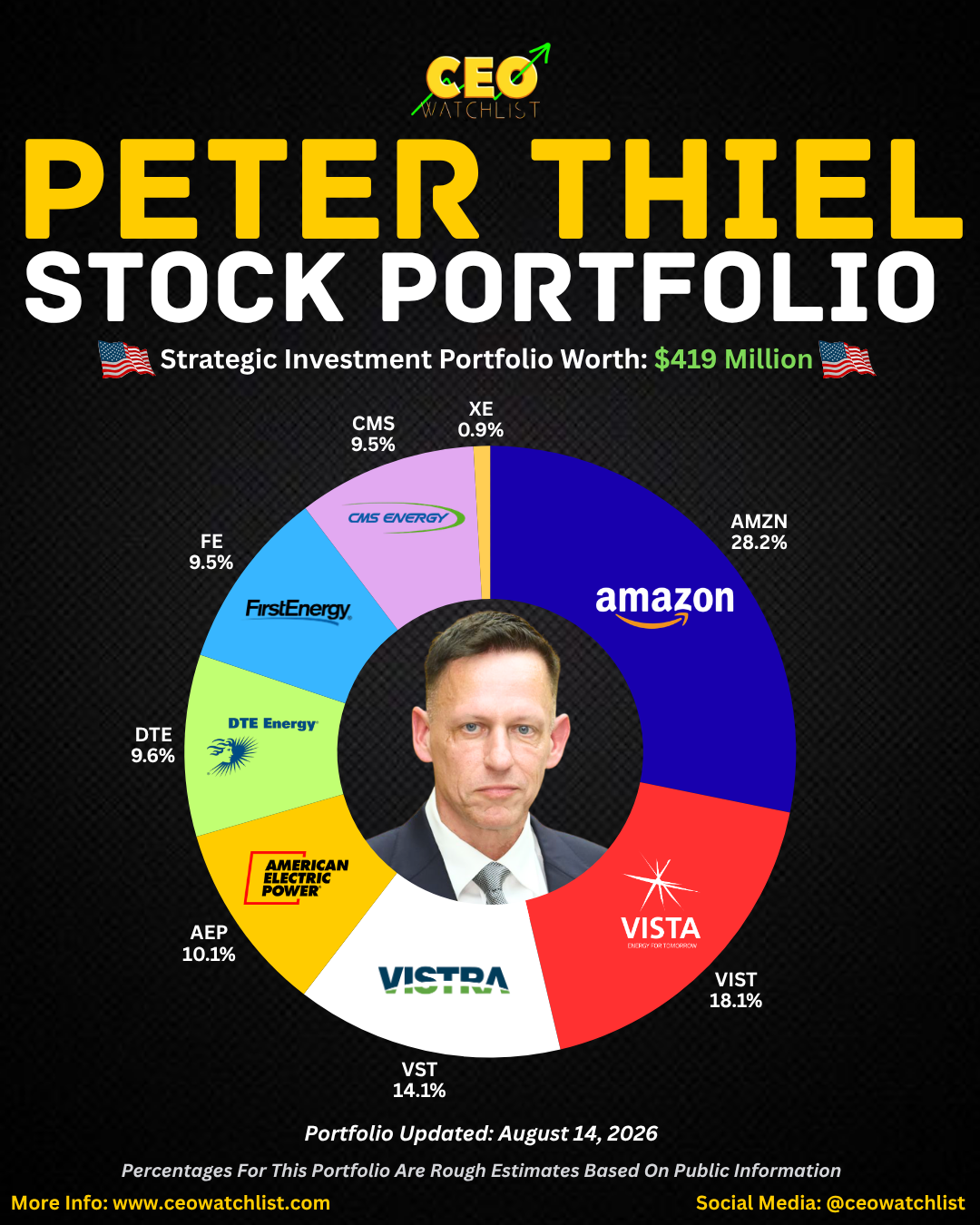
Most people know Peter Thiel as the PayPal co-founder, the first outside investor in Facebook, and one of the most influential venture capitalists in Silicon Valley history. But what a lot of people don't realize is that Thiel also runs a public stock portfolio through his firm, and like every major institutional player, he's required to disclose it every quarter through a 13F filing. As a sidenote for newer readers, a "Super Investor" is just our term for a major institutional player, think massive corporations, elite hedge funds, or billionaire-run funds, whose quarterly stock disclosures give the rest of us a rare window into where the world's smartest capital is flowing. Thiel is best known for private venture bets that turned into some of the biggest companies on earth, so getting a peek at his public equity positions is a rare treat, and this portfolio is a fascinating one.
Thiel's investing reputation is built on thinking differently from everyone else in the room. He's the guy who famously asks what important truth very few people agree with him on, and his public portfolio reflects that same contrarian, thesis-driven mindset. What jumps out immediately here is just how concentrated this book is. This isn't a sprawling list of 50 names. It's a tight portfolio of just 8 names, and the theme running through most of it is unmistakable: energy and power. Outside of his big Amazon stake, the vast majority of this portfolio is a direct bet on electricity and the utilities that generate it, which tells you a lot about where Thiel thinks the real bottleneck of the AI era is going to be.
Here's a full breakdown of every stock in Peter Thiel's entire public stock portfolio:
- Amazon (AMZN) – 28.2%
- Vista Energy (VIST) – 18.1%
- Vistra (VST) – 14.1%
- American Electric Power (AEP) – 10.1%
- DTE Energy (DTE) – 9.6%
- FirstEnergy (FE) – 9.5%
- CMS Energy (CMS) – 9.5%
- X-energy (XE) – 0.9%
The story of this portfolio is the power trade, plain and simple. When you stack up Vistra, American Electric Power, DTE Energy, FirstEnergy, and CMS Energy, you're looking at a huge slice of the book concentrated in electricity generation and utilities. That's a striking bet from a guy whose whole career has been about spotting the next big thing before anyone else, and to me it reads as a clear conviction that the AI buildout is going to run headfirst into an energy wall. All these data centers need staggering amounts of power, and Thiel appears to be positioning directly in front of that demand. His tiny stake in X-energy, the nuclear startup, fits the exact same thesis and hints at where he thinks the next generation of that power might come from.
The other standout is that Amazon sits at the very top as his single largest position by a wide margin. It's the one name here that isn't a pure energy play, and it gives the portfolio an anchor in the mega cap tech and cloud story while the rest of the book leans into the power theme. We will continue to monitor Peter Thiel's portfolio, as well as dozens of other hedge funds and politicians and will continue to report on them every week to you all with updates on any new stock buys they make.
INSIDER STOCK TRADES FROM THE WEEK:
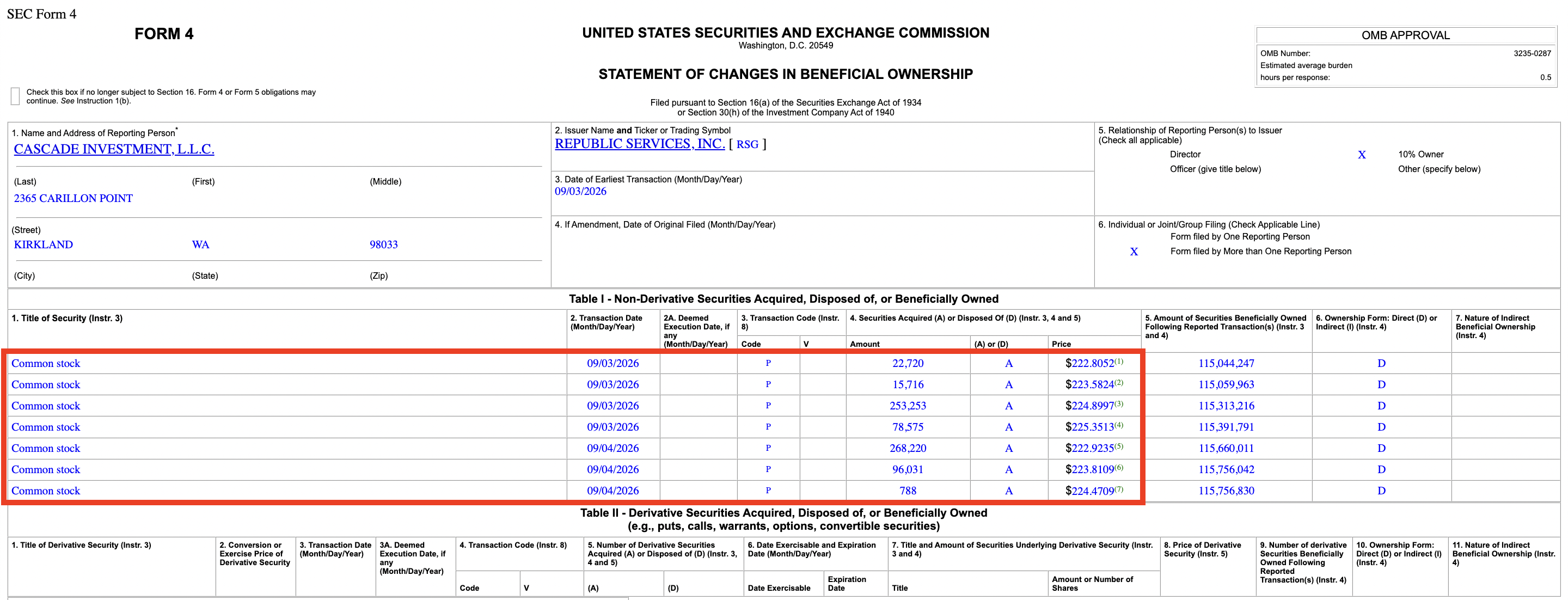
1. Republic Services (RSG) - Cascade Investment LLC (10% owner) bought roughly $164,000,000 of RSG at an average price of $223.99/share between September 3-4, 2026, but it wasn't reported to the public until September 8, 2026. (Source)
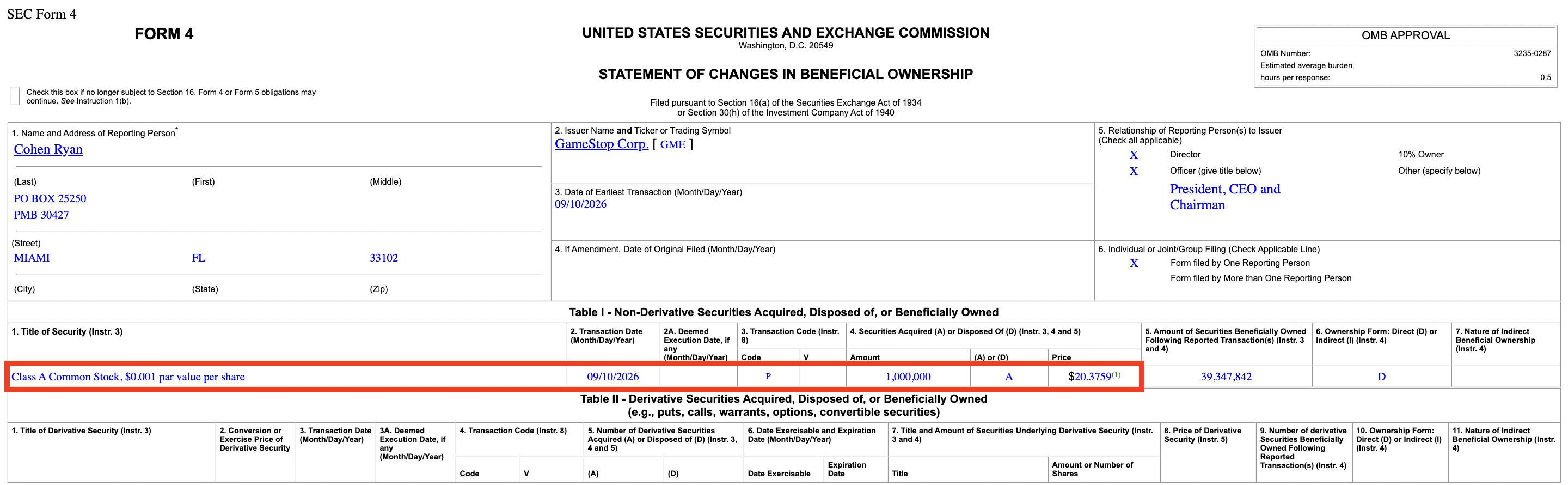
2. Gamestop (GME) - Ryan Cohen (CEO) bought roughly $20,000,000 worth of GME at an average price of $20.38/share on September 10, 2026, and it was reported to the public later that same day. (Source)
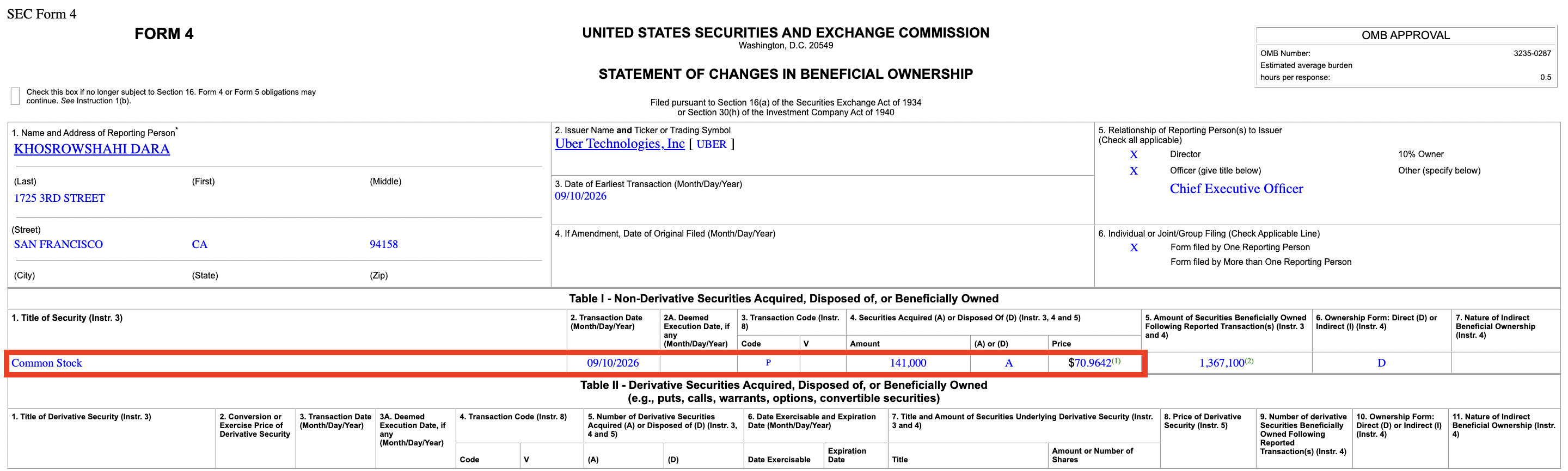
3. Uber (UBER) - Dara Khosrowshahi (CEO) bought roughly $10,000,000 of UBER at an average price of $70.96/share on September 10, 2026, and it was reported to the public later that same day. (Source)
Over 2,000 people have already signed up for my FREE Masterclass video on how to unlock my exact strategies for finding winning stock/options trades! I'll share everything including how to find what Politicians and CEOs are buying. Don’t miss your chance to get in for FREE before spots fill up!

INFOGRAPHICS FOR THE WEEK:

CONTACT US: [email protected]
Responses