

TOP NEWS AFFECTING THE STOCK MARKET THIS WEEK:
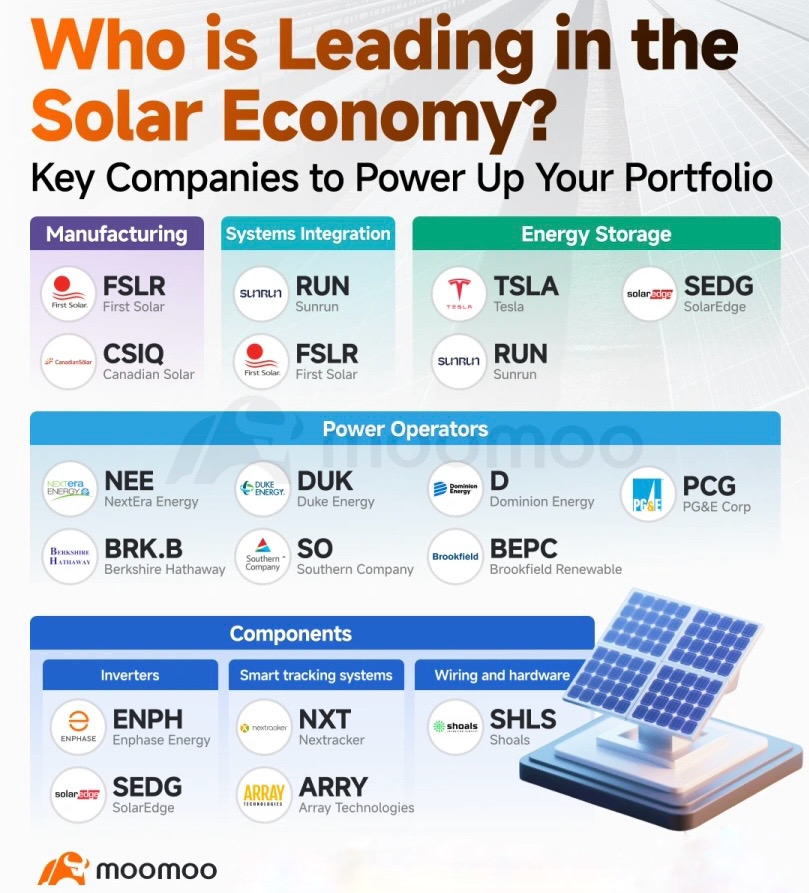
Trump Is Boosting Up a New Stock Sector: Here Are the Top 3 Stocks That We Are Watching ... (Source)
Stocks mentioned: $GLW, $FSLR, $TE
Last Thursday, President Trump signed an executive order that put a 15% tariff and a set of "minimum import prices" on polysilicon and everything made from it. If that word means nothing to you, you are not alone, and that is exactly why we think this one matters. Polysilicon is ultra purified silicon, and it sits at the very front of two supply chains that run the modern economy. Melt it, grow it into a crystal, slice it into wafers, and you either end up with a semiconductor or a solar cell. Think of it like flour. You do not think about flour when you order a sandwich, but if one country controlled 90% of the world's flour, every bakery on earth would have a problem. That is roughly where we are: China dominates global polysilicon production, and the United States has exactly two plants making the stuff, Hemlock Semiconductor in Michigan (a joint venture involving Corning (GLW)) and a Wacker Chemie facility in Tennessee. The administration used Section 232 of the Trade Expansion Act of 1962, which is the national security lever, and the argument was pretty direct. Chips need it, solar needs it, AI data centers need both, and building all of that on top of a single foreign supplier is a strategic problem.
With that backdrop, we think this could be bullish in the longer term for many of the domestic solar names, so we included a list below of 3 names we are watching that we think could carry upside potential, along with how each one actually connects to the order:
- First Solar (FSLR) - The largest U.S. panel manufacturer and the odd one out technologically. It uses cadmium telluride thin film instead of crystalline silicon, meaning it does not buy Chinese polysilicon at all. So a tax on polysilicon raises competitors' costs while leaving First Solar's cost base untouched. The company runs five U.S. plants across Alabama, Louisiana, and Ohio with a sixth going up in South Carolina, and management publicly backed the order the day it dropped. One analyst framed it as putting a structural floor under module pricing.
- T1 Energy (TE) - The smaller, higher beta version of the same trade. It assembles solar panels in Texas and is putting $510 million into a domestic solar cell factory. Cells are the piece the U.S. mostly still imports, so a company actually building cell capacity here is levered directly to the policy shift, with all the execution risk that comes with being early and small.
- Corning (GLW) - This is the sneaky one. Most people know it for smartphone glass and optical fiber, but it co-owns Hemlock Semiconductor, one of only two U.S. polysilicon plants. It is one of the few public ways to touch the raw material itself rather than the finished panel.
Now the fine print, because this is where we think a lot of people are going to get tripped up. None of this takes effect until December 4, 2026. That is nearly four months of runway, and trade attorneys are already warning that the obvious response is a flood of cheap imports rushing in before the door closes. That is where volatility lives in the short-term, but longer term, we keep coming back to the pattern rather than the single order. Chips, critical minerals, robotics, drones, and now the raw feedstock underneath solar and semiconductors have all gotten some version of the same treatment: protect the domestic producer, raise the cost of the Chinese one, and pair it with an incentive program (this order authorizes Commerce to build one for polysilicon investment). Whatever you think of the politics, the direction has been consistent enough that we treat it as a planning assumption rather than a one off headline.
To recap everything that was said, Trump's new executive order (which slapped a 15% tariff plus a hard price floors on polysilicon and its downstream products), is aimed at breaking a Chinese chokehold on a material that feeds both chips and solar. Due to this order, many of the U.S. based solar stocks rallied last week, given their domestic manufacturing exposure. However, the catch investors need to pay attention to is that nothing "binds" until December 4th of this year, which sets up a probable import surge and a stretch where the narrative is bullish but the numbers have not caught up yet, so we can always get volatility in the short term. Underneath that, the policy direction toward favoring domestic producers across chips, robotics, and now solar feedstock has been steady, which is the part we actually weight in our own thinking. That is the setup as we see it, and everything above is just how we are reading it for ourselves.
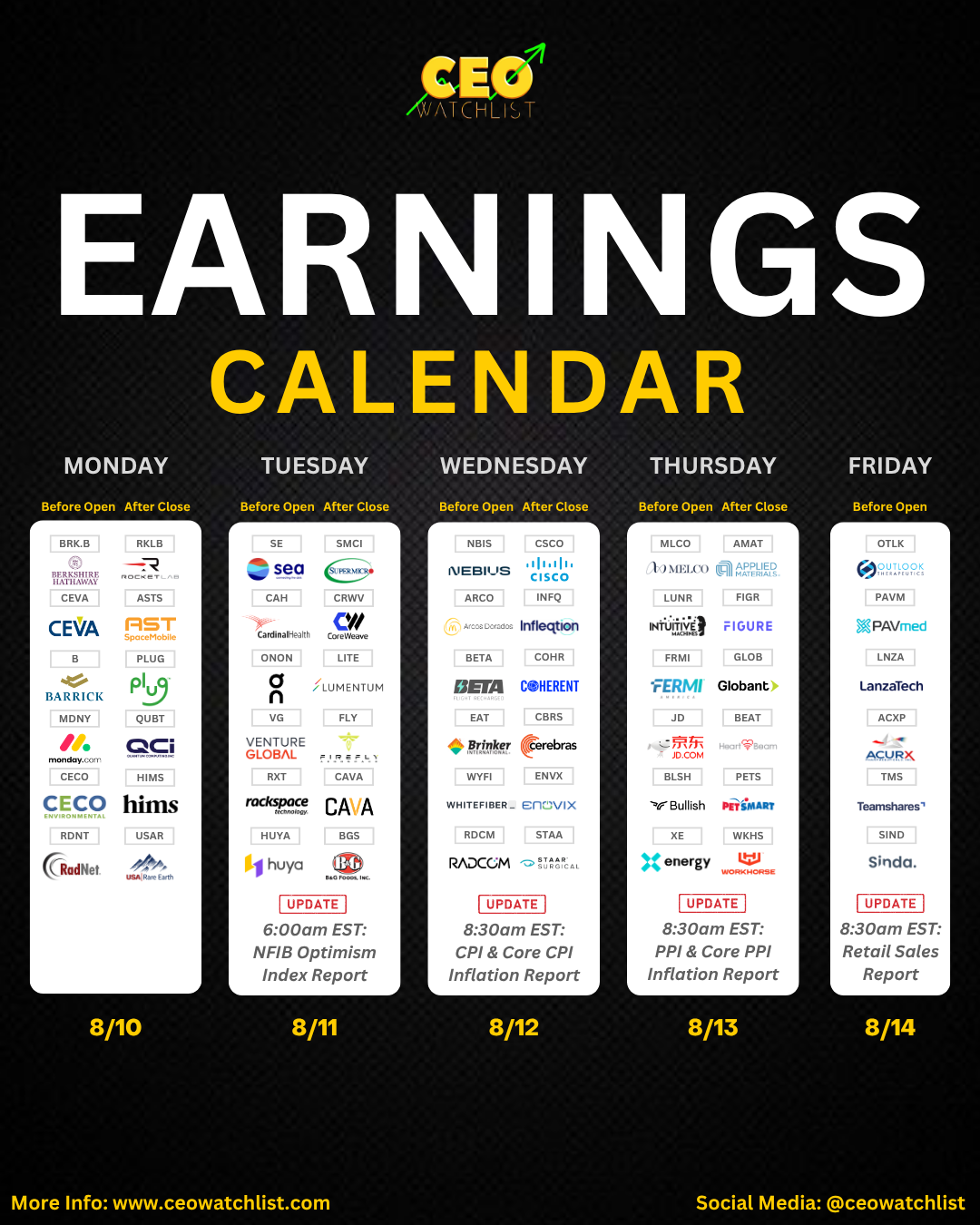
More Stocks Are Reporting Earnings... Here Are The Top 5 Stocks We Are Watching... (Source)
Stocks mentioned: $RKLB, $LITE, $NBIS, $COHR, $AMAT, $ASTS, $HIMS, $SMCI, $CRWV, $CSCO, $CBRS, $JD, $LUNR
Hope you're ready for another busy week of earnings, as there are dozens of important names reporting! For the sake of this article, we are going to focus on 5 names that we believe are important to pay attention to. Here is the list:
- Rocket Lab (RKLB) - Reports Monday, August 10, after the close. Rocket Lab is the closest thing the market has to an independent alternative to SpaceX, running small orbital launches with its Electron rocket while building the much larger Neutron rocket for bigger missions. Wall Street expects revenue of about $231.6 million, up roughly 60% year over year, and a loss of $0.06 per share, against company guidance of $225 million to $240 million. The real story sits outside the income statement. In the nine days before this report, Rocket Lab secured more than $663 million in new U.S. Space Force contracts, which gave the still-unflown Neutron rocket its first publicly confirmed national security mission with a hard 2028 deadline attached. The options market is pricing in about a 15% move in either direction, and the stock has pulled back about 19% over the past month while remaining up 8.5% year to date. We care most about Neutron timeline commentary here, because a rocket with a signed defense contract and no flight yet is the definition of execution risk.
- Lumentum (LITE) - Reports Tuesday, August 11, after the close. Here is the simplest way to think about Lumentum. Inside a data center, AI chips need to talk to each other constantly, and copper wire is too slow for that job. So the industry uses light instead, sending data through fiber optics, and Lumentum makes the lasers and optical parts that convert electrical signals into light. The company guided to revenue of $960 million to $1.01 billion with non-GAAP EPS of $2.85 to $3.05, while consensus sits at roughly $988.56 million in revenue, up about 106% year over year, and $2.99 in earnings versus 88 cents in the year-ago quarter. The upgrade cycle is the whole thesis. The industry is moving from 800G to 1.6T transceivers, and the 200G components used in 1.6T carry roughly twice the average selling price of the 100G parts used in 800G. Same box, double the price. Shares are up more than 730% over the past 52 weeks, which means the bar is somewhere in the stratosphere.
- Nebius Group (NBIS) - Reports Wednesday, August 12, before the open. Nebius is a "neocloud," meaning it buys enormous quantities of Nvidia chips and rents that computing power to companies training AI models. Think of it as a landlord who only leases to AI. Wall Street expects revenue of about $573.46 million, up more than 400% from a year earlier, with a loss of $0.67 per share. The stock has surged 161% this year and jumped 27% in a single week after signing a multi-year AI cloud agreement worth more than $1 billion with Reflection AI, and management raised its 2026 capital spending target to $20 billion to $25 billion. The company points to roughly $40 billion in contracted revenue from investment-grade counterparties, though the stock trades at more than 60 times forward sales with short interest around 21% of the public float. This is our personal favorite way to play the neocloud sector.
- Coherent (COHR) - Reports Wednesday, August 12, after the close. Coherent plays in the same photonics neighborhood as Lumentum, building the optical components and laser technology that move data around AI data centers, plus industrial and semiconductor products. Management guided to revenue of $1.91 billion to $2.05 billion with an adjusted EPS midpoint of $1.62, while analysts are modeling roughly $1.98 billion in revenue and $1.43 in EPS, up about 93% year over year. Two things are worth knowing before the print. Coherent announced a $2.0 billion investment and multi-year collaboration with Nvidia, tying its optics roadmap directly to the biggest AI systems customer in the world. At the same time, weaker guidance from peer Corning has raised questions about whether optical demand across the supply chain could cool faster than expected. And history says a beat alone is not enough. Coherent beat on revenue and earnings last quarter and the stock still fell 7.4% the next day.
- Applied Materials (AMAT) reports Thursday, August 13, after the close. Applied does not make chips. It makes the machines that make the chips, which puts it at one of the narrowest chokepoints in the entire supply chain. It is the largest wafer fab equipment vendor by revenue, selling deposition, etch, and inspection tools to TSMC, Samsung, SK hynix, Micron, and Intel. Guidance calls for revenue of $8.95 billion and non-GAAP EPS of $3.36, up nearly 36% year over year, and management raised its calendar 2026 semiconductor equipment growth outlook to more than 30%. Shares have more than doubled year to date but sit about 28% below their record high of $739.67 set on June 30. The day-of history here is genuinely strange. The average reaction across the last five beats is negative 2.18%, including a 14% drop after one quarter, and China still contributes 27% of revenue. A beat is widely expected. The October quarter guide and any commentary on China licensing is what is actually important.
The week also carries a macro layer that we think matters as much as any single print. The July CPI report lands Wednesday, August 12, at 8:30 a.m. Eastern, with PPI following Thursday morning and retail sales Friday, plus the NFIB small business optimism index Tuesday. This arrives at a moment when the inflation conversation has genuinely shifted. Headline CPI was running at 3.5% over the prior twelve months in the most recent report. J.P. Morgan Global Research has noted that hot inflation readings could put a rate hike on the table as early as September (REALLY BAD FOR STOCKS), while softer numbers could delay any action (REALLY GOOD FOR STOCKS). Important to note is that Nebius and Coherent both report on the exact day CPI prints, which means their numbers hit a market that may already be in a completely different mood by the closing bell. Beyond our five, the calendar is deep: AST SpaceMobile (ASTS) and Hims & Hers Health (HIMS) on Monday, Super Micro (SMCI) and Coreweave (CRWV) on Tuesday, Cisco (CSCO) and Cerebras (CRBS) on Wednesday, and JD (JD) and Intuitive Machines (LUNR) on Thursday.
Zooming out, here is what we are watching for as this week unfolds. Rocket Labs will tell us whether contracted defense revenue can carry a company through an unproven rocket program. Lumentum and Coherent together give us the cleanest read available on whether optical demand is accelerating or quietly rolling over. Nebius tells us whether the neocloud model can fund a $20 billion buildout without spooking anyone. Applied Materials tells us whether the equipment cycle has legs into 2027. Five different answers to the same underlying question, all inside four trading days, with an inflation print sitting right in the middle of it. We will be covering all of it live in the CEO Watchlist Investment Club as it comes out.
"Super Investor" Spotlight: Amazon (Source)
Stocks mentioned: $AMZN, $RIVN, $XE, $BETA, $ALAB, $MRVL, $ALGT
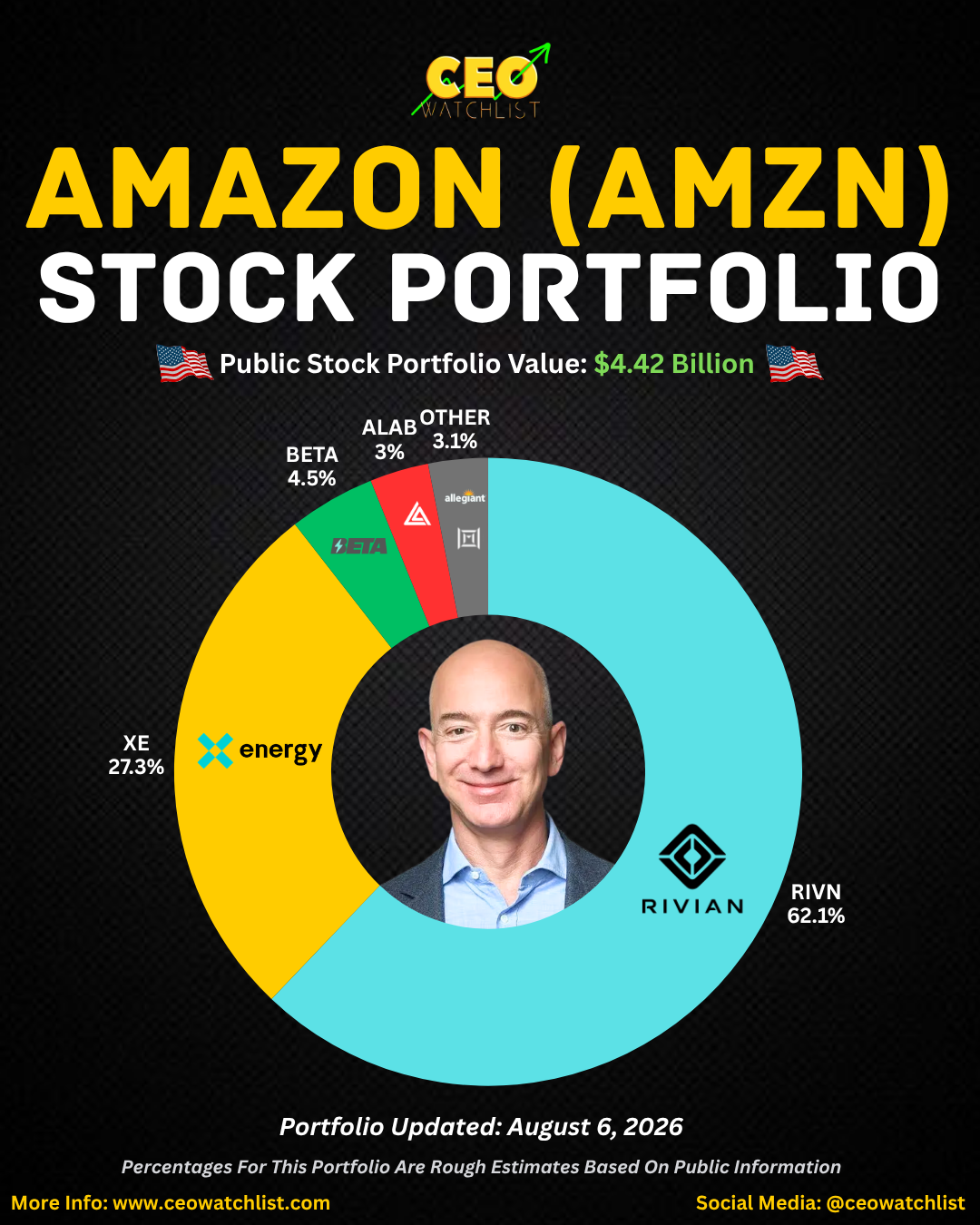
Most people know Amazon (AMZN) as the company that delivers your packages and runs half the internet's cloud infrastructure. But what most people don't know is that Amazon also quietly manages a public stock portfolio worth $4.4 billion, and they're required to disclose it every quarter through something called a 13F filing. As a sidenote for newer readers, a "Super Investor" is just our term for a major institutional player, think massive corporations, elite hedge funds, or billionaire-run funds, whose quarterly stock disclosures give the rest of us a rare window into where the world's smartest capital is flowing. Amazon isn't a hedge fund, but with $4.4 billion in disclosed public equity and some of the most strategically calculated bets on the planet, it absolutely belongs in the conversation.
Amazon's investing reputation is rooted in something most people underestimate: it doesn't just invest in companies for financial returns alone. When Amazon puts money into something, it's almost always tied to a core operational need, whether that's logistics, energy, or AI infrastructure. This is a company that generated $638 billion in revenue in 2025, runs the dominant cloud platform on earth (AWS), and is spending aggressively to win the AI infrastructure wars. Their public portfolio is a direct reflection of that strategic vision. It's not random stock picking. Every position connects back to Amazon's own business needs, which is exactly what makes their 13F so compelling to track.
Here's a full breakdown of every stock in Amazon's public stock portfolio:
- Rivian Automotive (RIVN) – 62.1%
- X-energy (XE) – 27.3%
- Beta Technologies (BETA) – 4.5%
- Astera Labs (ALAB) – 3.0%
- Marvell Technology (MRVL) – 2.7%
- Allegiant Travel (ALGT) – 0.4%
The major move this quarter for Amazon was a massive increase in their stake in X-energy, making it their second largest position in their portfolio. Amazon led X-energy's $500 million Series C-1 round and has pledged to purchase up to 5 gigawatts of nuclear power from X-energy by 2039, a commitment that functions as both a revenue anchor and a validation signal for the underlying technology. Then in April, X-energy raised $1.02 billion in its Nasdaq IPO, pricing its upsized offering at $23 per share, 21% above the top of its marketed range, with oversubscription reflecting investor conviction in the nuclear renaissance narrative. Amazon converted that pre-IPO stake into a now $1.2 billion public position.
Besides the heavy buying in XE, Amazon pretty much just maintained their other positions, deciding not to sell them despite the volatility in the markets. Our personal favorite name that they own currently is Marvell. We think that name has the most upside potential out of all the stocks they own. We will continue to monitor Amazon's portfolio, as well as dozens of other hedge funds and politicians and will continue to report on them every week to you all with updates on any new stock buys they make.
INSIDER STOCK TRADES FROM THE WEEK:
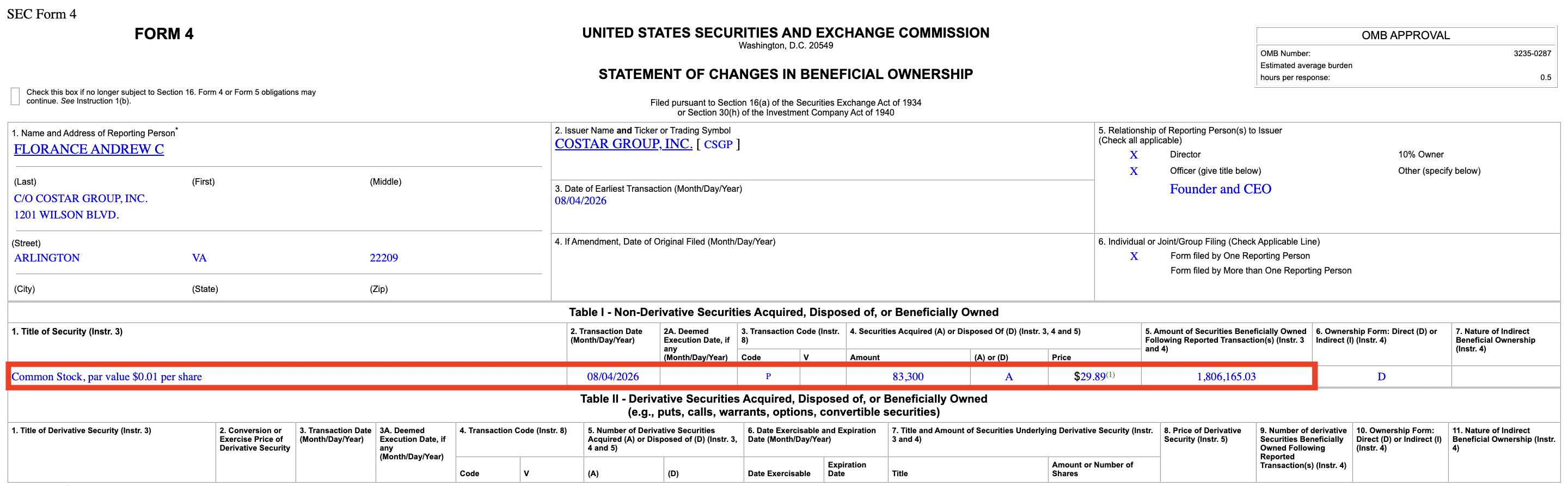
1. Costar Group (CSGP) - Andrew Florance (Founder & CEO) bought roughly $2,500,000 of CSGP at an average price of $29.89/share on August 4, 2026, but it wasn't reported to the public until August 5, 2026. (Source)
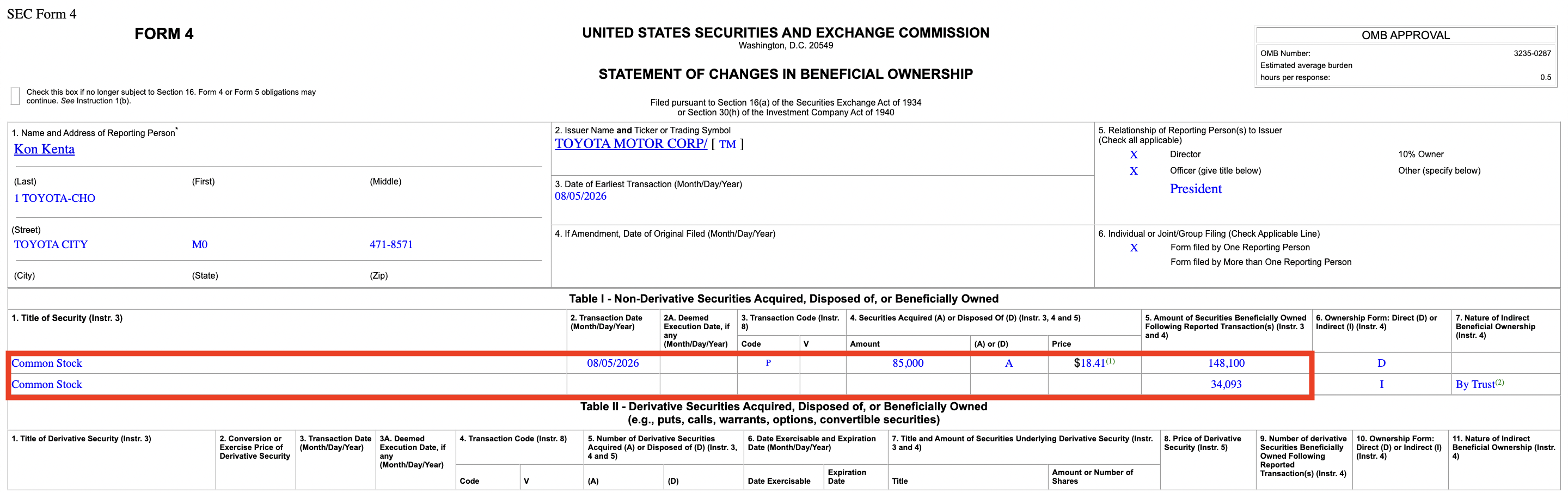
2. Toyota (TM) - Kenta Kon (President) bought roughly $1,500,000 worth of TM at an average price of $18.41/share on August 5, 2026, but it wasn't reported to the public until August 6, 2026. (Source)
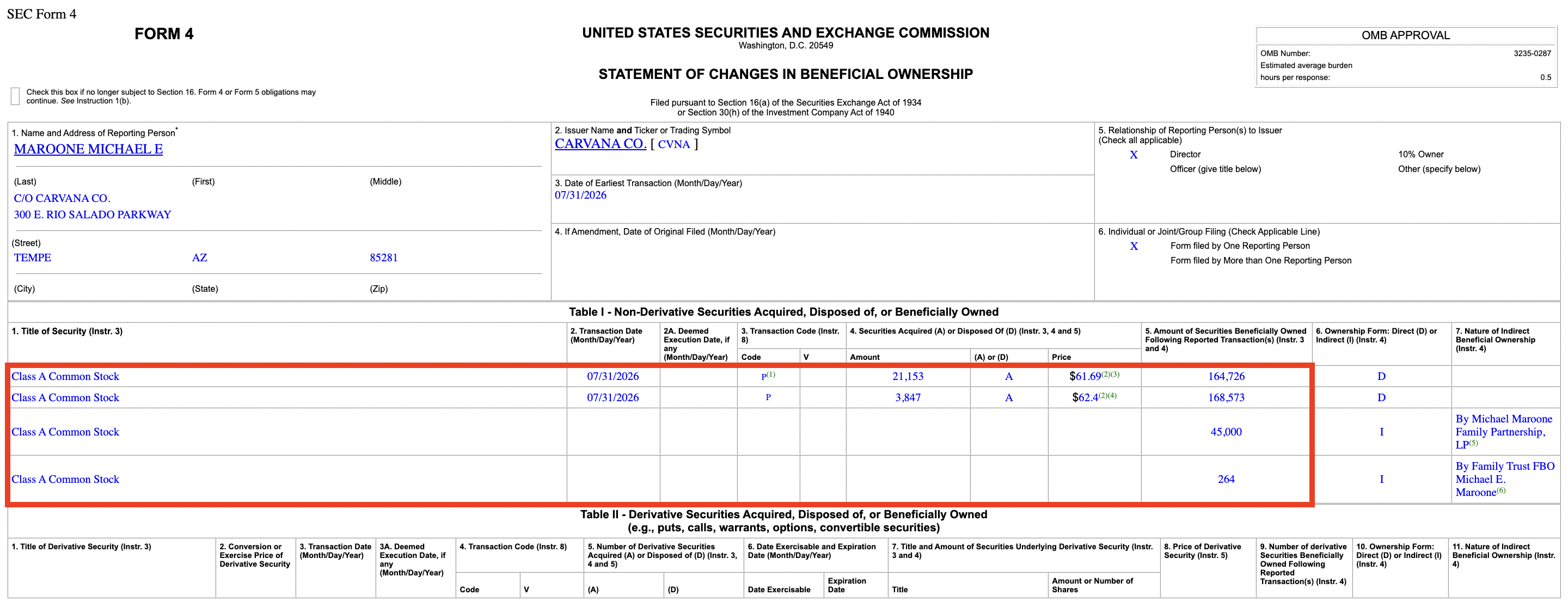
3. Carvana (CVNA) - Michael Maroone (CVNA) bought roughly $1,500,000 of CVNA at an average price of $61.80/share on July 31, 2026, but it wasn't reported to the public until August 4, 2026. (Source)
Over 2,000 people have already signed up for my FREE Masterclass video on how to unlock my exact strategies for finding winning stock/options trades! I'll share everything including how to find what Politicians and CEOs are buying. Don’t miss your chance to get in for FREE before spots fill up!

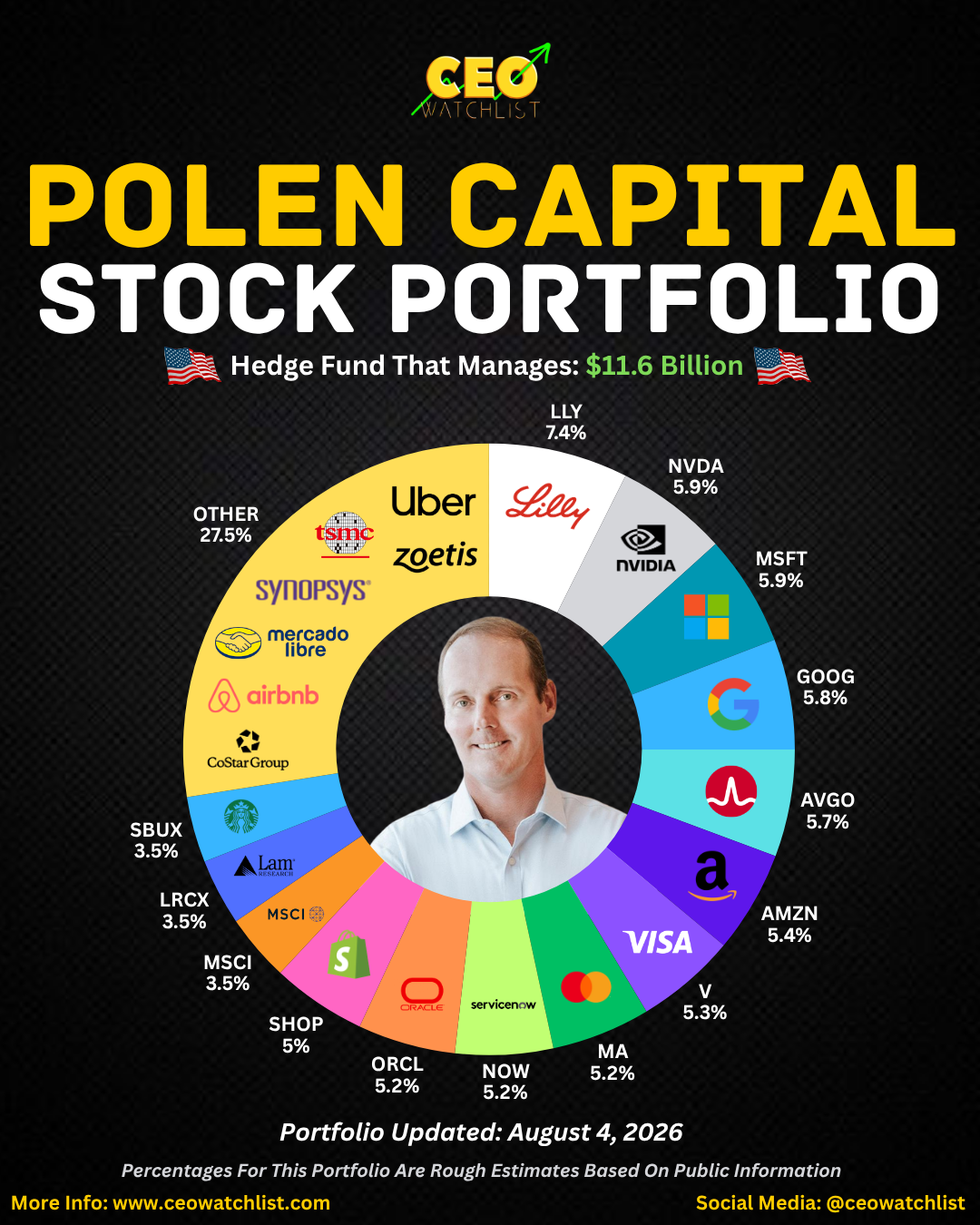
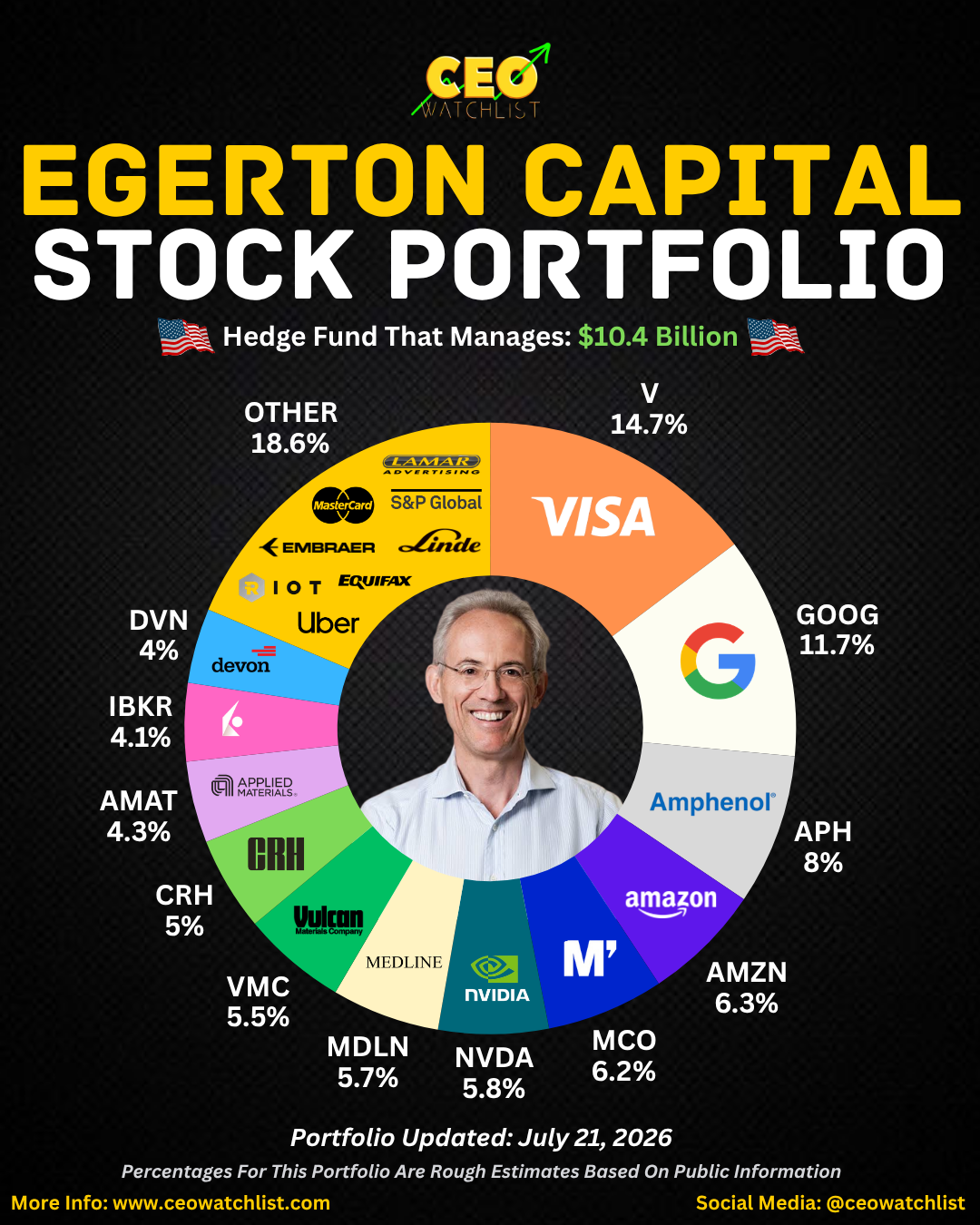
INFOGRAPHICS FOR THE WEEK:

CONTACT US: [email protected]
Responses