
TOP NEWS AFFECTING THE STOCK MARKET THIS WEEK:
Old Money vs. New Money: How This 24 Year Old Billionaire Went From Hero To Zero In Under A Month! (Source)
Stocks mentioned: $NBIS, $SNDK, $BE, $CRWV, $INTC, $GOOG, $MU, $META, $NVDA
There's a 24-year-old who graduated Columbia valedictorian at 19, wrote what became one of the most influential AI investment theses in history, and built a hedge fund from $225 million to $45 billion in under two years. His name is Leopold Aschenbrenner, and by most measures, he was the most talked-about investor on Wall Street heading into the summer of 2026. His fund, Situational Awareness, had printed over 1,000% in gains since inception, becoming one of the fastest-growing hedge funds ever recorded. The thesis was simple and loud: AI was going to consume the physical world, and the companies building the pipes, memory chips, and power infrastructure to support it were being drastically underpriced. Aschenbrenner structured the entire fund around his conviction that more capable AI systems would drive enormous demand for semiconductors, memory, data centers, and power infrastructure, a thesis he developed in a widely circulated 2024 essay written after his departure from OpenAI. On the other side of this story sits Ken Griffin's Citadel, the Chicago-based multi-strategy giant that manages over $60 billion and is widely considered one of the most sophisticated and powerful trading operations on the planet. These are two completely different animals: one, a young outsider who built his reputation in Silicon Valley writing prophetic essays; the other, a decades-old institution with tentacles in every corner of the financial system. When these two names collided this past month, it sent shockwaves through the AI trade, and it's become what some are calling the market story of the year.
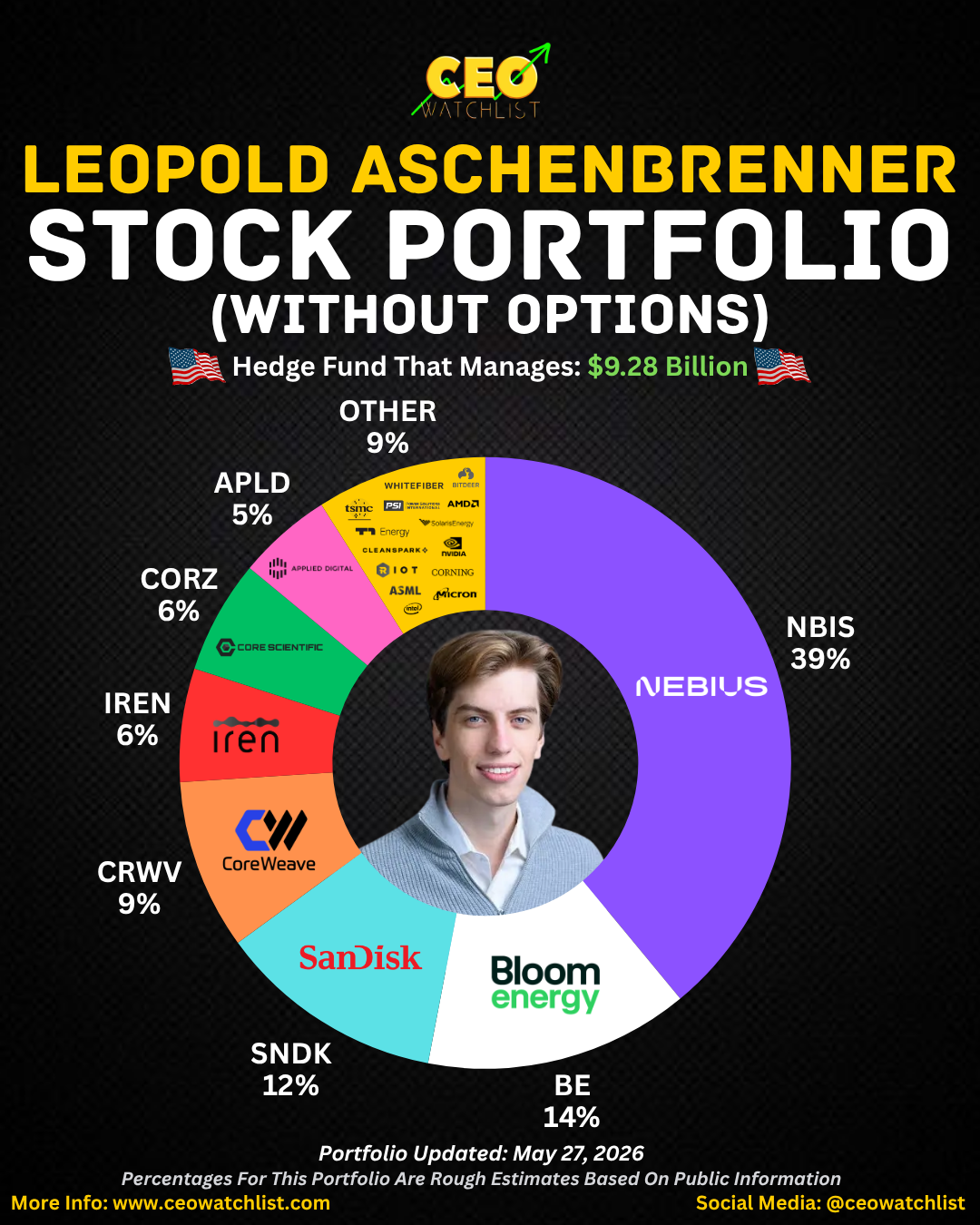
Leopold's fund's largest holdings at the end of the first quarter included Nebius (NBIS), SanDisk (SNDK), Bloom Energy (BE), and CoreWeave (CRWV), all deeply tied to the physical layer of the AI buildout. Think of it this way: if the AI boom is a city being built, Leopold wasn't betting on the architects or the tenants, he was betting on the concrete, steel, and electrical grid. That trade worked extraordinarily well until the end of July, when the AI infrastructure stocks started to crack. Intel (INTC) dropped over 40%, Bloom Energy (BE) fell over 50%, and Nebius (NBIS) also declined roughly 50% as the sector faced a broad valuation reassessment. The problem wasn't just that the stocks were falling. The problem was leverage. Situational Awareness (Leopold's fund) was running leverage of up to 400%, meaning for every $1 of real capital, the fund was controlling $4 of stock. That's like buying a house with almost no money down and a massive loan: great when the house goes up in value, absolutely catastrophic when it drops. When the AI names started sliding, Leopold's losses weren't just bad, they were mathematically overwhelming, and his prime brokers (the banks that lend money to hedge funds) came knocking for their cash back.
Here's where this story gets into real conspiracy territory, and we want to be transparent: this is speculative, not confirmed. But the timeline is hard to ignore. On July 28, Bloomberg reported that Citadel Securities was calling for a surprise Fed rate hike, a move markets hadn't priced in. A surprise rate hike is the kind of news that causes the exact stocks Leopold owned to sell off hard, because higher interest rates make future-growth stocks less valuable in the eyes of the market. On July 27, Citadel Securities issued a note warning of a surprise Fed rate hike. The next day, global markets sold off hard, wiping out Leopold's remaining buffer of collateral. Then the margin calls hit. Ken Griffin's Citadel hedge fund reached a deal to buy the stocks from the forced sale, meaning Citadel Securities (the trading arm that issued the scary rate hike note) and Citadel (the hedge fund that swooped in to buy) are technically separate entities but under the same Griffin umbrella. Market commentators called this sequence "absolutely ruthless," pointing out that Citadel appeared to know that if sentiment deteriorated enough, the fund could be forced to sell. The Fed then held rates steady, as most market participants had already expected. In other words, the hike never happened, tech stocks rebounded, and Citadel was sitting on a block of AI infrastructure stocks bought at fire-sale prices. This is old money doing what old money has always done when new money gets overextended: wait, apply pressure, and buy the dip.
The stocks that took the most damage in Leopold's book are the ones we're watching most closely for the rebound. Intel (INTC), the iconic American chip company that's been fighting a years-long turnaround battle, is now positioned as a manufacturing partner for major tech players; Google (GOOG) tapped Intel for chip manufacturing, sending the stock up 8.5% in one session as the market began re-pricing its foundry credibility. Micron (MU), the dominant American producer of high-bandwidth memory (the specific type of RAM that AI chips need to run their models), has seen analysts stay firmly bullish; Bank of America's analyst reiterated a "Buy" on Micron with a $1,550 price target, arguing that global cloud and AI infrastructure spending could reach $1.5 trillion by 2027, with 35-40% of that directed toward memory. And then there's Nebius (NBIS), the European AI cloud infrastructure company formerly known as Yandex, which secured a $27 billion deal with Meta (META) and a $2 billion investment from Nvidia (NVDA); analysts expect Nebius revenue to grow at a 242% compound annual growth rate from back in 2025 up until 2028, reaching $21.2 billion. Rounding out the picture: CoreWeave (CRWV), the GPU cloud provider that's become one of the most sought-after AI compute platforms for enterprise customers, and SanDisk (SNDK), a storage and memory player that sits at the intersection of every AI data center buildout. Chip stocks such as SanDisk and Micron rebounded over 20% and 15% respectively in the immediate aftermath of Citadel absorbing the block, which isn't a coincidence. When forced selling ends, the stocks tied to real demand tend to find their floor fast.
Here's the summary: a 25-year-old AI visionary built one of the fastest-growing hedge funds in history by making a concentrated bet on the physical infrastructure layer of the AI boom, then got wiped out not because his thesis was wrong but because 4x leverage leaves zero room for a bad month. In a July 24 investor letter, Aschenbrenner himself called the crash one of the best buying windows since early 2025, and a week later, he was forced to sell his highest conviction names at the lows. Citadel issued a rate hike scare that spooked the market at just the right moment, then stepped in to buy the exact stocks that panic had crushed. Whether that was calculated or coincidental, the result is the same: a massive transfer of AI infrastructure exposure from a highly leveraged young fund to one of the most established institutions in finance. The core thesis Leopold was running hasn't changed. AI is still being built at a historic pace, and the memory, compute, and cloud infrastructure companies at the center of that buildout still have years of structural demand ahead of them. Every core position Situational Awareness was forced out of bottomed on July 29, the day the margin calls crested, and bounced violently on July 30 once Citadel absorbed the block. Intel, Bloom Energy, Nebius, and SanDisk all look more interesting today with their prices roughly cut in half than when Leopold was up 450%. The story is intact but the price is cheaper. Sometimes the most bullish thing that can happen to a trade is getting the weak hands shaken out of it, even if those hands belonged to someone who understood the thesis better than almost anyone else on the planet.
Did Cloud Stocks Just Save The Market?! Our Thoughts and The 3 Stocks We're Watching This Week... (Source)
Stocks mentioned: $MSFT, $AMZN, $GOOG, $SPCX, $PL, $RKLB, $SNDK, $AAOI
Last week was one of the most important weeks of this entire earnings season, and if you weren't paying attention, here's what happened. Microsoft (MSFT) reported $90 billion in revenue for its fiscal Q4, up 18% year over year, and Azure, their cloud business, grew 43% and crossed $100 billion in annual revenue for the very first time in the company's history. The stock jumped nearly 9% after hours. Then the very next night, Amazon (AMZN) reported, and the numbers were just as strong. AWS, Amazon's cloud division and the part of the business that drives most of their profits, grew 37% year over year, the fastest pace in 18 quarters. Total revenue crossed $200 billion in a single quarter for the first time ever, and the stock moved over 10% in extended trading. Two of the biggest companies on the planet, back to back, both delivering results well above what Wall Street was expecting.
Here's why that matters. There's been a real debate in the market for the past year or so around whether all the money being poured into AI infrastructure was actually going to produce results. Were companies really spending on cloud and AI services, or was this just a buildout with no customers yet? That question got answered last week. Amazon (AMZN), Microsoft (MSFT), and Google (GOOG), all 3 of the major cloud platforms that have reported over the past few weeks, crushed their numbers, and their cloud businesses are growing at rates that are remarkable for companies this size. AWS is now sitting on an annualized revenue run rate of $169 billion, and it's still accelerating. The spend is paying off. The customers are there. The revenue is following.
So where do these stocks go from here? I think the bull case is still very much intact, and here's the simple way to think about it. Cloud infrastructure is essentially the real estate of the AI economy. Every company, every AI model, every application that gets built needs to run somewhere, and Amazon, Microsoft, and Google own that infrastructure. As AI demand grows, so does the need for cloud. Microsoft just guided for Azure to accelerate to 45% growth next quarter, which is actually faster than what they just reported. That's not a company that's slowing down. Of the 3, Amazon is my favorite right now. AWS is the largest cloud platform in the world, and Amazon has been building its own custom AI chips, Trainium and Graviton, both of which have already crossed $25 billion in annualized revenue on their own. That's a company building an entire AI ecosystem from the ground up, not just renting out servers. The valuation still looks reasonable relative to where growth is heading, and with $220 billion in capital expenditure planned for 2026, they are absolutely not taking their foot off the gas.
Now let's talk about this coming week, because there are 3 names reporting that we're watching closely. These are more volatile than the mega-caps we just covered, which means the earnings reactions could be much bigger in percentage terms, in both directions. Here's what's on the radar:
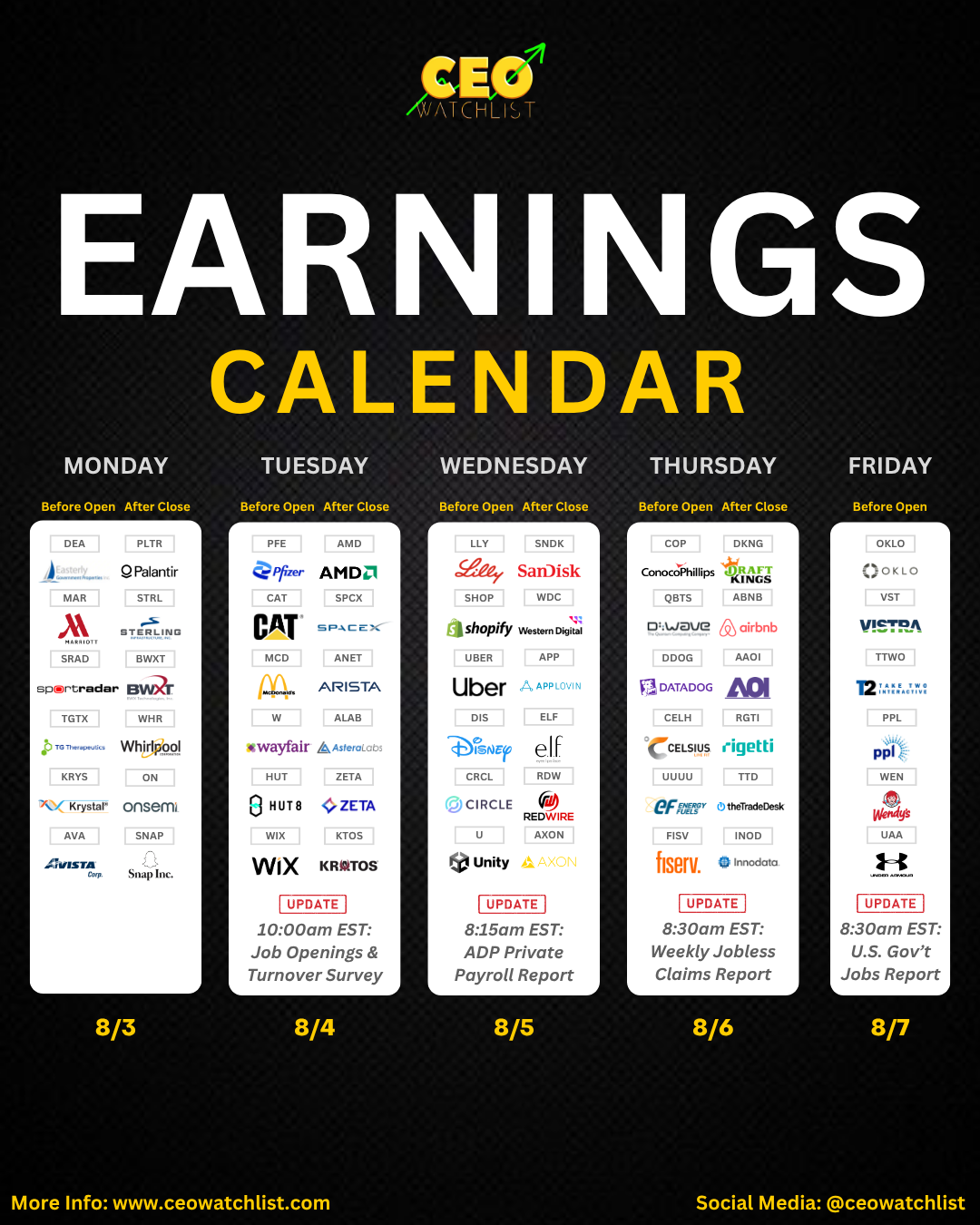
- Space Exploration Technologies (SPCX) - Space / Launch: August 4 is SpaceX's very first earnings report as a publicly traded company, following its record-breaking IPO in June. Analysts are expecting around $6.75 billion in revenue, driven primarily by Starlink, the satellite internet business that has been growing over 50% annually. The actual numbers will matter, but there's something else to pay attention to here: two days after this earnings report, insiders are allowed to start selling up to 20% of their locked-up shares, that's potentially over 900 million shares hitting the market at once. The stock has already fallen from its $135 IPO price down to around $108, so there's real selling pressure already in place. The fundamentals of the business are exciting long-term, but the lock-up situation adds a layer of uncertainty around the near-term price action that's hard to ignore. Also this is not a cheap stock to own, we would rather own Planet Labs (PL) or Rocketlabs (RKLB) over SpaceX here.
- Sandisk (SNDK) - Memory Storage: Sandisk reports its fiscal Q4 results on August 5. If you're not familiar, Sandisk makes NAND flash storage, basically the memory chips that live inside solid-state drives and data center servers. Every AI server requires enormous amounts of this type of storage, which is why Sandisk has become one of the biggest stories in the market this year, up over 500% before pulling back roughly 45% over the past month. Analysts are expecting earnings of around $34 per share for the quarter, which would represent astronomical growth compared to where they were a year ago. The company has beaten estimates by 60-75% in each of its last 2 quarters, so the real bar might be higher than the official consensus suggests. The key things to watch are NAND pricing stability and whether management gives guidance that supports continued margin expansion into 2027. With the recent sell-off it's seen, this may make for a really good earnings trade.
- Applied Optoelectronics (AAOI) - Photonics / Optical Networking: AAOI reports on August 6, and this is one of the more interesting under-the-radar names tied to the AI infrastructure theme. Applied Optoelectronics makes fiber-optic networking components, specifically the hardware that moves data at extremely high speeds inside hyperscale data centers. Think of it as the high-speed cabling system that connects everything inside an AI data center. Without it, the whole thing doesn't work. They just completed their first volume shipments of next-generation 800G transceivers to a major hyperscale customer, and management has guided for full-year 2026 revenue of over $1.1 billion. Q2 revenue estimates are sitting around $190 million. The main risk is customer concentration, a large portion of their revenue comes from just a handful of big cloud customers, but the demand signals we just got from AWS and Azure earnings are a direct tailwind for this business. This is a very high-risk, high-reward play, but that type of volatility makes it attractive for a short-term trader.
The overall theme heading into this week is simple: the AI infrastructure trade just got a massive vote of confidence from the 3 largest cloud platforms on the planet, and now the question is whether that momentum flows into the smaller names that are part of the same ecosystem. SpaceX is the wildcard with the lock-up situation. Sandisk is the pure-play memory bet. And AAOI is the kind of name that doesn't get the headlines but sits right in the middle of the same spending wave that drove AWS and Azure to record growth. Full recaps on all 3 will be in the Club as the numbers drop throughout the week.
Stock Spotlight: Regal Rexnord Corp (Source)
Stocks mentioned: $TSLA, $CCXI, $RRX
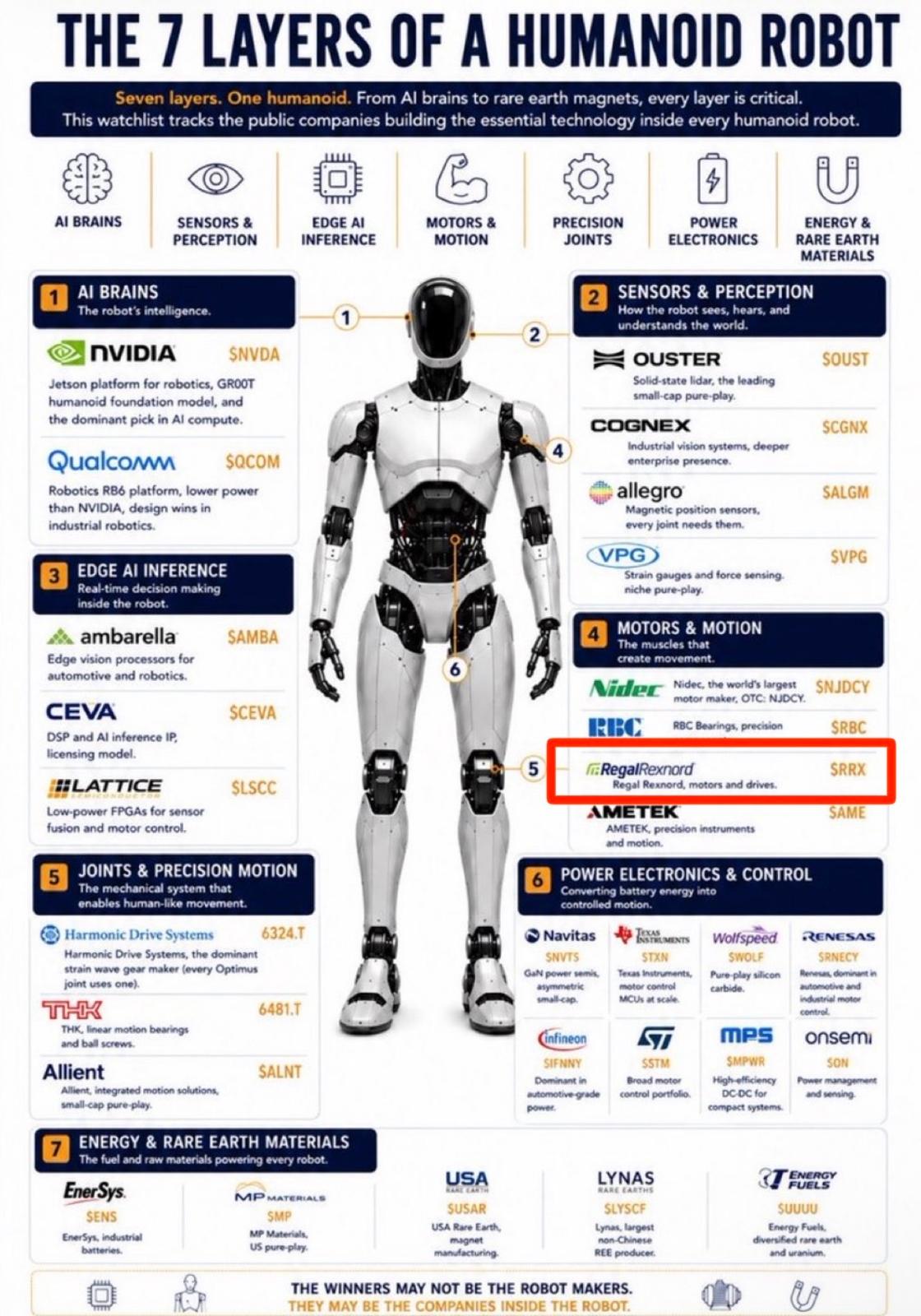
Every robotics conversation right now centers on which humanoid company is going to win. Tesla's (TSLA) Optimus. Figure AI. Agility Robotics (CCXI). The debate is endless, and honestly, nobody knows the answer. But I've found a way to win no matter who takes the crown, and that's the picks and shovels approach. While everyone argues over which robot is going to dominate the factory floor, we're looking at the company quietly supplying the critical hardware that goes inside all of them.
Regal Rexnord (RRX) is the name, and the more I've dug into it, the more we think this is one of the cleanest physical AI infrastructure plays hiding in plain sight. With $5.9 billion in 2025 sales and 30,000 associates worldwide, the company's portfolio spans electric motors, power transmission components, actuators, drives, and precision motion control systems. Translation: they make the mechanical guts that make robots move. And here's the thing about humanoid robots, the part that gets the most capital and commands the highest cost in the bill of materials is the actuator system. The joints. The motion. That's exactly where RRX plays.
The reason we find this framing so compelling is the "hardware agnostic" nature of the thesis. It doesn't matter if Tesla's Optimus scales to a million units or if Figure AI becomes the dominant platform. RRX has line of sight to opportunities on all critical joints on the robot, and has already secured wins in 2025 with leading global humanoid manufacturers. They're supplying frameless motors, micro motors, miniature brakes, precision bearings, and full actuator systems, components that show up across virtually every humanoid platform being built right now. Kerrisdale Capital has noted that motion control components are estimated to comprise 40 to 60% of the total bill of materials for humanoid robots, and a discounted cash flow analysis on that revenue stream alone could support nearly $5 billion of incremental market value for RRX today. That's not a small number.
Management has been direct about the opportunity. CEO Louis Pinkham said on the Q1 2025 earnings call: "We have secured several recent wins with leading humanoid manufacturers worth over $20 million in sales annually, which are scheduled to ramp over the next 12 to 18 months." By Q4 2025, that funnel had grown substantially. Pinkham confirmed on the Q4 call that the team is working an opportunity funnel in excess of $200 million across humanoids, cobots, and robotic surgery applications, and has already been experiencing strong double-digit compounded growth in robotic actuation in recent years. He also gave a telling breakdown of their current market penetration: of the 10 key humanoid OEMs they're targeting in the U.S., they're already on 3 platforms selling subassemblies, and actively working to get integrated with the remaining 7. That's early innings with clear runway.
What makes RRX more than just a robotics story is the fact that the business has multiple engines firing at once. The company booked approximately $735 million in E-Pod data center orders in Q4 2025, with initial shipments expected to begin in early 2027, and is investing in capacity to capture additional demand in what management describes as a double-digit CAGR market. That data center backlog is already locked in. On the partnership front, RRX announced a collaboration with ABB Robotics that made their Thomson Movotrak CTU the first certified 7th axis technology for ABB cobots, a real, tangible integration win with one of the most established names in industrial robotics. They also carry a partnership with Honeywell on the eVTOL side, extending their motion control expertise into electric aerospace. The company's growth opportunity in humanoids alone carries a 10-year CAGR forecast exceeding 50%, and that's before layering in cobots, surgical robots, and the reshoring wave pushing domestic manufacturers toward automation.
The financial setup is improving as well. First quarter 2025 saw all segments exceed guidance, with free cash flow growing 32% and $164 million of gross debt paid down. Automation and Motion Control orders surged 34% year over year, and 9 analysts currently rate RRX a "Buy". The stock isn't priced like a robotics darling, it's still priced like a legacy industrial company. That's the opportunity. The market hasn't fully repriced what it means to have $0.40-$0.60 of every humanoid dollar flowing through your components, across every platform, from every manufacturer, in what Morgan Stanley estimates could become a humanoid robot market exceeding $5 trillion by 2050. We're not betting on which robot wins. I'm betting on the picks and shovels supplier that wins no matter who does.
INSIDER STOCK TRADES FROM THE WEEK:
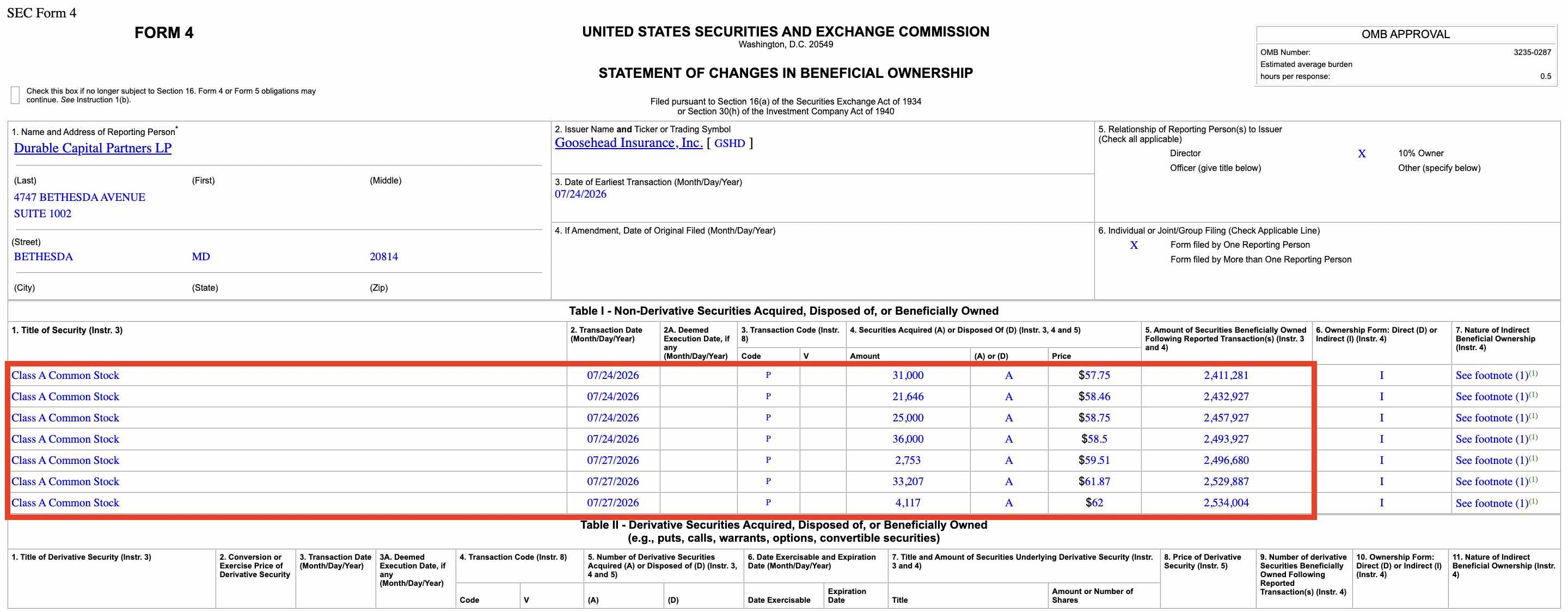
1. Goosehead Insuarnce (GSHD) - Durable Capital Partners (10% Owner) bought roughly $9,100,000 of GSHD at an average price of $59.22/share between July 24 - July 27, 2026, and it was most recently reported to the public on July 28, 2026. (Source)
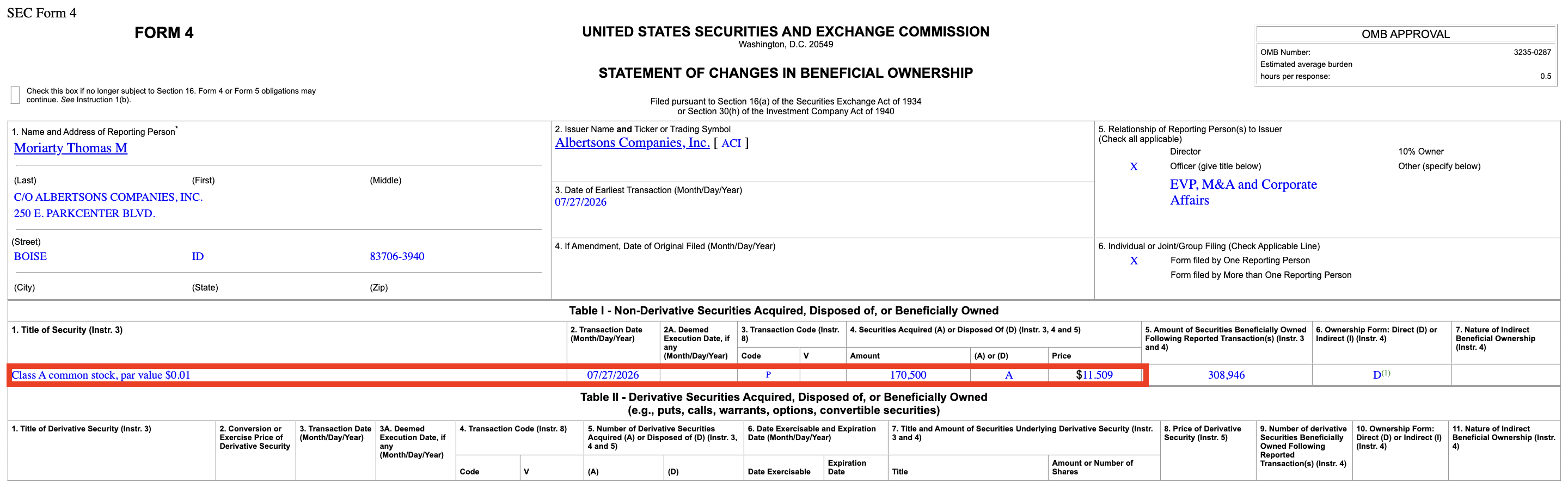
2. Albertsons Companies (ACI) - Thomas Moriarty (Executive VP) bought roughly $2,000,000 worth of ACI at an average price of $11.51/share on July 27, 2026, but it wasn't reported to the public until July 28, 2026. (Source)
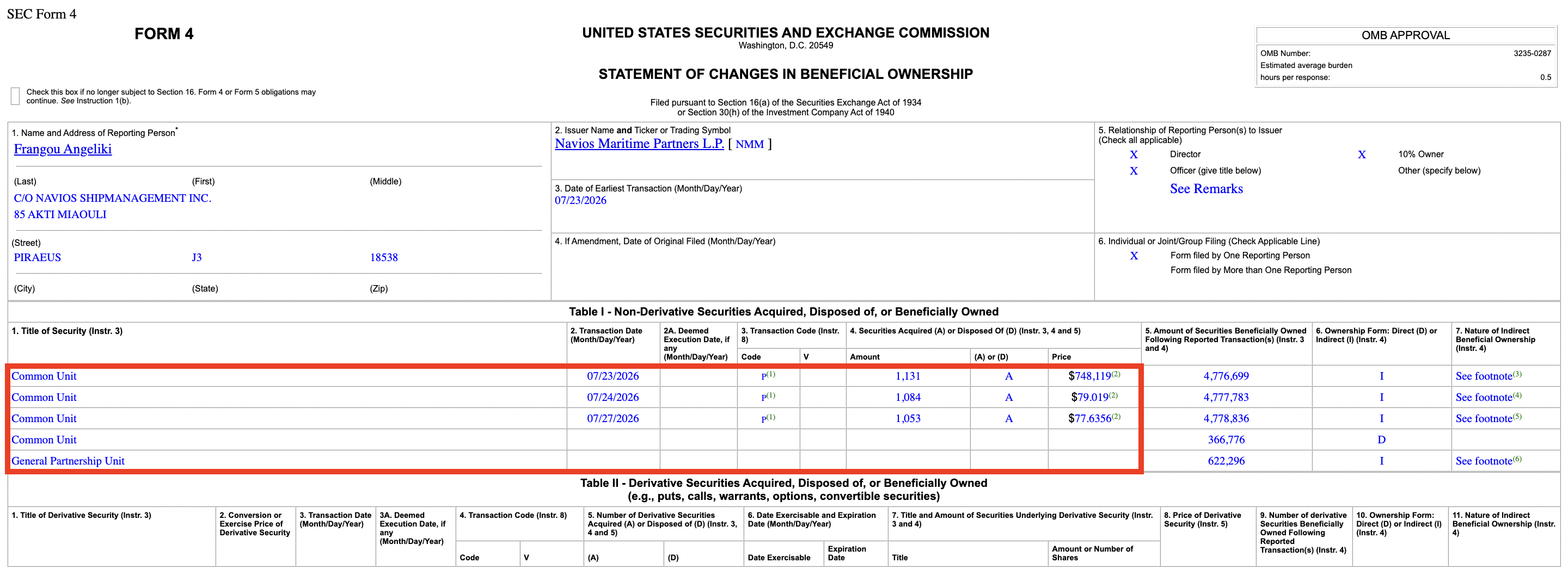
3. Navios Maritime Partners (NMM) - Angeliki Frangou (CEO) bought roughly $1,000,000 of NMM at an average price of $280.15/share on July 23, 2026, but it wasn't reported to the public until July 27, 2026. (Source)
Over 2,000 people have already signed up for my FREE Masterclass video on how to unlock my exact strategies for finding winning stock/options trades! I'll share everything including how to find what Politicians and CEOs are buying. Don’t miss your chance to get in for FREE before spots fill up!

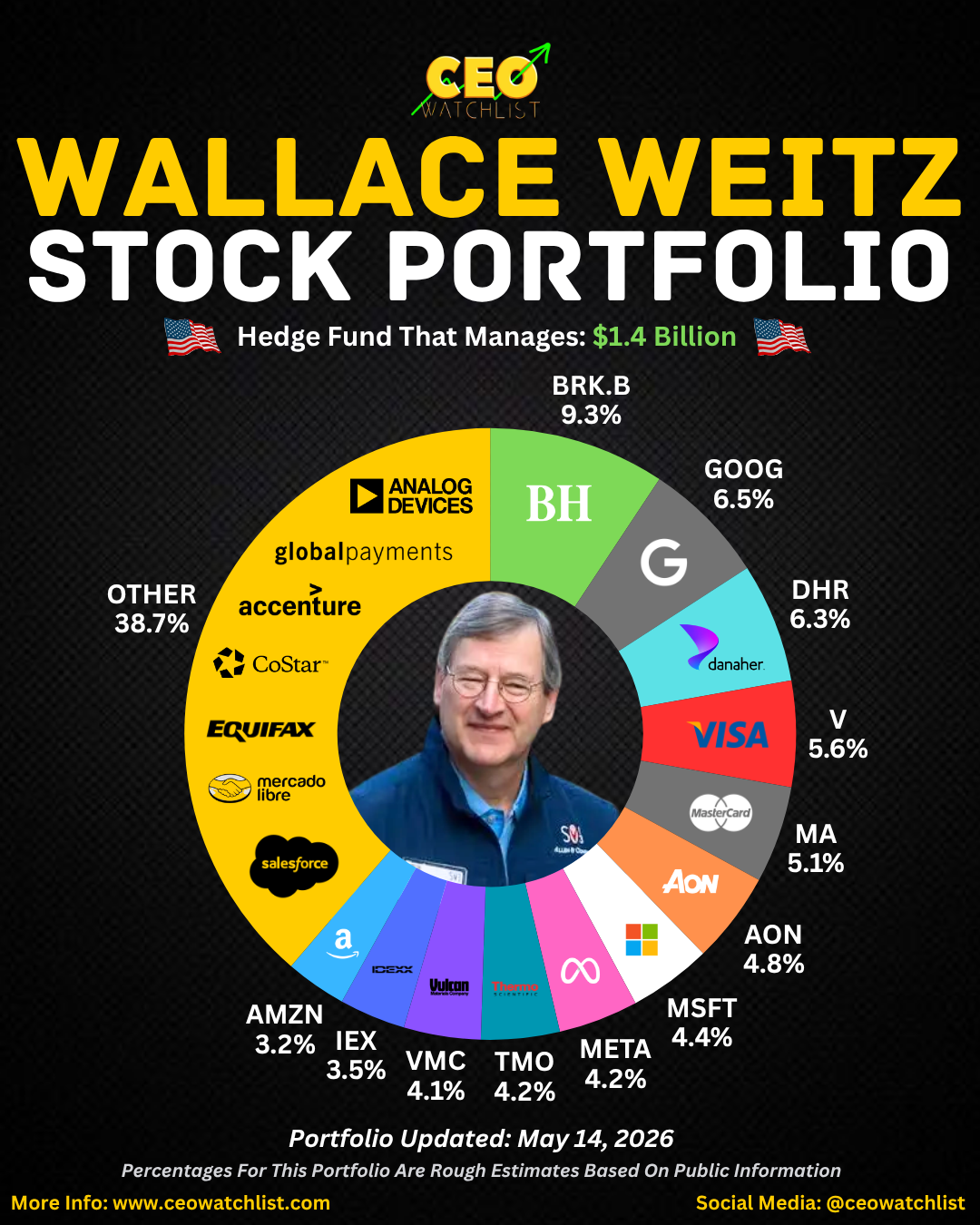
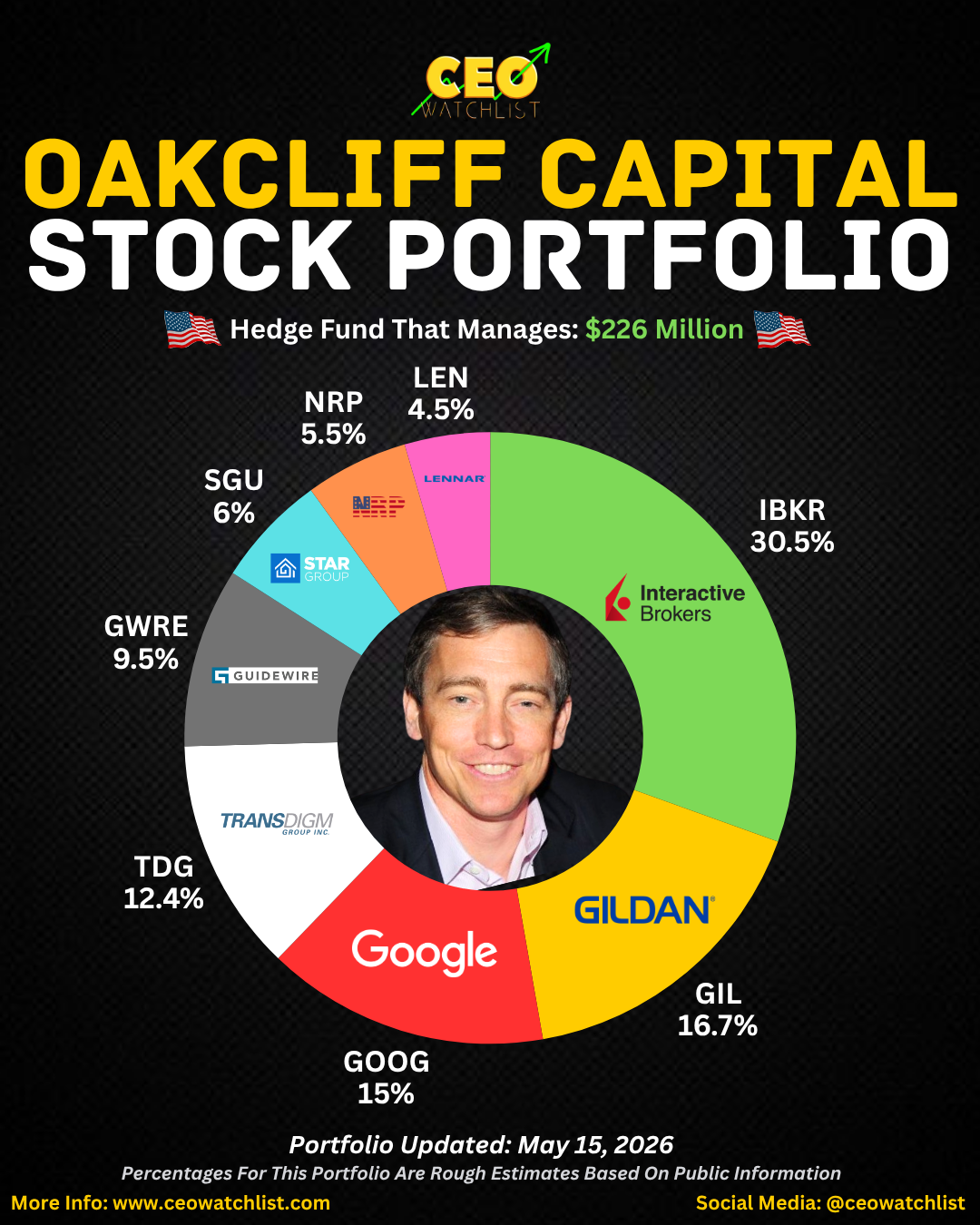
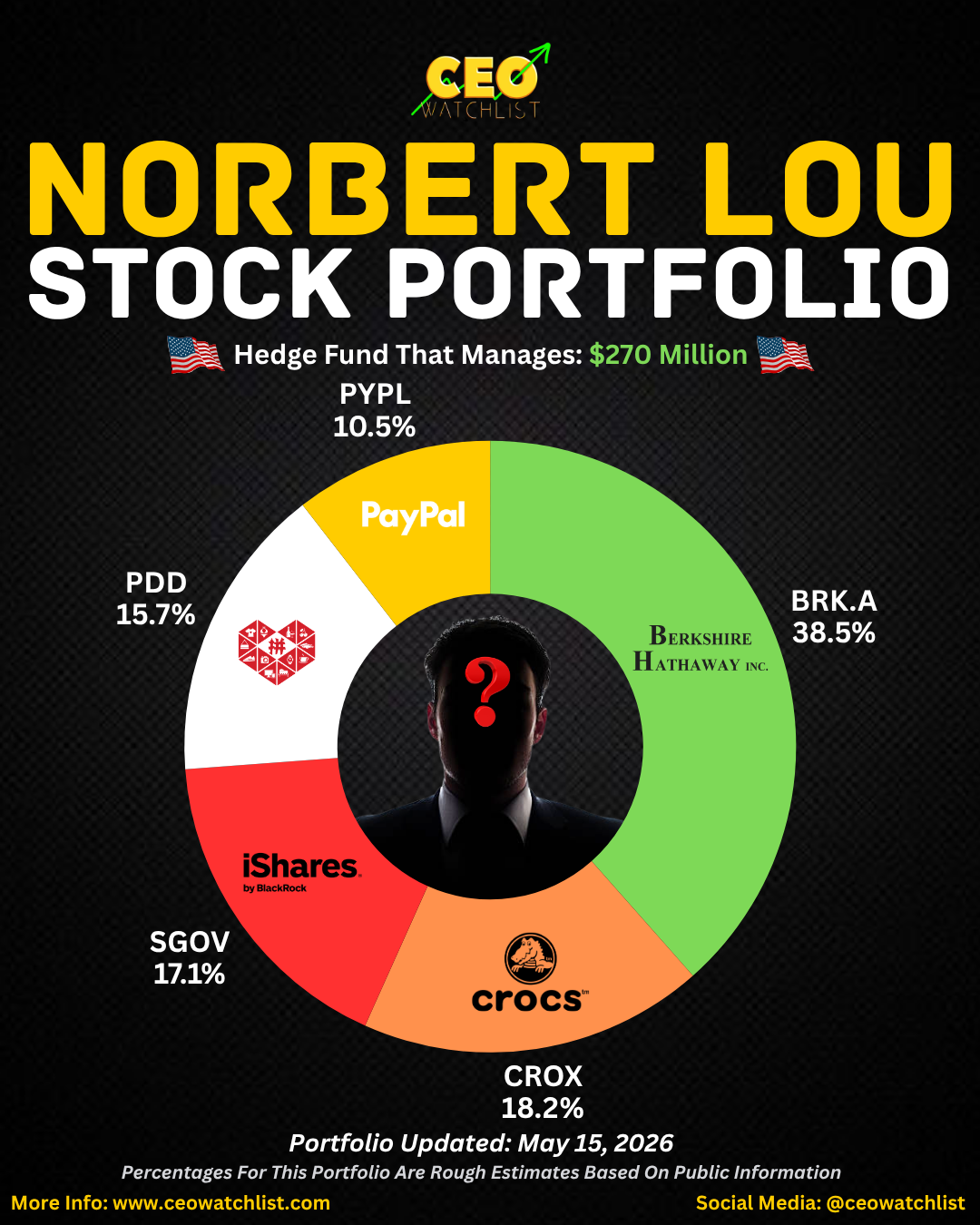
INFOGRAPHICS FOR THE WEEK:

CONTACT US: [email protected]
Responses