

TOP NEWS AFFECTING THE STOCK MARKET THIS WEEK:
-
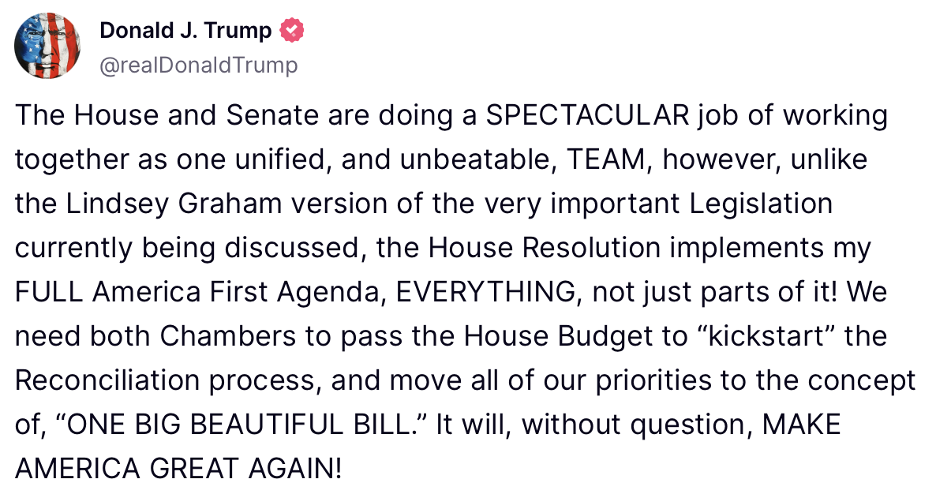
Trump’s Signature Bill Just Passed: Here Are 5 Stocks on Our Radar... (Source)
Stocks mentioned: $CAT, $LMT, $NUE, $NEE, $URI
-
New Rules On Wall Street: How The Average Person Can Now Invest Into Companies Like Chick-fil-A, SpaceX, and OpenAI (Source)
Stocks mentioned: $HOOD, $COIN, $SI, $BX
When you invest in the stock market, you can only purchase publicly traded companies, but there are many companies that remain private that aren't available for purchase. Companies such as Open A.I. (creators of Chat GPT), Chick-Fil-A and Elon Musk's Space-X. The thing is the wealthy elite are able to invest in companies like these but the average Joe/Jane is not. We at CEO Watchlist don't think this is completely fair to the average investor and Robinhood (HOOD) seems to agree! They are pioneering the way for average investors to get a piece of the action, in regards to private companies, which we believe may be the biggest financial story of the year! Robinhood, once dismissed as a meme stock casino for retail traders, is now positioning itself as the potential bridge between the walled gardens of private markets and the open frontier of global capital. Its latest innovation, blockchain-based “tokens” that represent ownership in U.S. stocks and private companies, promises to upend how assets are bought, sold, and accessed across borders. The narrative is shifting from commission-free trading, to rewriting the very architecture of capital flows.
At the heart of this shift lies a major macro bottleneck: global demand for U.S. equities and private assets is surging, yet access remains limited by regulatory barriers, custody challenges, and geographic restrictions. As a result, billions of international investors are effectively locked out of Silicon Valley’s next big investment, or even something as simple as the S&P 500. Meanwhile, private markets in the U.S. remain off-limits to all but the institutional elite. This is where Robinhood enters the picture, and where a major opportunity begins. The company is building a new “tokenization” layer that could potentially break down these barriers by enabling fractional ownership of pre-IPO (initial public offering) startups and public equities. In theory, this would be available 24/7, globally, and without traditional intermediaries, a direct challenge to the structure of legacy capital markets.
But not everyone is sold on the vision. OpenAI, whose AI models Robinhood allegedly used to price and structure these tokens, publicly distanced itself from the project, saying it has “no business relationship” with the firm’s token efforts. This casts doubt on Robinhood’s credibility and raises questions about how these digital assets are valued, regulated, and secured, at least for now. The bullish case is this: Robinhood is moving fast and breaking things, exactly what Wall Street needs. We at CEO Watchlist own Robinhood personally and believe in their long-term story. Robinhood is currently only available in the U.S. and U.K., but the potential with this tokenization could allow anyone from any country access to U.S. markets which we believe is a major tailwind for the company. We're very excited for Robinhood, but there may be other companies that can benefit from this news. Here is our list of 4 companies we think are poised to benefit:
-
Robinhood (HOOD): Obviously this is our number 1 pick, as we see it as more than a broker, potentially a tokenized exchange for both public and private equity.
-
Coinbase (COIN): A likely backend winner if tokenized equities require regulated crypto rails or custody infrastructure.
-
Silvergate Capital (SI) or its successors: Niche banks that specialize in bridging fiat and digital assets may become critical infrastructure (not our favorite, but there is potential here if they can capitalize).
-
Blackstone (BX): As the world’s largest private equity firm, any serious tokenization of private markets would ripple directly into its ecosystem.
The bottom line: we are witnessing the early innings of a new financial layer being built in real-time. Robinhood’s token experiment may falter, pivot, or be regulated into submission, but the genie is out of the bottle. The combination of crypto-native infrastructure, global investor demand, and fintech's hunger to break moats will not go away. The question for investors isn’t whether tokenized assets will take off, it’s which companies are positioning now to dominate when they do!
We just loaded up on several new stock picks this week based on this news and you can get instant access to them right now as an Investment Club Member 👉 [CLICK HERE]. At CEO Watchlist, we’ve done the heavy lifting for you, researching the companies we believe are best positioned to win, so you don’t have to guess. To celebrate financial freedom this July 4th weekend, we’re giving you 40% off our flagship Investment Club membership! You'll get full access to our proven strategies, real-time stock and options trades, and the exact system that’s helped so many of our members level up fast. But this deal ends soon, so [CLICK HERE to claim your spot now] before it disappears. -

-
Is The China - U.S. Technology War Over? These Stocks Say Yes! (Source)
Stocks mentioned: $SNPS, $CDNS, $ASML, $NVDA, $TSM
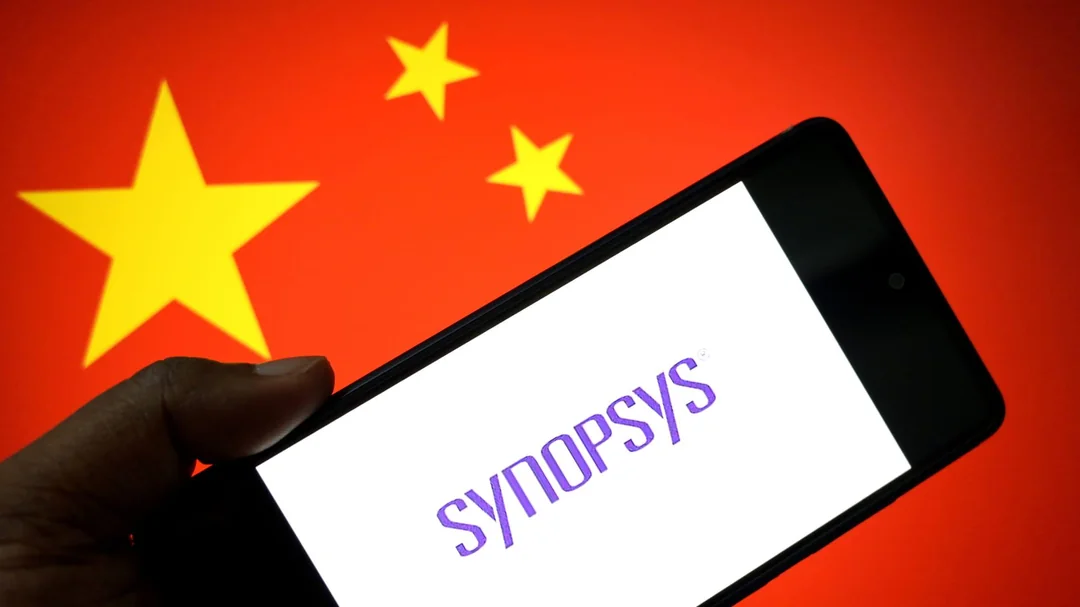
This past week, Trump announced that the U.S. would be lifting restrictions on China in relation to exports for chip design software. This is the latest in negotiations between the two countries in order to finalize a trade deal. This is bullish (positive) news for tech stocks, specifically chip companies. Simply put, any deal between the U.S. and China that creates a more friendly trade environment is going to be positive for markets. The headlines will say the U.S. simply “lifted export curbs” on chip design software, but that undersells the moment. What we’re witnessing is potentially the first real sign of a geopolitical reset, one where trade, not tariffs, regains center stage. After years of tech decoupling and export restrictions, this move suggests a calculated pivot: instead of fully containing China, the U.S. may be starting to re-engage selectively. If that thesis holds, this is one of the most asymmetric, underappreciated green lights for chip design software stocks and the broader semiconductor ecosystem.
Electronic Design Automation (EDA) tools, the software stack used to architect the world’s most advanced semiconductors, are largely controlled by just three U.S. firms. China’s inability to access them has been a critical choke point in its tech ambitions. Now that the Commerce Department has quietly lifted some of those restrictions, reportedly in exchange for more transparency from Chinese buyers, the door is cracking open. Whether this is a one-off licensing deal, or part of a broader normalization, the implications are massive: increased volume, resumed sales, and perhaps most importantly, precedent.
For investors, the opportunity sits not only in the policy relaxation itself, but in its signaling effect. These stocks are now in position to recapture demand from the world’s fastest-growing chip consumer:
-
Synopsys (SNPS): A dominant force in chip design software, it was directly impacted by the curbs and stands to regain market share in China.
-
Cadence Design Systems (CDNS): Alongside SNPS, it forms the EDA software duopoly. Renewed access to China could add a double-digit revenue tailwind.
-
ASML Holding (ASML): While not an EDA company, any tech thaw that allows upstream chip design could eventually lift demand for ASML’s lithography machines.
-
Nvidia (NVDA): Loosening of design restrictions could indirectly supports Nvidia’s broader China business, especially for AI accelerators.
-
TSMC (TSM): With more design activity potentially flowing through mainland clients, TSMC could see stronger downstream demand for fab services as well.
Critics will argue this opens the floodgates for China to catch up faster in semiconductor design and that such a move undercuts U.S. leverage. That’s a valid concern, but the more plausible scenario is that this is a tactical shift: enabling trade where the U.S. retains strategic control while reducing global supply chain friction. China still lacks the tools for extreme ultraviolet (EUV) lithography and export controls there remain firmly in place. So here's the bottom line...the semiconductor cold war is not over, but the front lines are moving. This policy shift suggests we’re entering a new phase, which is strategic engagement over blanket restriction. Investors betting on a fractured, zero-sum world may need to reassess, because if even a partial tech thaw is beginning, today’s discounted chip design names and supply chain partners may be tomorrow’s compounding winners.
-
INSIDER TRADES FROM THE WEEK:
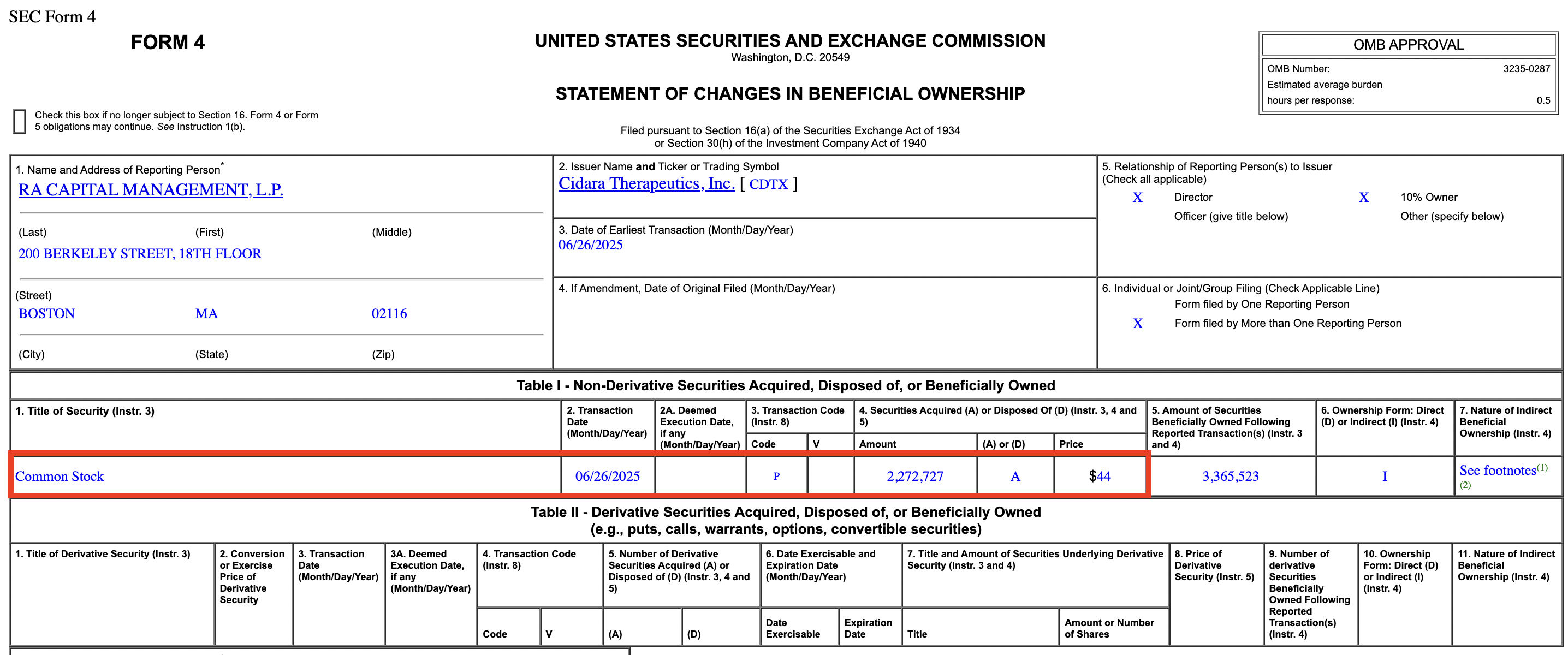
1. Cidara Therapeutics (CDTX) - RA Capital Management, a hedge fund that specializes in biotech investments, bought ~$100 million of CDTX stock on June 26, 2025, but it was reported to the public on June 30, 2025. (Source)
2. Welltower, Inc. (WELL) - Andrew Gundlach, a director, bought ~$3 million of WELL stock on June 30, 2025, but it was reported to the public on July 2, 2025. (Source)

3. Bit Digital (BTBT) - Pierce Jeffrey, a director and 10% owner of the company, bought ~$1 million worth of BTBT stock on June 25, 2025, but it was reported to the public on June 27, 2025. (Source)

Over 2,000 people have already signed up for my FREE Masterclass video on how to unlock my exact strategies for finding winning stock/options trades! I'll share everything including how to find what Politicians and CEOs are buying. Don’t miss your chance to get in for FREE before spots fill up!

INFOGRAPHICS FOR THE WEEK:



CONTACT US: [email protected]
Responses