
TOP NEWS AFFECTING THE STOCK MARKET THIS WEEK:
Earnings Season Week 2: Here Are The Top 5 Stocks We Are Watching This Week ... (Source)
Stocks mentioned: $ASML, $TSM, $TSLA, $GOOG, $NOW, $STM, $INTC
Welcome to another week of earnings in the market. We already got a batch of big bank earnings, and for the most part they came in very solid, with the major financials showing real strength. On top of that, we had huge tech names report, including ASML Holdings (ASML) and Taiwan Semiconductor (TSM), both of which are core to the entire AI chip supply chain. Here's the catch: even though those companies put up great numbers, the market still fell and tech names still sold off. That's the part worth sitting with. When strong earnings show up and the stocks go down anyway, it tells you something important. Right now, good news is not enough to save this market on its own.
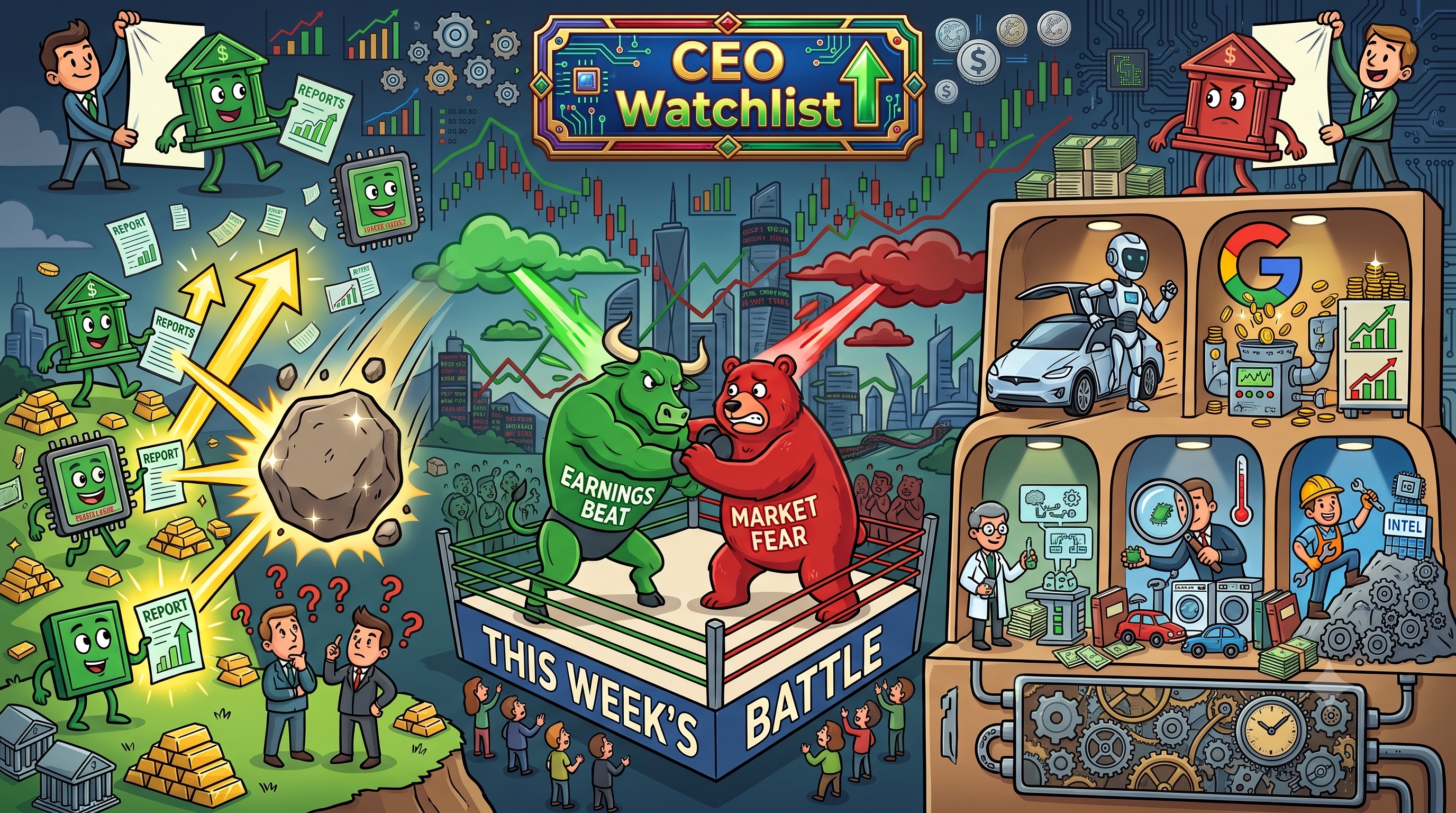
That sets up a high-stakes week ahead. We've got even more big tech earnings coming, and after watching what happened to last week's solid reports, the tension is obvious. We fully expect more strong earnings to roll in. The real question isn't whether these companies will beat. It's whether the market keeps selling off regardless, or whether the earnings come in so strong that they overpower the fear and force the buyers back into the trade. That's the battle this week. Strong numbers versus a nervous market, and we're about to find out which one wins.
Here are the top 5 names we're watching this week:
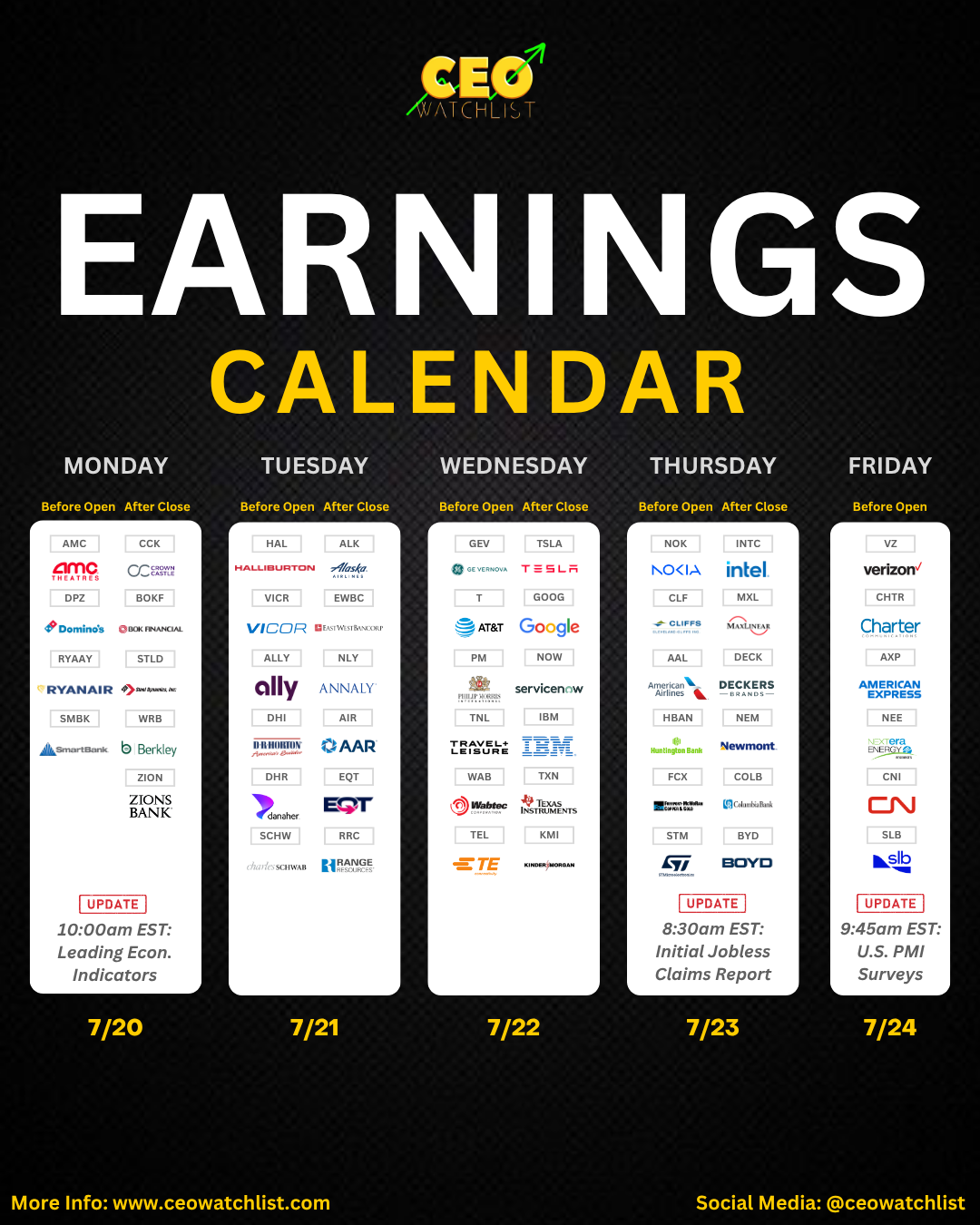
- Tesla (TSLA) - The electric vehicle and AI company reports after the close, and this one is more about the story than the car business. We're watching for updates on the Robotaxi rollout, the Optimus humanoid robot, and automotive margins after a strong delivery quarter. Think of Tesla as two companies bolted together: a carmaker that pays the bills today, and an AI and robotics bet priced for the future. The commentary from management may move the stock more than the actual numbers.
- Alphabet (GOOG) - The parent company of Google reports, and the key thing we're watching is whether its massive AI spending is turning into real returns. Google makes most of its money from advertising and its cloud business, and the market wants to see that the billions being poured into AI are showing up as growth rather than just cost. In simple terms: Google is spending like a company that believes AI is the future, and this report tells us whether that spending is starting to pay off.
- ServiceNow (NOW) - This is an enterprise software company that helps big businesses automate their workflows, and it's become one of the clearest ways to see whether companies are actually adopting AI tools in the real world. We're watching for signs that its AI products are being bought at scale. If a behind-the-scenes software company like ServiceNow shows strong AI-driven demand, it tells us the AI adoption story is broadening beyond just the chipmakers.
- STMicroelectronics (STM) - This is a European semiconductor company that makes chips for cars, industrial equipment, and everyday electronics. It sits in a different corner of the chip world than the AI names, which makes it a useful read on the health of the broader, non-AI economy. We're watching whether demand in autos and industrials is stabilizing. Think of STM as a thermometer for the parts of the chip market that AI headlines usually ignore.
- Intel (INTC) - The turnaround story everyone has an opinion on. Intel is in the middle of a long, expensive effort to rebuild itself into a leading chipmaker and compete in the AI era. We're watching for any signs of progress on its manufacturing plans and whether the business is stabilizing. In plain terms: this is a company fighting its way back to relevance, and every report is a checkpoint on whether that comeback is real or still a work in progress.
Put it all together and this week is a real test of the market's mood. We already saw last week that strong earnings weren't enough to stop the selling, so the pressure on these five names is even higher. If these reports are strong enough, they could be the spark that pulls buyers back in. If they're not, last week's selloff may just be getting started. Either way, we'll be breaking it all down as the numbers hit inside the CEO Watchlist Investment Club. Club Members, [CLICK HERE], to access all of our alerts and stock portfolio changes.
Tech Giants Are Stumbling ... Is This Stock The Next Domino To Fall? (Source)
Stocks mentioned: $MU, $TSM, $GOOG
The tech market has been in a rough patch, and this past week it got uglier. The very names that carried this entire rally on their backs all year, have been selling off hard. The semiconductor sector, the beating heart of the AI trade, has tumbled nearly 20% from its late-June peak, putting it right on the edge of what's a bear market (a drop of 20% or more from recent highs). Even the most resilient tech stocks got hit: Micron (MU) plunged almost 6% on Thursday, and TSM (TSM) actually fell despite posting record earnings. Through all of this chop, Google (GOOG) had been one of the more stable megacap names, holding up better than most while everything around it wobbled. But last week, Google's turn came, and it came from a direction that stings more than a broad market selloff. This wasn't Google getting dragged down by sector fear. This was Google-specific bad news, and that's a different animal entirely.
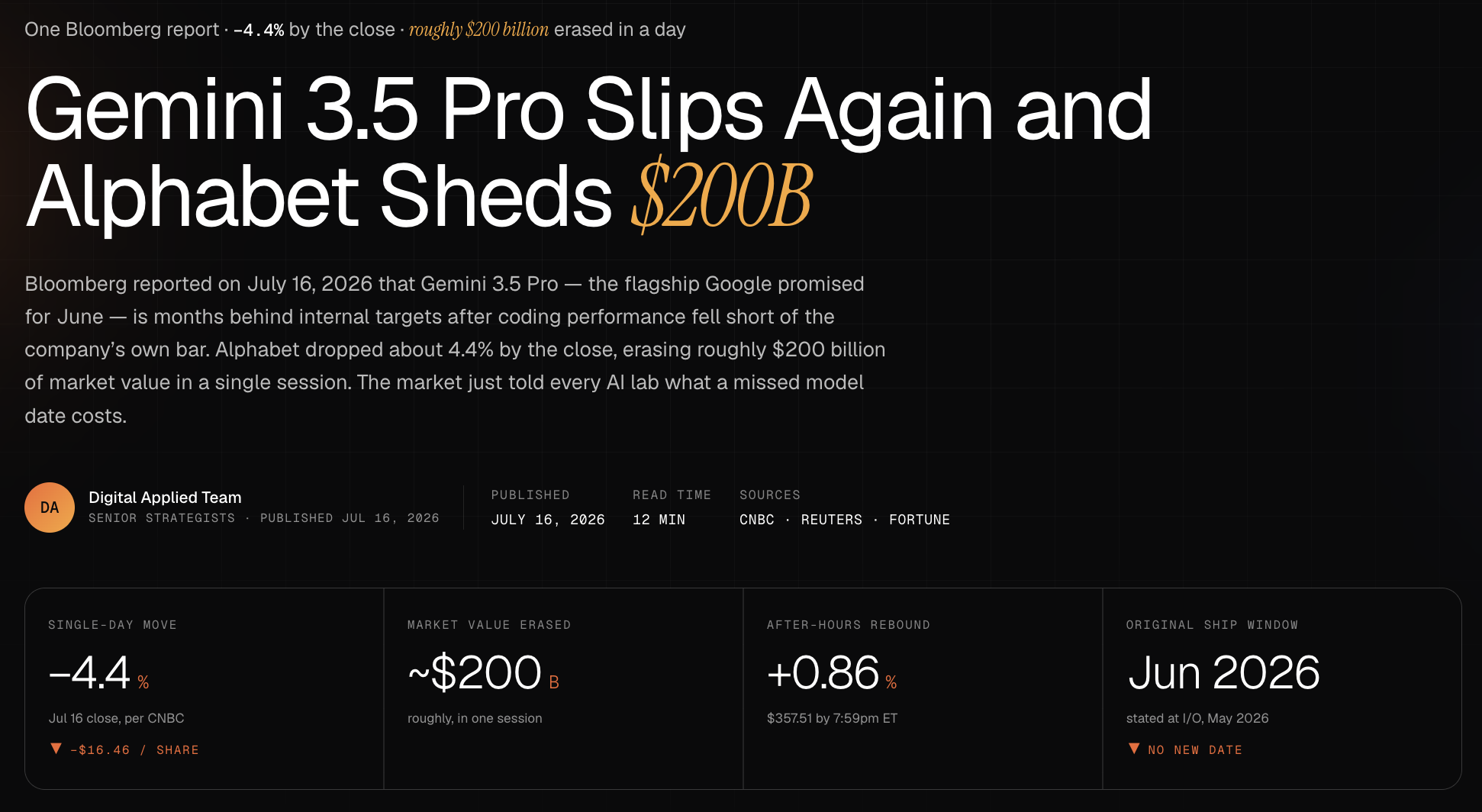
So here's what actually happened. On Thursday, July 16, Alphabet's stock dropped more than 4% after Bloomberg reported that the company is delaying the release of its flagship AI model, Gemini 3.5 Pro, by several months as it works to improve the model's performance. To understand why this matters so much, you need context. Google first announced Gemini 3.5 Pro back in May at its big annual developer conference, positioning it as its most powerful AI model yet and its answer to rivals like OpenAI and Anthropic. In the AI race, your flagship model is how you prove to the world that you're not falling behind. So when the company has to quietly push that release back by months because it isn't good enough yet, the market hears one thing loud and clear: Google might be losing a step in the most important technology race of the decade. It's a bit like a car company hyping its next-generation lineup at a huge event, then going silent and pushing the launch back because it can't get the engine right. Even if the eventual product is great, the delay itself plants a seed of doubt. And this landed on top of an already-nervous backdrop, where investors have grown increasingly skeptical about whether the massive AI spending across big tech will pay off. The message from Wall Street right now is blunt: they're no longer handing tech giants a blank check on AI promises. You have to execute flawlessly, and a months-long delay on your headline model is the opposite of that.
Now, in fairness, we do not believe that Google's underlying business is falling apart. Not even close. Google Cloud has been growing at a blistering pace, the company's contracted cloud backlog (essentially future revenue already under contract) sits at a staggering figure larger than what Google earns in an entire year, and its core advertising engine remains one of the best businesses on the planet. So this is a stumble in the narrative and the perception, not necessarily a crack in the foundation. A delayed model is a real setback, but it's the kind of setback a company with Google's resources and reach can recover from. The question isn't whether Google is doomed. It plainly isn't. The question is simpler and more practical for us as investors: with so many opportunities out there right now with stocks selling off, is Google, near all time highs, the best place for our capital at this exact moment? The answer is no. There are better opportunities in the tech space for stocks that have sold off 40-60% from their highs that we think can double in the next year.
The brutal selloff in higher-risk chip and AI stocks has a silver lining: it's created genuinely attractive risk-versus-reward opportunities in some of the strongest companies in the space. When great businesses get thrown out with the bathwater during a broad, fear-driven selloff, that's often where the best opportunities tend to hide. Many of these beaten-down names are now trading at prices we find far more compelling than Google at its current level, and we've been putting our "Watchlist" to work accordingly. We've been actively buying, positioning ahead of what we think could be a strong bounce once this fear washes out.
With all that said, if you want to see all of our research and the subsequent moves we're making in our portfolio, that's what The CEO Watchlist Investment Club is built for. We share with you all of our research articles on the stocks we are looking to own and exactly which names we've been rotating into, along with every buy and sell we've made in our personal portfolios in real time. If you're already a club member, [CLICK HERE] to see our newest buys that we've been accumulating during this selloff. If you're not in the club yet, ask yourself this simple question: when you buy a stock, does it tend to fall shortly after, and when you sell a stock, does it tend to go up shortly after? If you answered "YES" to either of these, it's time to makea change and join one of the top Investment Clubs in the US, and allow us to help you achieve your goals. As a newsletter subscriber, we're granting you $200 OFF the membership today! [CLICK HERE] to lock in your spot today before spots fill up. You'll get full transparency into our personal stock and options portfolios, a library of research articles on stocks we like, access to private live trading classes and calls, and mentorship directly from us within the Club. Once you join, make sure to send us a message, so we can presonally welcome you into the group and help you get started.
Stock Spotlight: Moog (MOG.A) (Source)
Stocks mentioned: $MOG.A
It's been a while since we did a "Stock Spotlight", so for those that are new, "Stock Spotlights" are a segment that we do where we highlight a little unknown stock in the market that we believe has a lot of potential. This week, we will be covering a hidden gem in the robotics sector. We think there's a ton of growth over the coming years in robotic-themed stocks and for that reason we've been digging in deep to figure out which stocks we think have the most potential. The stock that we've currently owned for a while now, and is the highlight of this "Stock Spotlight" is none other than Moog (MOG.A).
Most investors have never heard of this stock and the few that have, still file Moog under the "aerospace and defense" sector. This means most people that have heard of them think of them as a company that just makes parts for airplanes and military gear, the kind of boring name you inherit from a relative rather than one you go searching for because you think it's going to make you a ton of money. We think that framing is exactly why it's interesting right now. Underneath that outdated label, Moog is quietly turning into what we'd call a "picks and shovels" way to play the explosion within the robotics theme. That phrase, "picks and shovels", comes from the Gold Rush, when the people who reliably got rich weren't the miners gambling on striking gold, but the folks selling "picks and shovels" to everyone who showed up to dig. Moog is a "picks and shovels" business for robots because no matter which robot company ends up winning, they all need the parts that Moog sells, and the parts that Moog sells are called "actuators". In simple terms, an actuator is a part of a robot that is responsible for moving and controlling the mechanism or system.
When a software company builds an AI model to automate physical work, that AI still needs a reliable way to actually do something in the real world. It needs muscles. Moog builds the muscles. This is where that actuator comes into play because they are the parts that turn an electrical signal into physical movement. If the software is the brain deciding to "lift the arm," the actuator is the muscle that actually lifts it. Moog makes the high-precision versions of these, the ones that let machines and robots move with extreme accuracy. So clearly, actuator companies like Moog are crucial to the robotic theme. But you may be asking us "why are you so excited about investing specifically in actuators, and not the other parts of the robot?" Our answer is simple: money. We are investing in all parts of the robotic theme, but actuators stand out above the rest. When we break down the cost of a humanoid robot, there are a lot of moving pieces we need to consider, and it's not to say that we don't think all the components of a robot are investible, but rather, one in particular stands out above the rest. As you can see below, we've attached a breakdown of the costs of a robot:
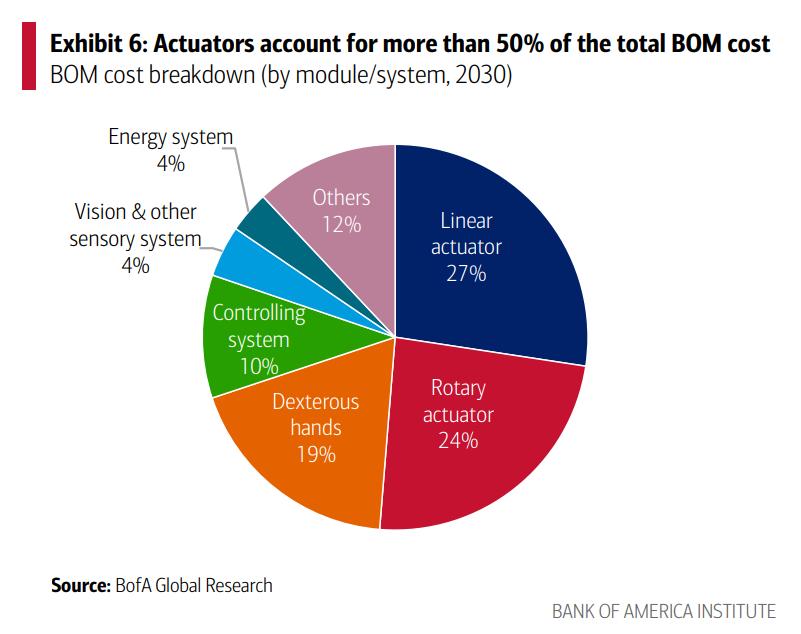
As you can see above, actuators make up over 50% of the bill of materials (BOM) in a robot. So it's not that the other components don't interest us, it just comes down to the simple concept of which components are going to get allocated the most amount of capital. In the case of robotics, the component that is going to require most of the capital are the actuators and Moog is a leader in this space.
Now, the other question that comes up is around competition. So why do we think Moog has a durable edge that competitors can't easily copy? Moog's edge comes down to trust in situations where failure is not an option. In robotics, software gets updated every few weeks, but the physical hardware has to survive for years. If a warehouse robot's hardware glitches, it drops a box, no big deal, BUT if a 10-ton digging machine or a surgical robot's hardware glitches, the result is catastrophic. Moog has spent years building parts for military aircrafts, where a failure could get people killed. This is why their parts are engineered with layers of backup safety built in and they've built a long history of trust with their customers because they've avoided these failures. Customers will pay a premium for a track record that clean and avoid the switching costs of entertaining competitors. On top of that, Moog's parts are built for every type of environment you can imagine. Whether they are to be used in a high-end, ultra-sterile lab where computer chips are made, or out in the rugged terrain working in a freezing, mud-soaked construction site. Moog's products have been tried and tested over time and with how fast-paced the robotics sector is moving, companies don't have the luxury of getting second best. This is why Moog has dominated, and will continue to dominate, for the foreseeable future.
The big-picture tailwind underneath all of this is simple: there aren't enough workers. Construction and mining can't find enough skilled operators, and modern militaries are shifting hard toward unmanned systems. Robots are the answer companies and governments are spending real money on, and Moog sells the parts those robots are built from. That's the key point for us. Rather than betting on one specific robot company to win, we'd rather own the supplier that gets paid no matter which one comes out on top.
And it doesn't hurt that the financials back up the story. Moog just reported record sales and record profit in its most recent quarter, and raised its guidance, meaning management told investors they now expect to do even better than they'd previously predicted. That's a company firing on all cylinders in its main business while quietly building a second growth story in robotics on the side.
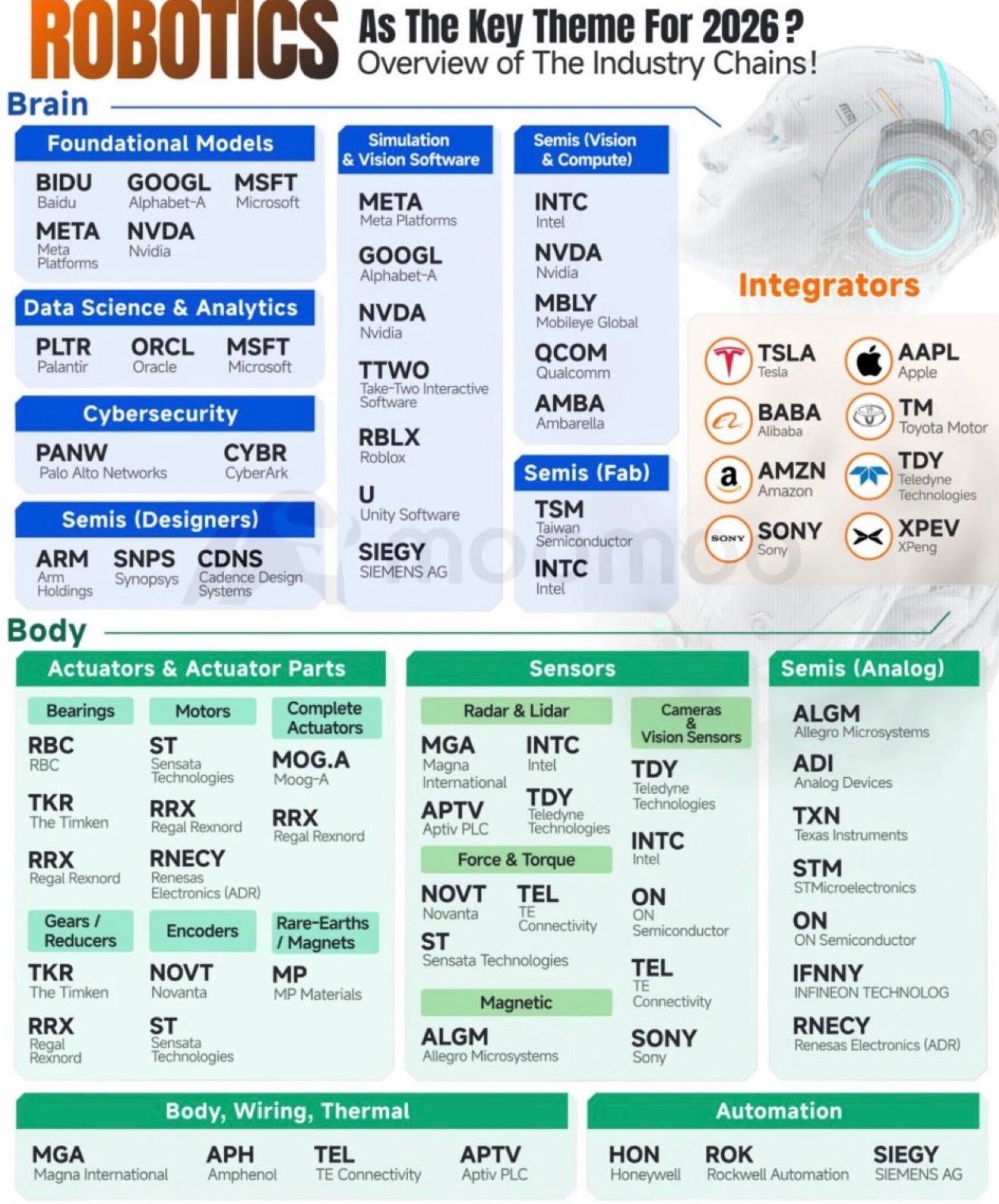
We could go on and on about multiple more bullish themes for this company, but this is the general gist of it. We believe Moog will be a dominate player in the robotics components space. The question is whether or not you believe robots are the future? If your answer is "YES", then we recommend you do your due dilligence and research Moog as a potential investment. But if Moog still doesn't interest you after reading this article, then we've included an infographic down below of a multitude of stocks that benefit from the robotics theme overall and maybe one of those will catch your interest.
INSIDER STOCK TRADES FROM THE WEEK:
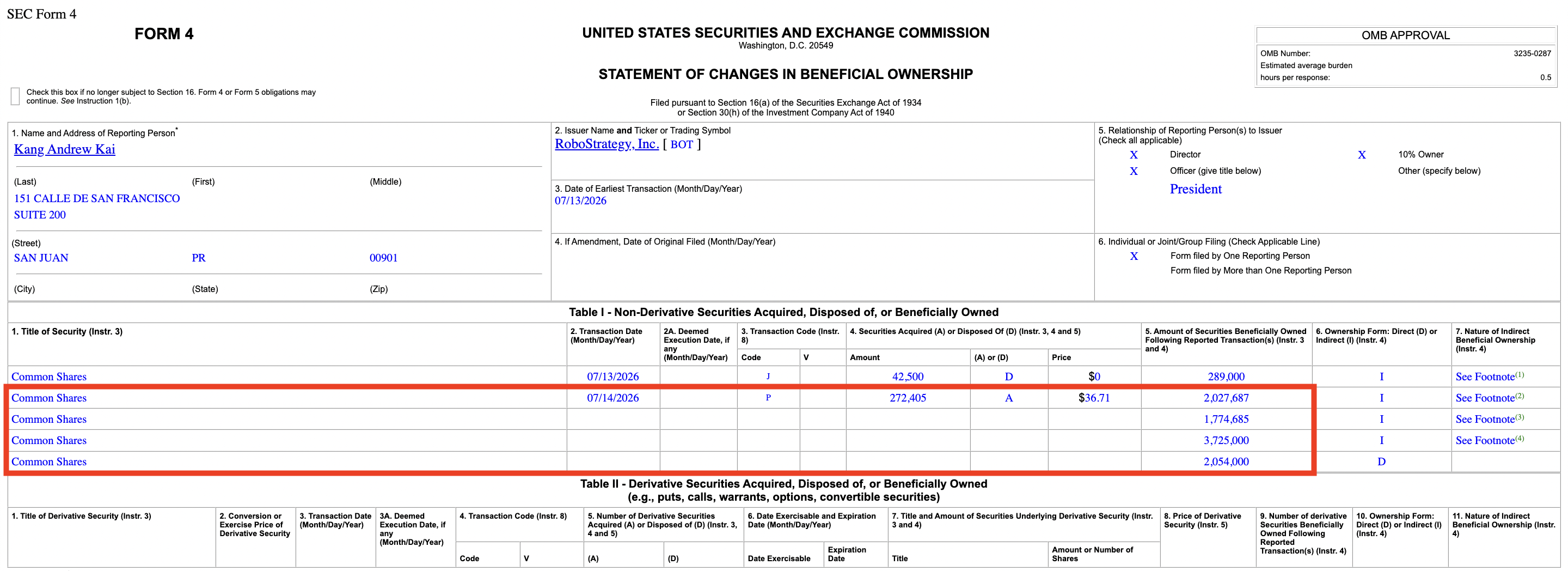
1. RoboStrategy (BOT) - Andrew Kang (President) bought roughly $10,000,000 of BOT at an average price of $36.71/share on July 14, 2026, but it wasn't reported to the public until July 15, 2026. (Source)
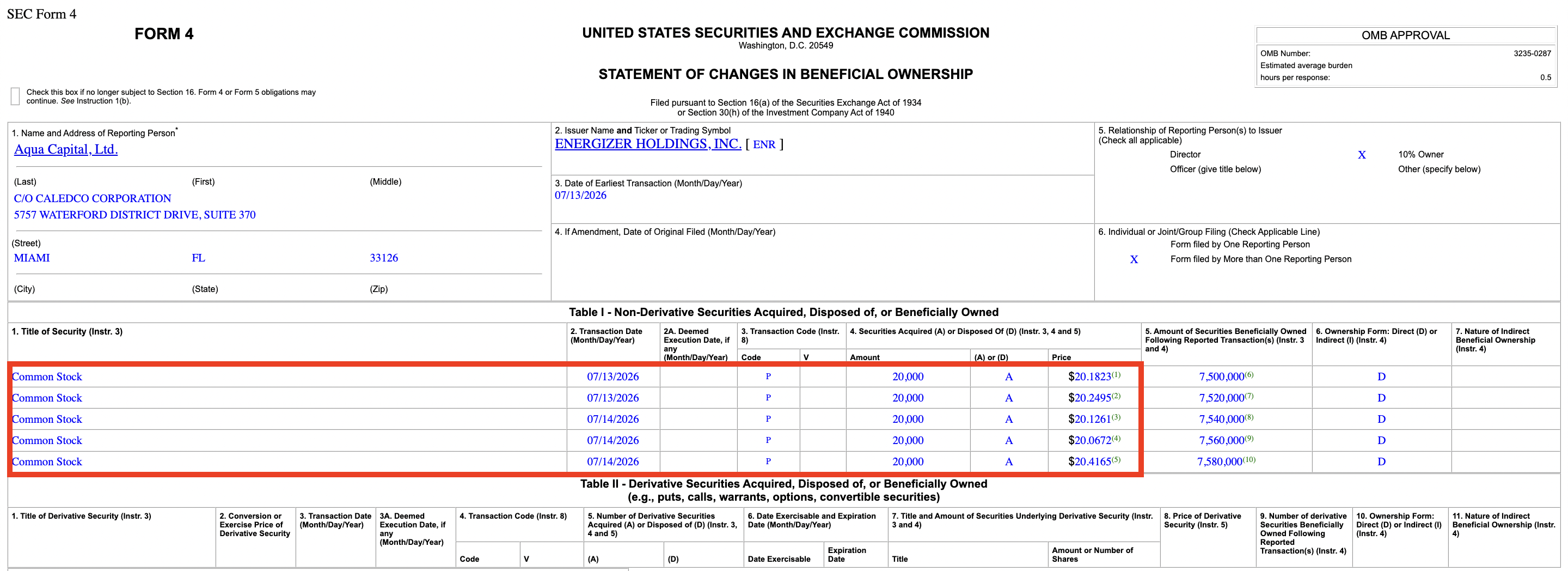
2. Energizer (ENR) - Aqua Capital (10% owner) bought roughly $2,000,000 worth of NTSK at an average price of $20.21/share between July 13 - July 14, 2026, but it wasn't reported to the public until July 15, 2026. (Source)
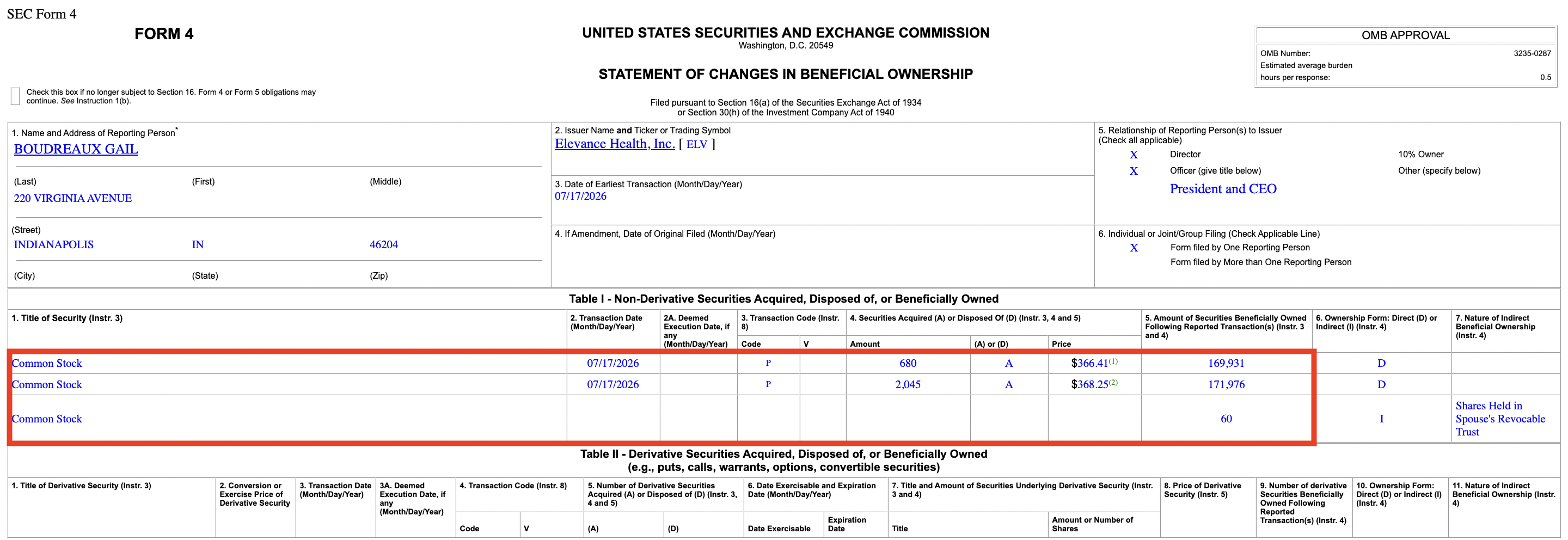
3. Elevance Health (ELV) - Gail Boudreaux (President & CEO) bought roughly $1,000,000 of ELV at an average price of $367.79/share on July 17, 2026, and it was reported to the public later that same day. (Source)
Over 2,000 people have already signed up for my FREE Masterclass video on how to unlock my exact strategies for finding winning stock/options trades! I'll share everything including how to find what Politicians and CEOs are buying. Don’t miss your chance to get in for FREE before spots fill up!

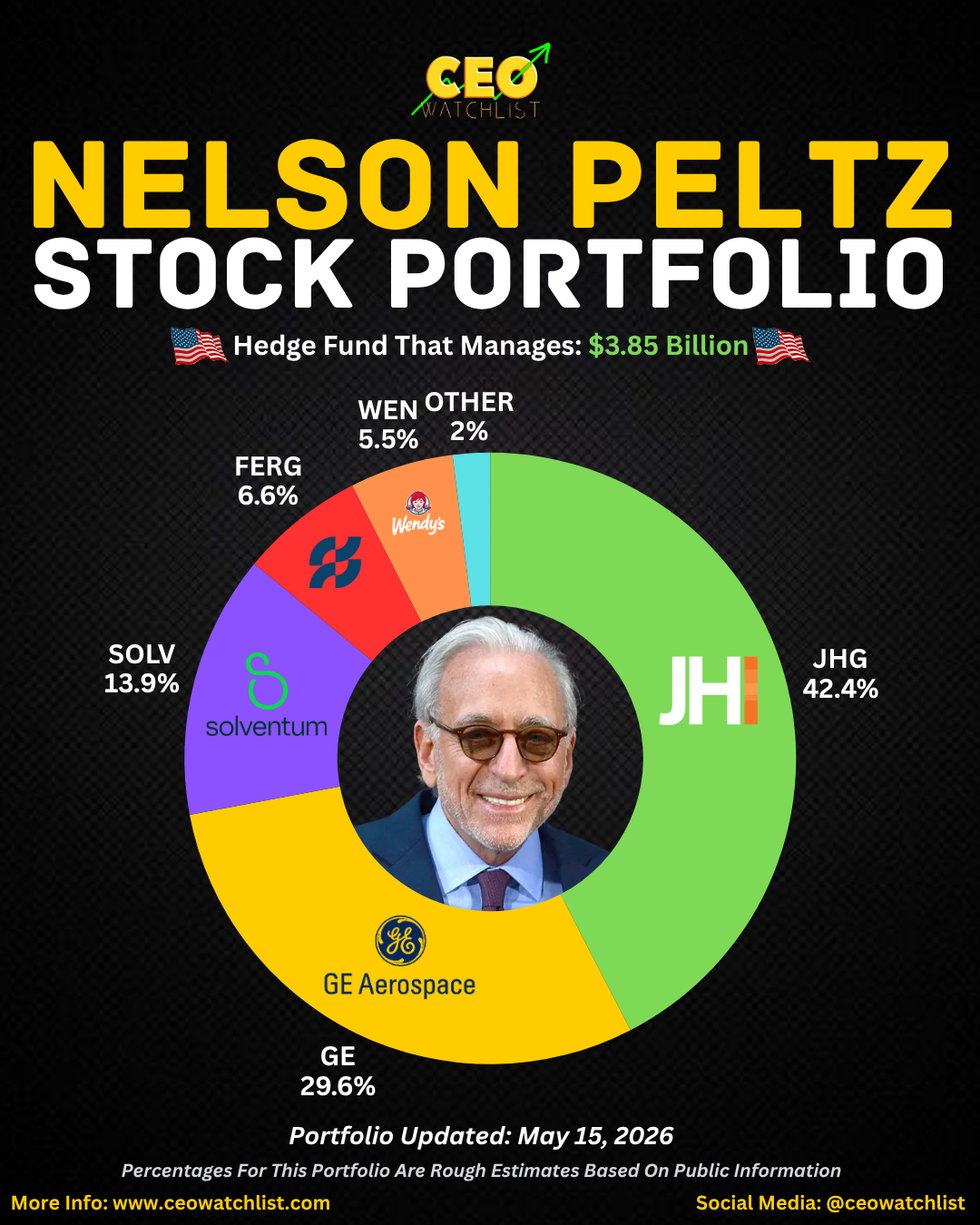
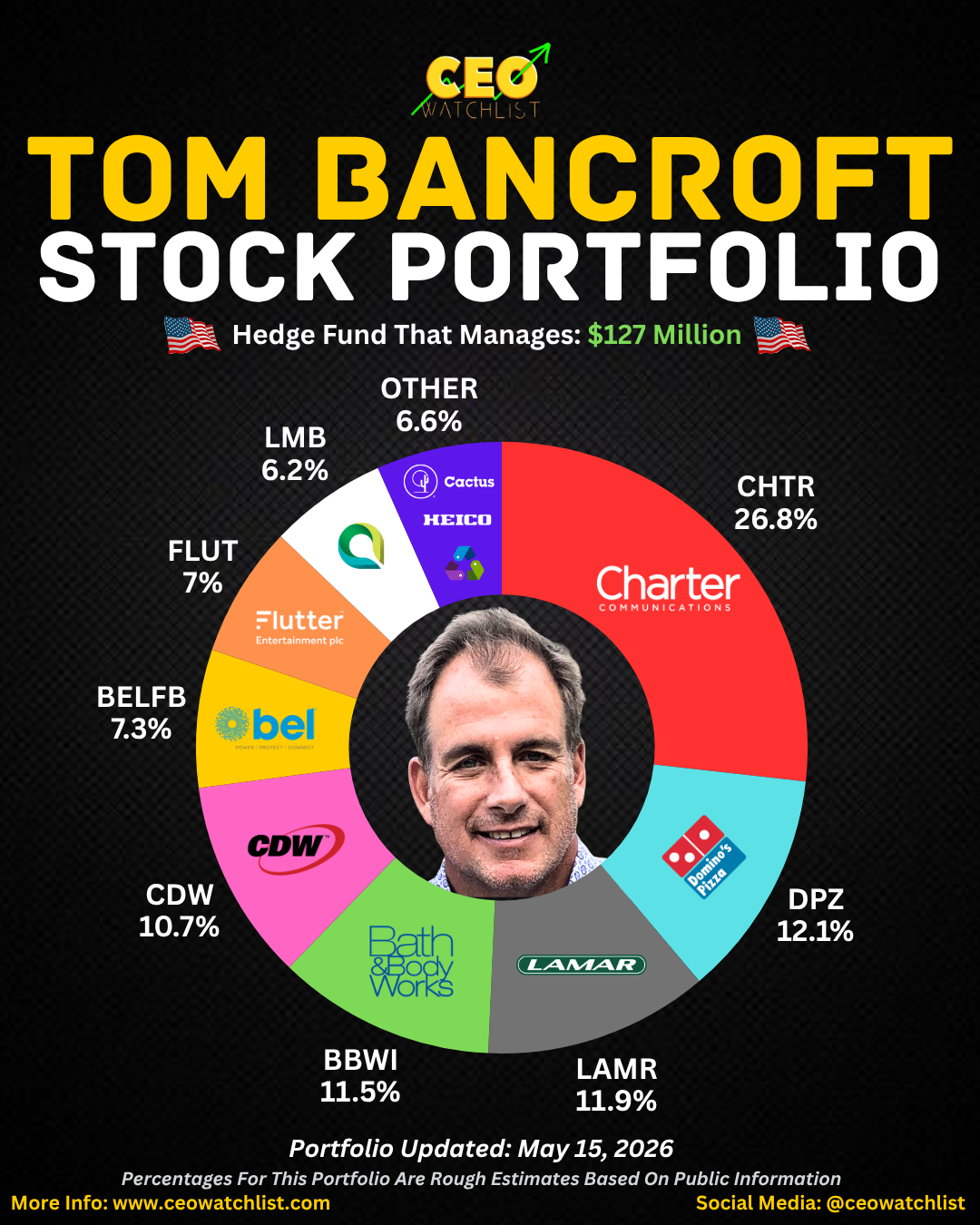
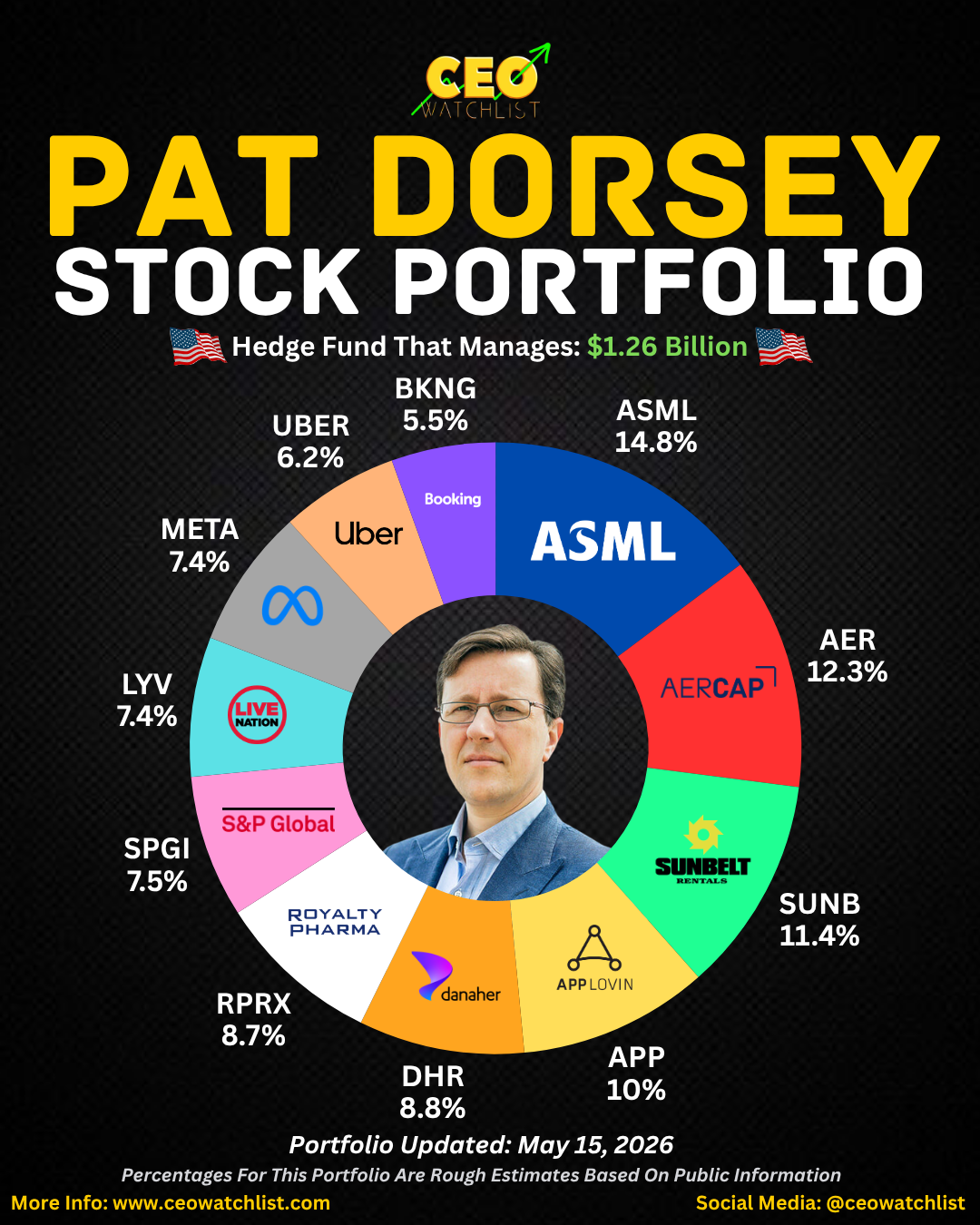
INFOGRAPHICS FOR THE WEEK:

CONTACT US: [email protected]
Responses