

TOP NEWS AFFECTING THE STOCK MARKET THIS WEEK:
-
The Next Great Defense Stocks Are Cybersecurity, Not Missiles! Our Top 4 Defense Stocks For This New Age Of Technology! (Source)
Stocks mentioned: $LMT, $NOC, $CRWD, $PANW, $ZS, $PLTR
The world still thinks in tanks, planes, and Lockheed (LMT) contracts. But wars are no longer won with metal, they’re won with computers. While investors rush into legacy defense stocks every time a missile hits the news cycle, we believe the better investment is elsewhere. In a world where power grids, hospitals, and entire banking systems can be turned off with code, it’s not missiles we should be worried about, it’s malware. Kinetic warfare still gets the headlines, but cyber is where the next frontiers of dominance are being drawn.
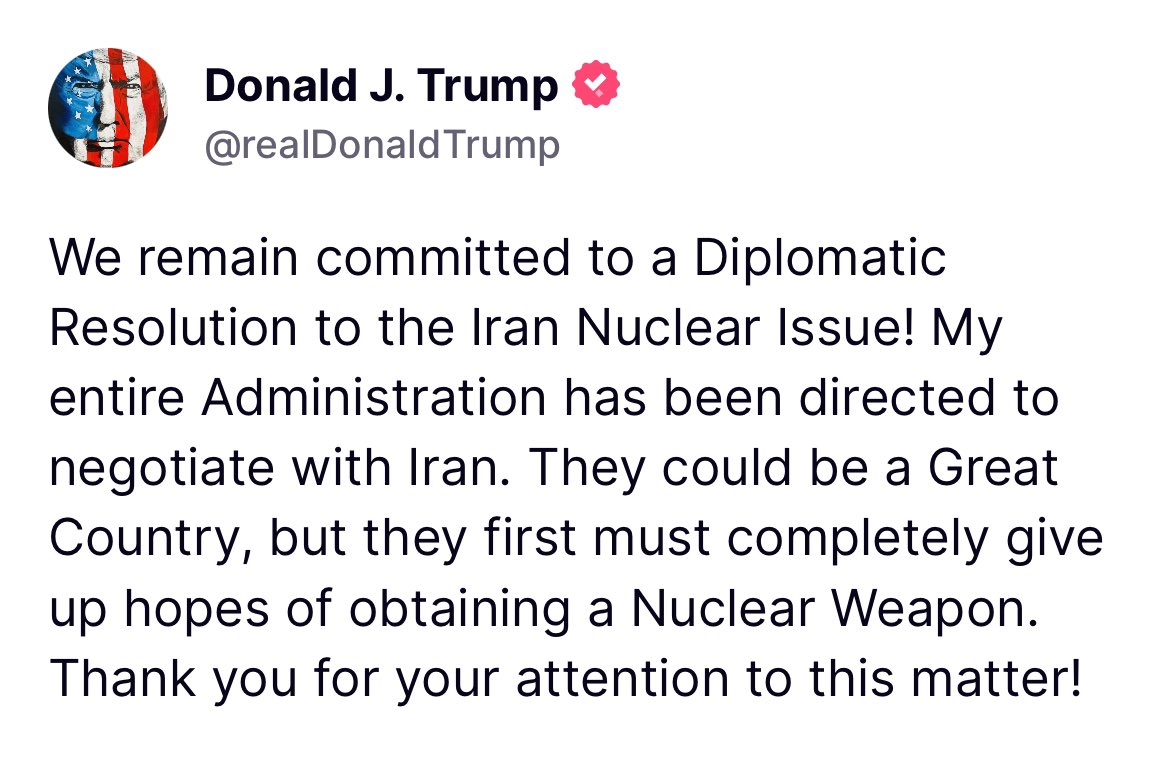
This shift is not hypothetical, it’s already happening. The Israel–Iran conflict has exposed the fragility of old-world thinking. In a potential Persian Gulf escalation, oil tankers and F-35s may grab attention, but the truly devastating impact will come from cyberattacks on critical infrastructure. The U.S. has already confirmed heightened cyber alertness. Iran has historically responded to kinetic strikes with asymmetric cyber warfare, targeting American financial systems and Middle Eastern industrial networks. Traditional defense companies like Lockheed Martin (LMT) and Northrop Grumman (NOC) are still producing hardware for a battlefield that is rapidly digitizing. They are locked into government procurement cycles and bureaucratic inertia. But the real constraint in modern conflict isn’t who has the most missiles, it’s who has the most resilient, agile, and offensive-ready cyber capabilities.
What’s different this time is that the technology stack is flipping. Software is no longer an auxiliary support for defense, it is the defense. The bottleneck is no longer production lines; it’s expertise in AI-enabled threat detection, rapid deployment, and real-time response. We are entering an era where zero-day exploits matter more than stealth bombers. And a new class of companies is ready to capitalize:
-
CrowdStrike (CRWD) – Arguably the most scalable endpoint protection platform globally. CrowdStrike’s Falcon platform operates like a digital immune system for the enterprise and government, proactively identifying and neutralizing threats in real time.
-
Palo Alto Networks (PANW) – A legacy firewall company that has successfully transitioned into cloud-native AI-driven threat prevention. Its Prisma and Cortex products position PANW as a critical infrastructure layer for national and corporate cyber defense.
-
Zscaler (ZS) – Zscaler’s zero-trust architecture is designed for the post-perimeter world, securing cloud and remote environments for the public and private sectors alike.
-
Palantir Technologies (PLTR) – Already embedded with government and defense agencies, Palantir provides battlefield-level data intelligence, combining cyber ops and AI-enabled decision-making with geopolitical scale.
In short, the future of national defense will be written in code, not forged in steel. Markets are still pricing cybersecurity stocks like they’re software utilities, not mission-critical defense infrastructure, which they now are. This is a generational mispricing. As cyber becomes the primary attack vector in both state and non-state conflicts, the value of these firms will be repriced accordingly. The next Lockheed Martin won’t build missiles. It’ll ship software.
-
-
The Market Is Sleeping On One Of The Most Critical Stock Sectors of the Next Decade!!! (Source)
Stocks mentioned: $AXON, $MSI, $SSTI
The greatest risk to American stability is no longer external, it’s internal. While investors obsess over rate cuts and AI chips, they’re ignoring the more urgent reality domestically...our cities are becoming battlegrounds between political parties. Political violence is rising, institutional trust is collapsing, and public safety is now the defining constraint for modern civilization. Just like airports needed TSA after 9/11, our society is about to rewrite the infrastructure of safety, with new winners in the stock market.
The old model of policing, reactive, underfunded, and offline, is breaking down. What comes next is a digitized public safety system, powered by software, sensors, and scalable platforms that reduce the margin for error and increase trust between governments and citizens. This is not just about policing; it’s about enabling civil society to function. The next decade will see enormous investment into tools that prevent escalation, provide transparency, and defend all civilians from threats domestically and internationally. The bottleneck isn’t demand, it’s institutional readiness, but like all systems under stress, the market is already picking winners.
A new class of companies is emerging that sits at the intersection of public safety, technology, and social infrastructure. They are building tools that reduce violence, improve accountability, and make real-time decisions when seconds matter:
-
Axon Enterprise (AXON) – The definitive leader in public safety technology. Their ecosystem of body cameras, TASER devices, and evidence management software is becoming the default operating system for modern law enforcement. AXON’s cloud-based Command Center is more important now than ever, as agencies across the country prepare for heightened political unrest.
-
Motorola Solutions (MSI) – Often overlooked, MSI owns the critical communications backbone used by police, fire, and EMS nationwide. Their push into AI-based video surveillance and command center analytics is positioning them as an end-to-end safety platform.
-
ShotSpotter (SSTI) – With gun violence rising, SSTI’s acoustic gunshot detection system is increasingly deployed by cities to provide real-time location data to first responders. Every second counts in violent incidents, and SSTI is the first alert. We consider this stock extremely high risk compared to the other stocks, as they have a market cap of ~$200 million, but if they can execute, the potential is there!
We are entering an era where public safety isn’t just a social issue, it’s an investable thesis. Investors who wait for the legislation, the budget, or the public outcry will be too late. The infrastructure for civil stability is being rebuilt in real time, and the market is already rewarding those who understand the stakes. These companies are not just riding a trend, they are the infrastructure. The question is not whether society will need them. It’s how long it will take Wall Street to price that in. Now, if you're an Investment Club Member with us, and haven't seen our updated stock portfolio, we actually own a few stocks mentioned in this newsletter, so CLICK HERE to access it now becuase we have made some rotations recently! However, if you're not a member yet and have been wanting to join, then CLICK HERE to join today, as we are offering access to The Club for only $150 (our "Father's Day" discount).
-

-
How The Federal Reserve Can Affect Stocks This Week! (Source)
Stocks mentioned: $NVDA, $DDOG, $ROKU, $TTD
Besides the Iran-Israel war, we are facing a different type of war domestically...and that war is between the President and the Fed. Trump has been pushing the Fed to cut interest rates (positive for stocks) while the Fed has been adamant on not cutting interest rates (negative for stocks...most of the time). Jerome Powell, the Fed Chairman, wants to remain data dependent and play things more cautiously. Trump, on the other hand, believes Powell is taking too long to act, which could be detrimental to the markets. Every month the Fed waits, the odds rise that we overshoot into stagnation.
The pressure is mounting on the Federal Reserve. With inflation cooling and the economy holding firm, many are calling for immediate rate cuts. While some view this as premature, others see it as a strategic opportunity to preserve momentum. But beneath the political noise lies a legitimate debate: is the Fed exercising caution, or waiting too long? This week we will find out. Markets are predicting no rate cut this week, but we are hoping that Powell will at least speak about the possibility of a rate cut this year, which would be positive for the stock market.
At CEO Watchlist, we respect the Fed’s commitment to data dependency, but we are concerned they're being overly cautious. Fed Chair Jerome Powell is navigating a complex environment, balancing the risk of reigniting inflation with the need to sustain growth in a higher-for-longer world. His restraint may ultimately prove prudent. But our concern is about timing. Monetary policy operates with a lag. Waiting for all indicators to turn green may leave the Fed reacting rather than leading, and in doing so, miss a critical window to ease just enough to keep capital flowing where it’s needed most.
The real bottleneck today isn’t inflation, it’s cost of capital. Credit conditions have quietly tightened across corporate and consumer lending, and risk appetite is thinning. A small, early cut, especially if clearly framed as insurance, not stimulus, could support lending, business investment, and market stability without undercutting the Fed’s credibility. In our view, it’s not about pivoting too soon, it’s about avoiding the trap of doing too little, too late.
For investors, this debate matters. Growth stocks, particularly those reliant on long-duration cash flows, are highly sensitive to rate trajectories. If and when cuts begin, even modestly, the following companies are positioned to benefit from reaccelerating growth sentiment and falling capital costs:
-
Nvidia (NVDA) – As the dominant AI infrastructure provider, NVDA stands to gain from increased enterprise investment and lower capital hurdles in cloud and data center expansion.
-
Datadog (DDOG) – A high-growth observability play that would benefit from expanding SaaS budgets and a broader risk-on shift in software multiples.
-
Roku (ROKU) – A speculative name that’s underperformed in a high-rate regime. A modest cut could reawaken investor interest in consumer discretionary tech.
-
The Trade Desk (TTD) – Ad spending is cyclical and closely tied to business confidence. Rate cuts could unlock new campaign budgets across the programmatic space.
Ultimately, this isn’t about picking sides, it’s about preparing for a shift that, when it comes, will reprice risk across asset classes. Whether Powell moves in July or waits until year-end, rate sensitivity is back in play. Investors who understand the dynamics, and position early, stand to benefit the most when the pivot finally arrives.

-
INSIDER TRADES FROM THE WEEK:
1. Post Holdings (POST) - William Stiritz, Director, bought ~$20.3 million of Post Holdings stock on June 5, 2025, but it was reported to the public on June 9, 2025. (Source)

2. Bausch Health (BHC) - John Paulson, Director, bought ~$14.7 million of Bausch Health stock between June 10-12, 2025, and it was reported most recently to the public on June 12, 2025. (Source)

3. Appfolio, Inc. (APPF) - Timothy Bliss, a director, bought ~$4.7 million worth of Appfolio stock between June 5-9, 2025, and it was reported to the public on June 9, 2025. (Source)

FATHER'S DAY SPECIAL: UNLOCK ALL INSIDER TRANSACTIONS BY JOINING THE INVESTMENT CLUB. JOIN TODAY FOR ONLY $150!!!

INFOGRAPHICS FOR THE WEEK:



CONTACT US: [email protected]
Responses