
TOP NEWS AFFECTING THE STOCK MARKET THIS WEEK:
This Old Tech Stock May Have Just Come Back Into Style: Why It Could Double From Here... (Source)
Stocks mentioned: $INTC, $TSM, $NVDA, $AMD, $ARM, $MRVL, $CDNS, $AMKR, $ETN
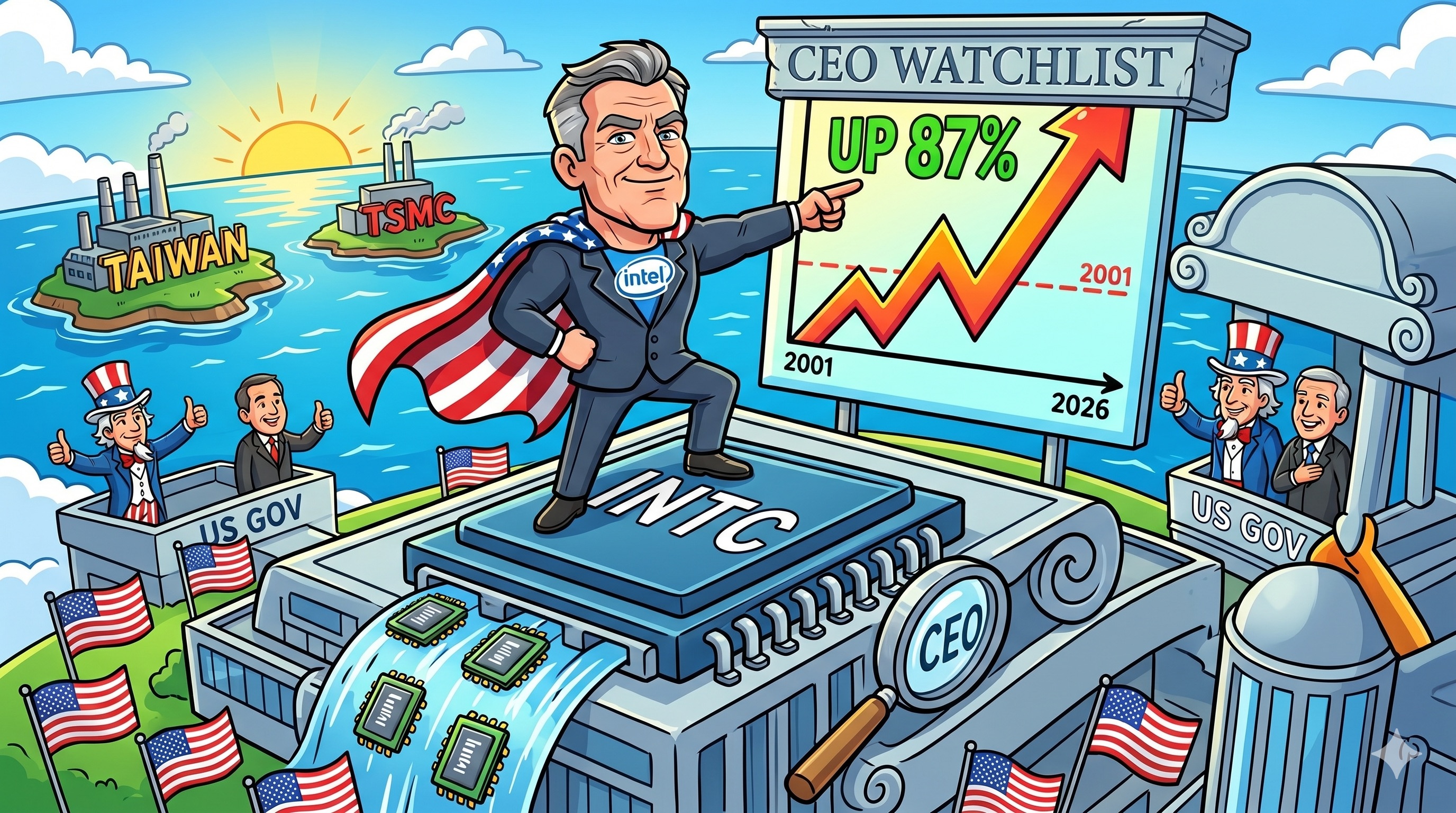
A sleeping giant that has been hibernating for decades is finally showing some signs of life! The stock we're talking about is none other that Intel (INTC)! Following a blowout Q1 2026 earnings report that featured a massive beat and raise, Intel saw its stock catapult 30% in pre-market trading on Friday morning. While it settled to a 23% gain by Friday’s close, the momentum is undeniable in the sense that this stock is up a staggering 75% in the last month, reclaiming all time high prices not seen since the peak of the 2001 dot-com era! For years, the narrative was that Intel was a "dinosaur" left behind by the mobile and AI revolutions. But today, that narrative has shifted from extinction to a strategic resurrection. Intel is no longer just a chip company; it has become the bedrock of American technological sovereignty.
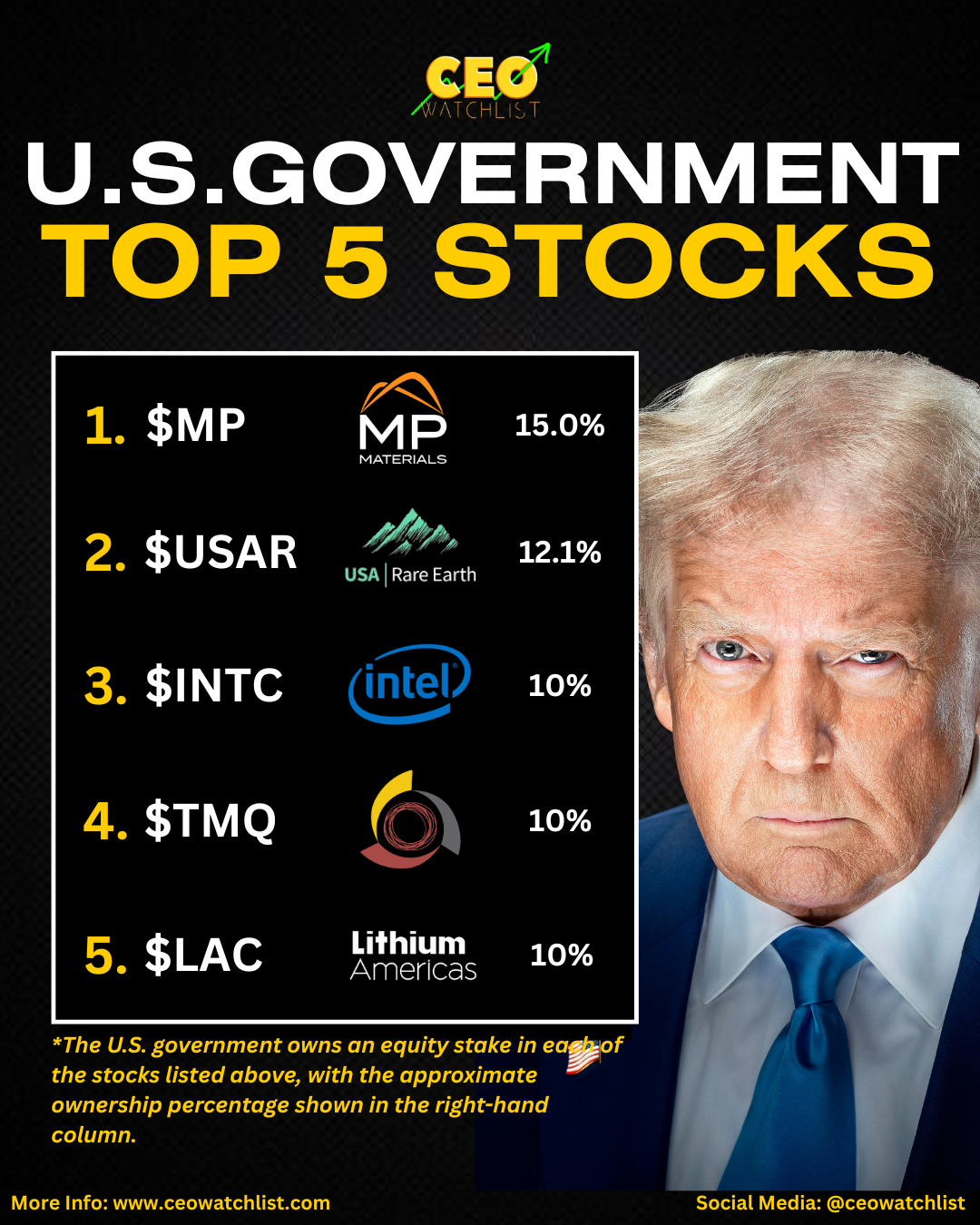
The core of this thesis lies in the "Great Reshoring." Currently, the world’s most advanced semiconductors, the "brains" of everything from your iPhone to F-35 fighter jets, are primarily manufactured by Taiwan Semiconductor (TSM) in Southeast Asia. In a world of increasing geopolitical friction, relying on a different country for 90% of advanced logic chips is a massive systemic risk. The Trump administration has made domestic manufacturing a cornerstone of its "America First" policy, pushing for a complete decoupling of critical supply chains from volatile regions. Trump even went as far as taking a 10% stake in Intel last year, when it was roughly $20 per share. That means in less than a year, their investment has already made a whopping 300% return! But beyond the incredible returns, it's telling you that technology has become a crucial battle ground point for national security. As a country, we can no longer risk losing the war on technology, which means expect a lot more money to flow into critical domestic tech names.
Now although Taiwan is an ally of the United States, our current dependency on Taiwan Semiconductor (TSM), the company that develops 90%+ of all high end chips including Nvidia (NVDA) and Advanced Micro Devices (AMD), has to change. With ever growing risk of China wanting to invade Taiwan, and reabsorb the country, for our own national security reasons, we need to be more self-reliant on our own tech capabilities rather than leaning on Taiwan for what we would consider the most important aspect of this technological renaissance. If Intel can capture even a fraction of the market share currently held by a company like TSM, then the valuation gap could be enormous. With Intel currently valued at approximately $400 billion, a successful "re-rating", where the market values Intel like a high-growth foundry rather than a legacy hardware maker, could easily see the stock double or triple as it chases TSM’s trillion-dollar-plus shadow.
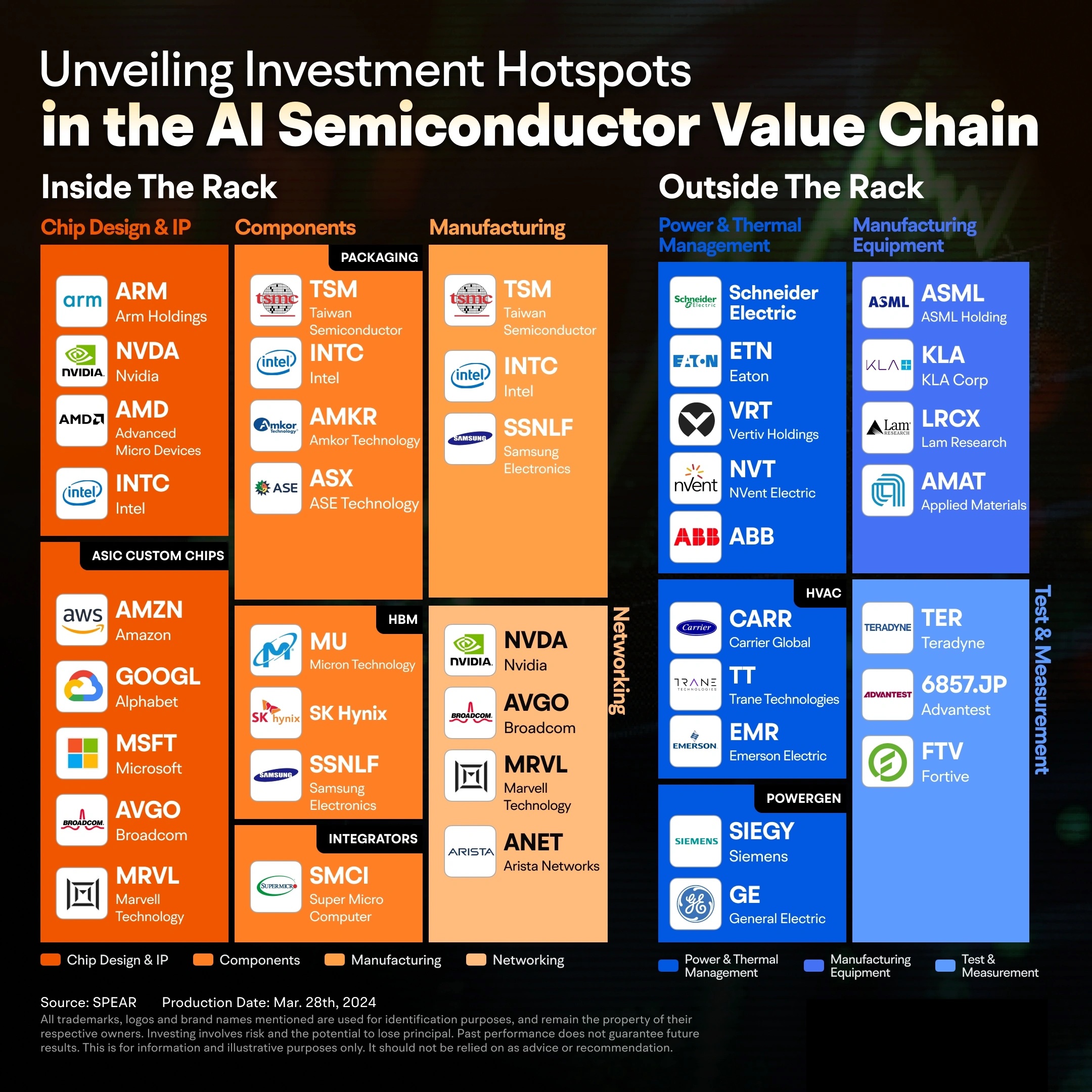
Another tailwind for Intel is that we are witnessing a fundamental "CPU resurgence" in the market today. For the last 2 years, the market was obsessed with GPUs (graphics chips) for AI training. But as AI moves from training to "inference" (actually running the AI in your daily apps), the Central Processing Unit (CPU) is reclaiming its throne as the primary workhorse. This shift is creating a massive "halo effect" across the entire semiconductor ecosystem. Therefore, as Intel ramps up its domestic production, it creates a rising tide for a specific list of downstream partners and infrastructure plays. That's why in addition to Intel, there are 5 other stocks that we think are poised to benefit, which includes:
- Arm Holdings (ARM): This company is the architecture behind the world's most power-efficient chips, specifically CPU's, which is why as Intel's business improves, ARM indirectly is benefiting.
- Marvell Technology (MRVL): A leader in the data infrastructure and networking "plumbing."
- Cadence Design Systems (CDNS): One of the two major players in chip designing, acting as a duopoly in the entire space.
- Amkor Technology (AMKR): Essential for "advanced packaging," which directly benefits when companies like TSM or Intel are seeing growth.
- Eaton (ETN): The power management giant providing the massive electrical infrastructure for new U.S. fabs.
In conclusion, the Intel of 2026 is a fundamentally different animal than the Intel of 2021. The combination of a blowout financial performance, a direct equity stake from the U.S. government, and a favorable geopolitical tailwind has created a "perfect storm" for investors. By positioning itself as the sole American alternative to the Taiwan-centric supply chain, Intel has transformed from a value trap into a high-conviction play on the future of American industry.
Earnings Week 3: The 5 Big Tech Stocks We’re Watching... (Source)
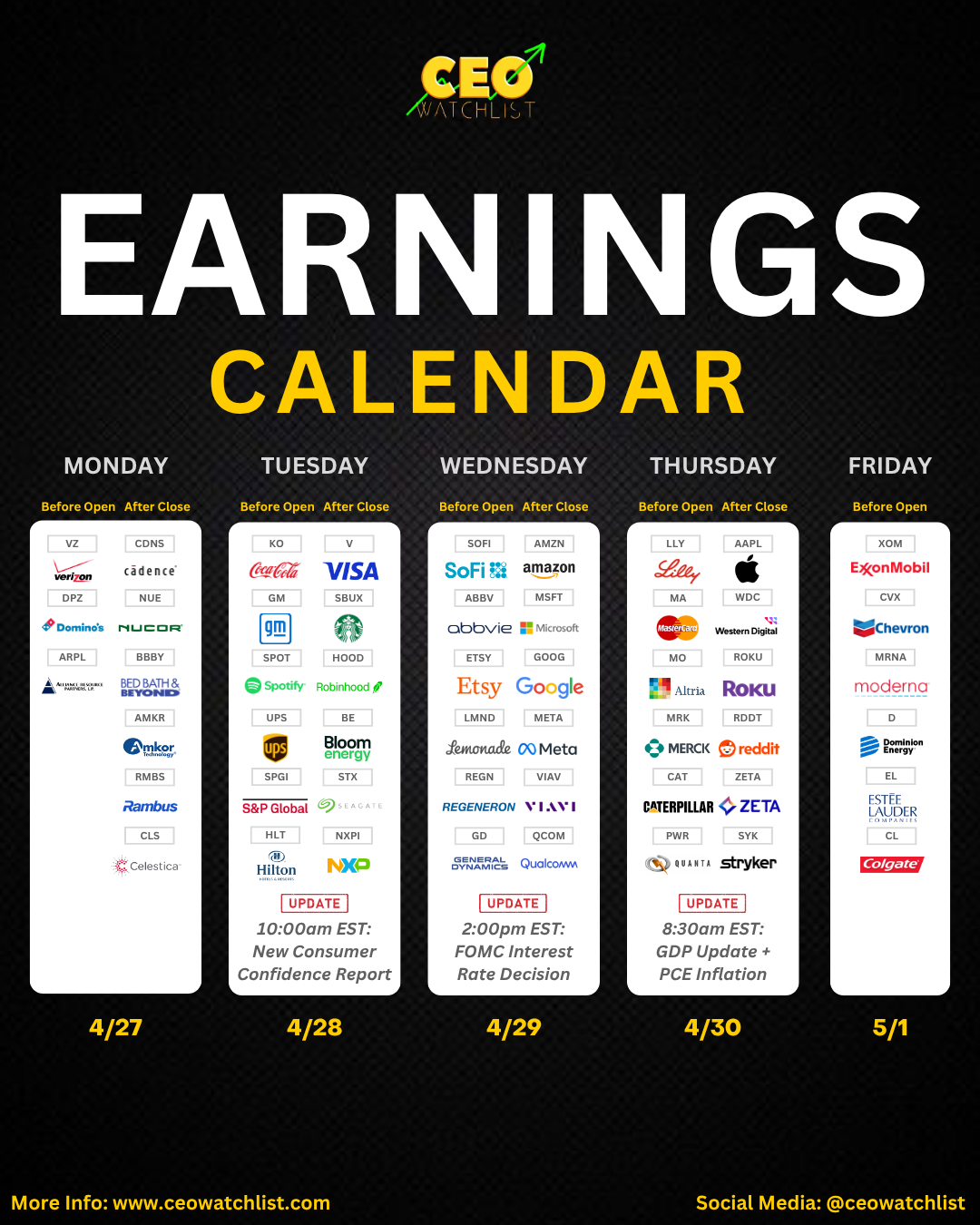
Stocks mentioned: $MSFT, $AMZN, $GOOG, $META, $AAPL, $CDNS, $AMKR, $HOOD, $QCOM, $VIAV, $PWR
Welcome to week 3 of earnings season, where we have finally got past the boring bank stocks and are now entering what many consider to be the most important week of the quarter ... big tech earnings! While people are still stressing the war in the Middle East and a new Fed Chair to take the helm of the Federal Reserve, we are solely focused on the numbers that these companies are putting out in their reports. We are at a critical junction where tech will either make or break this market and the only way we will know which direction stocks are going to move in is by paying very close attention to the updated financials that the largest companies in the entire world are going to give us this week.
But before we get into the stocks we're watching, it's important to note that beyond earning reports, there are a few crucial economic updates that will have huge impact on whether stocks go up or down! On Wednesday, the Federal Reserve will deliver its latest FOMC Interest Rate Decision, followed closely by Thursday’s GDP Update and PCE Inflation data. The market is currently pricing in a delicate "soft landing," but any hawkish deviation from the Fed or a hotter-than-expected inflation print could trigger a sell off in the markets. So as you can see, there's a reason why many people consider this week the most important one to pay attention to of the quarter!
But without further ado, here are the 5 stocks we are watching for this week:
- Microsoft (MSFT): The bull case hinges on whether or not Microsoft's cloud division (Azure) can continue to accelerate and grow, despite competition from Google Cloud and Amazon Web Services. The bear case is pretty concerning, and a major reason why Microsoft has lagged many of its tech peers, which is their software. Obviously this past year has been really rough on software companies, and for Microsoft, that's their core business. If they can't show that their software is evolving and won't be disrupted by AI, then this "Mag 7" giant could continue to lag the market.
- Amazon (AMZN): Bulls are focused on the twin engines of AWS growth and the high-margin advertising business, which continue to offset retail logistics costs. However, the bear case warns that persistent inflation could finally begin to sap the strength of the American consumer, leading to a surprise miss in e-commerce guidance. This still remains our favorite "Mag 7" stock for 2026.
- Google (GOOG): The bull case is centered on Gemini’s integration into Search and the potential for a massive YouTube ad-revenue beat as political spending ramps up. The bear case remains concerned about the ongoing antitrust litigation and the threat that generative AI poses to the traditional "cost-per-click" moat.
- Meta (META): Bulls point to the incredible efficiency of Meta’s AI-driven ad-ranking systems and the growing traction of Threads as a legitimate alternative to X. On the other hand, the bear case focuses on the continued multi-billion dollar "burn" in Reality Labs and the risk of rising customer acquisition costs in a saturated market.
- Apple (AAPL): The bull case relies on a strong iPhone 17 preview and a surge in Services revenue that proves the ecosystem is stickier than ever. The bear case, however, highlights the continued stagnation in the Chinese market and the lack of a clear, market-leading hardware play in the generative AI space.
As we prepare for 5 of the largest companies in the entire world to report their earnings, there are still a handful of other important stocks reporting this week. A few of those names include Cadence (CDNS), Amkor (AMKR), Robinhood (HOOD), Qualcomm (QCOM), Viavi (VIAV), and Quanta Services (PWR). The "Mag 7" names in addition to these are going to cause massive volatility swings either up or down for the entire stock market, depending on how good or bad the reports are. Obviously this is a lot to track, so for those of you who are members of the CEO Watchlist Investment Club, please make sure to have your notifications turned on in the app. We will be updating you in real time about these earnings as they come out live, as well as updating you on our stock and options portfolios, with any changes we make to them. This is the week that defines the quarter, make sure to stay sharp!
"Super Investor" Spotlight: Li Lu (Himalaya Capital) (Source)
Stocks mentioned: $GOOGL, $GOOG, $BAC, $PDD, $BRK.B, $EWBC, $OXY, $CROX, $AAPL
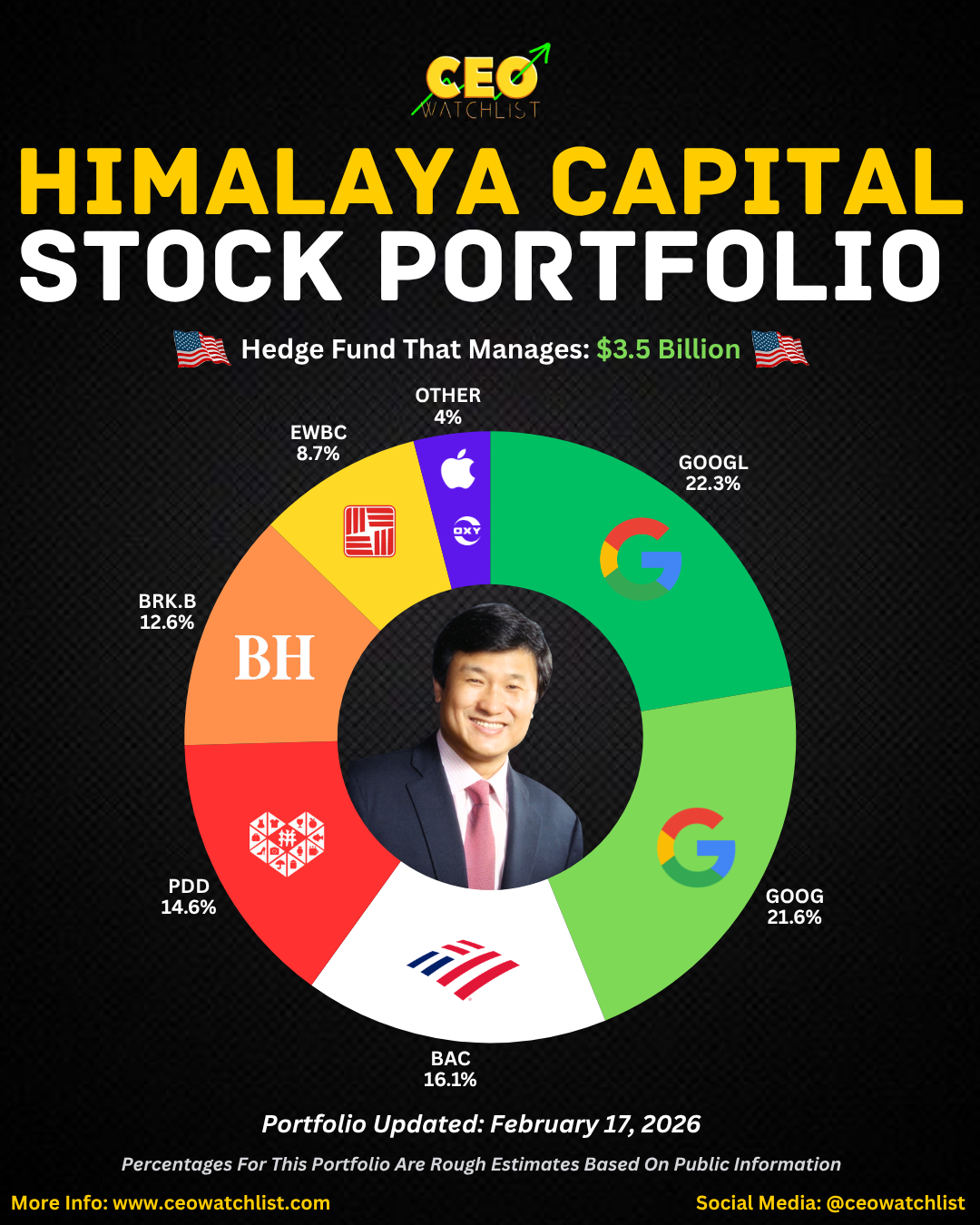
This week’s "Super Investor" Spotlight focuses on Li Lu, the founder of Himalaya Capital. For those new to the term, a "Super Investor" is an elite money manager who manages billions and has a verified track record of outperforming the S&P 500 over long periods. Fun Fact: Li Lu was a close friend and the only outside manager that the late Charlie Munger (Berkshire Hathaway) ever trusted with his personal money. He is known in the financial world as the "Chinese Warren Buffett." Li Lu uses a rigorous value-investing framework, similar to Buffett, looking for strong businesses with durable moats and holding them for prolonged timeframes with extreme conviction.
Li Lu’s newest 13F filing reveals a "Super Investor" who is not afraid of massive concentration. Managing roughly $3.5 billion in U.S. equities, his portfolio consists of only 9 holdings. While many investors are currently worried about the volatility in "Big Tech" and the shifting landscape in China, Li Lu has remained steadfast. He hasn't followed the crowd into the newest AI hype cycles; instead, he has doubled down on the "toll booths" of the internet and the backbone of the banking system.
Here is his 9 stock portfolio that even Warren Buffett approves of:
- Alphabet Inc - Class A (GOOGL) – 22.3%
- Alphabet Inc - Class C (GOOG) – 21.6%
- Bank of America (BAC) – 16.1%
- PDD Holdings (PDD) – 14.6%
- Berkshire Hathaway (BRK.B) – 12.6%
- East West Bancorp (EWBC) – 8.7%
- Occidental Petroleum (OXY) – 1.7%
- Crocs Inc (CROX) - 1.51% - *NEW BUY*
- Apple Inc (AAPL) – 0.8%
His only major change this quarter was a new buy in Crocs Inc (CROX), while he maintained pretty much everything else exactly the same, signaling that he still has bery high conviction in "Big Tech" as almost 50% of his entire portfolio is in Google alone. Now some of you may be questioning the performance of such a highly concentrated portfolio, but Li Lu wouldn't be sitting at the same table as the greats like Buffett and Munger, if he was anything less than extraordinary. That's why the performance of this concentrated strategy speaks for itself. Over the past 3 years, Li Lu has delivered a return of roughly 130%, significantly outpacing the S&P 500’s 78% return, as you can see below:
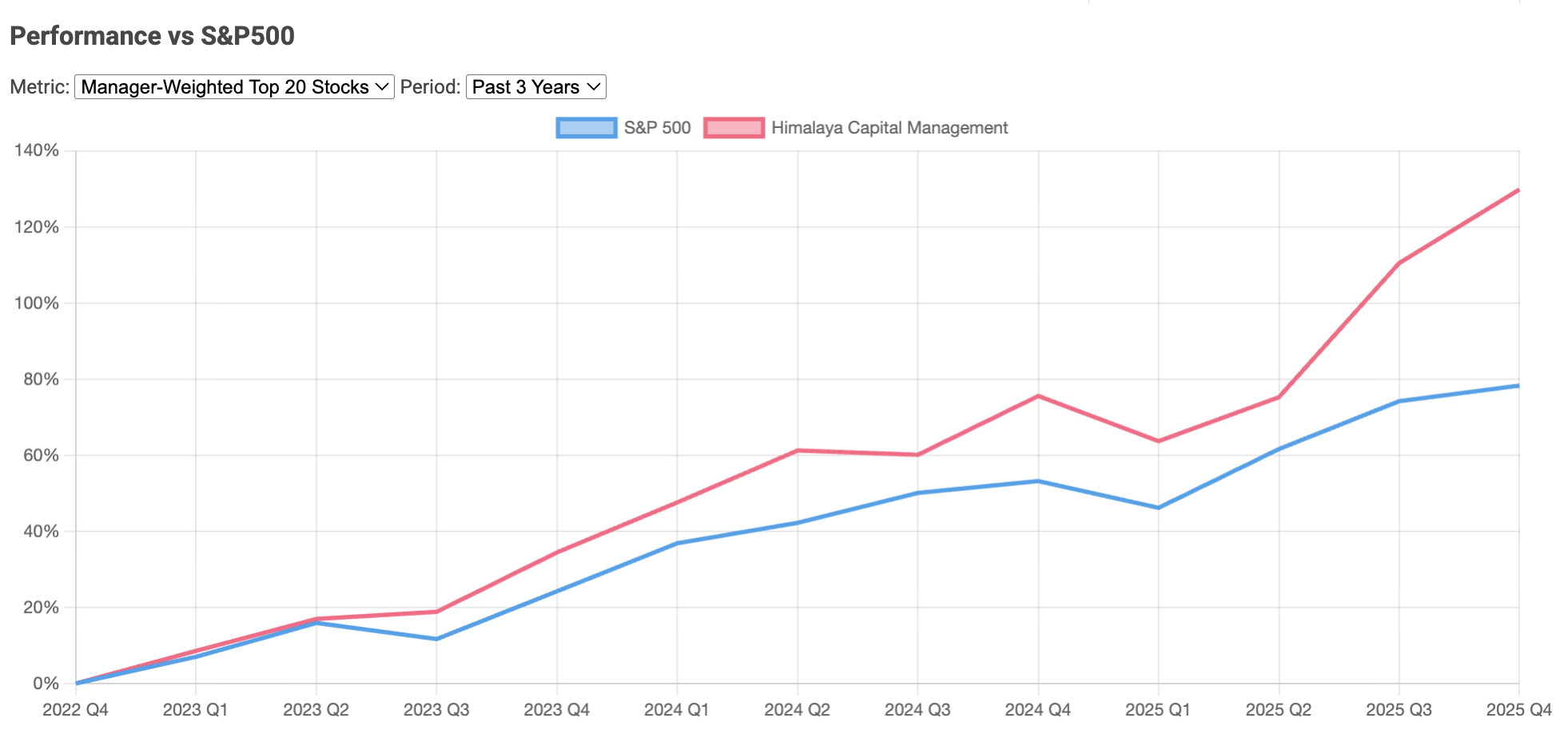
This massive outperformance is the result of a simple process of finding incredibly strong companies and then just sitting on your hands and letting great ideas compound rather than over-trading them. We track Li Lu because he represents the "Munger School" of investing: find a few great businesses, buy them at a fair price, and do nothing. As long as he continues to beat the market by betting big on a handful of global leaders, we will continue to watch his portfolio for any signs of change.
INSIDER STOCK TRADES FROM THE WEEK:
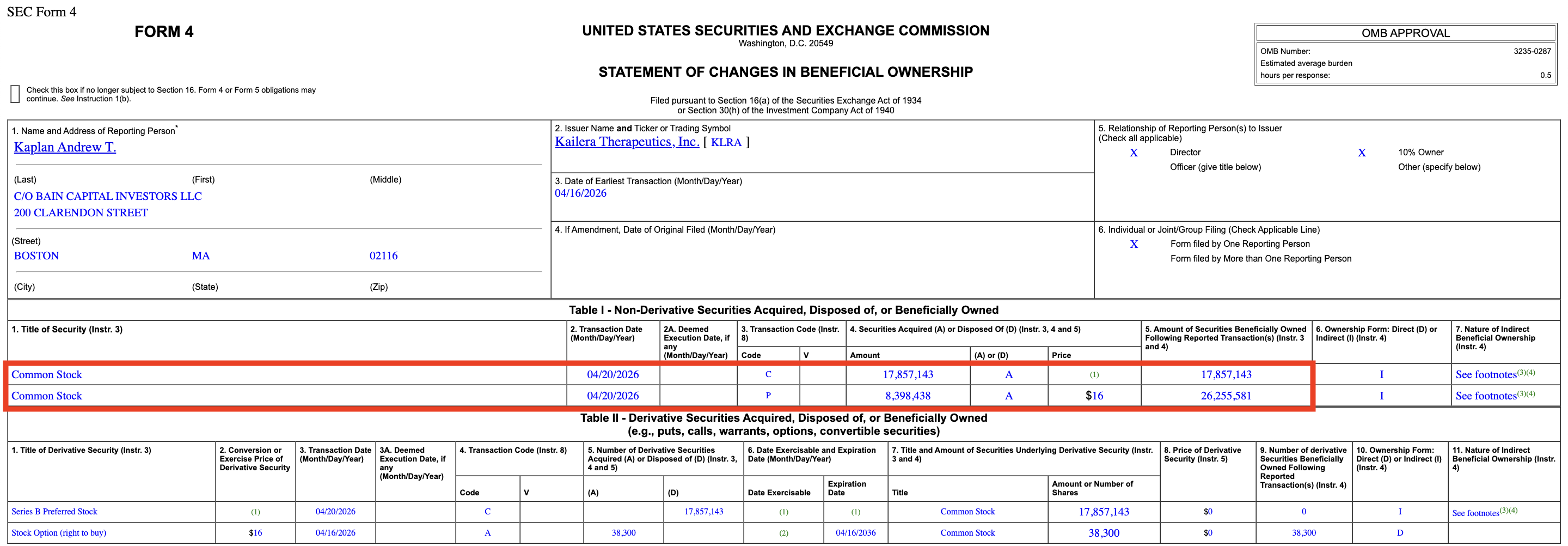
1. Kailera Therapeutics (KLRA) - Andrew Kaplan (Director) bought roughly $134,000,000 worth of KLRA at an average price of $16/share on April 20, 2026, but it wasn't reported to the public until April 22, 2026. (Source)
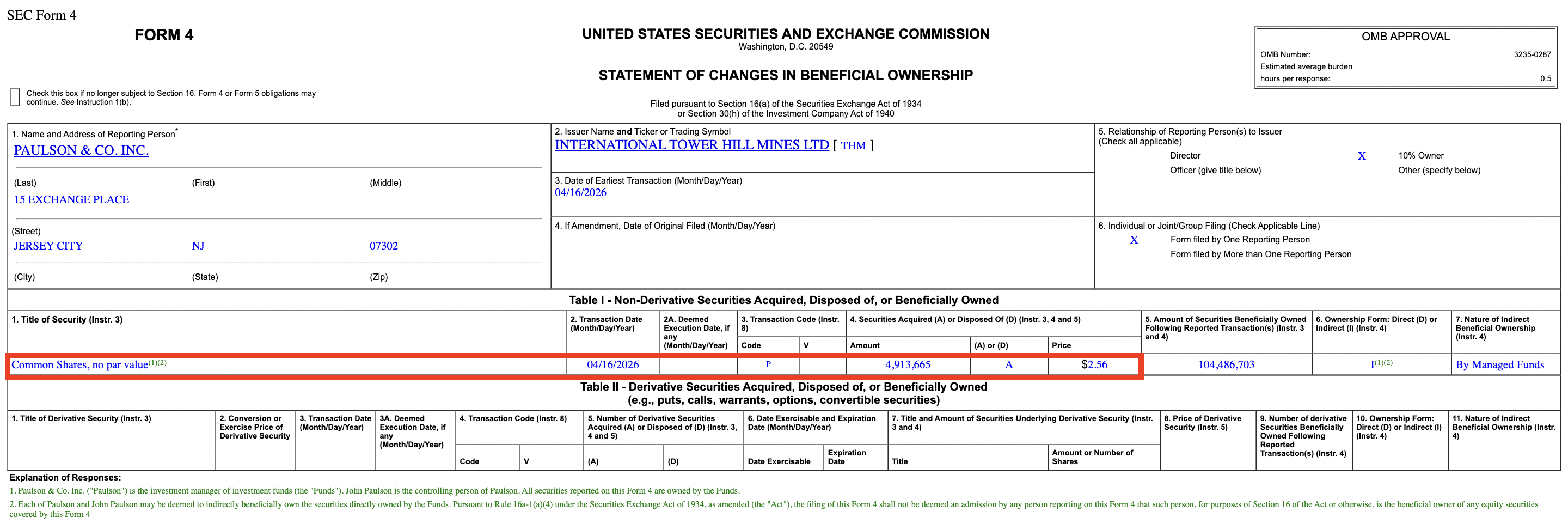
2. International Tower Hill Mines (THM) - Billionaire John Paulson (Director) bought roughly $25,000,000 of THM at an average price of $2.56/share on April 16, 2026, but it wasn't reported to the public until April 20, 2026. (Source)
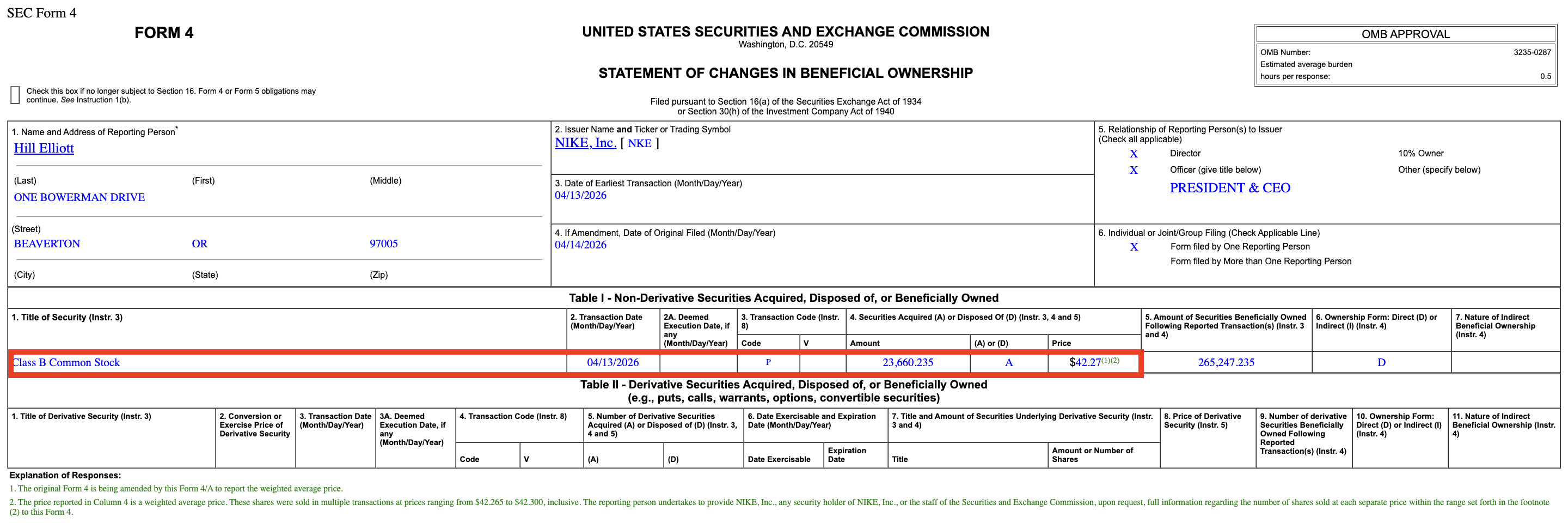
3. Nike (NKE) - Elliott Hill (CEO) bought roughly $2,000,000 of NKE at an average price of $42.27/share on April 13, 2026, but it wasn't reported to the public until April 22, 2026. (Source)
Over 2,000 people have already signed up for my FREE Masterclass video on how to unlock my exact strategies for finding winning stock/options trades! I'll share everything including how to find what Politicians and CEOs are buying. Don’t miss your chance to get in for FREE before spots fill up!

INFOGRAPHICS FOR THE WEEK:

CONTACT US: [email protected]
Responses