
TOP NEWS AFFECTING THE STOCK MARKET THIS WEEK:
Is Big Tech Headed for Trouble in 2026? These 3 Stocks Could Still Win Either Way! (Source)
Stocks mentioned: $AVGO, $ORCL, $CRM, $ADBE, $NFLX
The debate heading into 2026 has hardened into two loud camps. One argues that big tech has finally gone too far, that stretched valuations, AI spending fatigue, and slowing growth will force a long overdue pullback. The other believes the opposite, that technology remains the only true engine of earnings growth and will once again lead markets higher. Both views are compelling, with a little bit of truth to each. The real question is not whether tech survives 2026, but which tech stocks will underperform the markets, and which will outperform the markets.
We want to address both sides head on and then narrow the focus. Some companies are priced for perfection and vulnerable to even minor execution risk like we saw in Broadcom's (AVGO) earnings this past week, but we'll get into that in a minute. Others have already been punished, repriced, and in some cases left for dead, despite still operating at the center of long term technology adoption. Our goal here is not to pick a side in the tech debate, but to identify a small group of companies that can perform in either outcome because they combine durable fundamentals with valuations that already reflect skepticism. With that said, before we cover those 3 stocks with you, there's a couple things we need to go over that unfolded this past week.
The recent earnings from this past week did tech no favors. Broadcom (AVGO) and Oracle (ORCL) both reported results that fell short of what a nervous market wanted to see. Broadcom sold off more than 11% and Oracle dropped over 4% in a single session on Friday, dragging the entire sector lower into the weekend. The situation worsened when reports surfaced that portions of Oracle’s data center expansion could be delayed until 2028. This comes after a lot of doubt around Oracle and Open AI's partnership, and whether or not they could deliver. Needless to say, the market was spooked and even though Oracle pushed back on that narrative, they did so without providing concrete evidence, which left investors unconvinced. For those already worried about AI spending timelines and capital intensity, this was enough to hit the sell button.
And yet, the story is not one sided. Adobe (ADBE) delivered a sharp reminder this past week that strong execution still matters. Its earnings crushed expectations and directly challenged the idea that generative AI is destroying incumbent software business models. At least for now, Adobe proved that AI can be an enhancement rather than a replacement. The result is a market stuck in limbo. Good news is rewarded selectively, bad news is punished aggressively, and sentiment flips quickly. In environments like this, markets struggle to grind higher because fear travels faster than confidence. That is precisely why we shifted our focus toward high quality technology companies that are no longer priced at extreme multiples but still sit inside long term winning trends.
The opportunity we see is in a small set of leaders that have already corrected roughly 30% or more from their highs and now trade as if their best days are behind them. Nobody is going to argue that these 3 companies don't have their own issues, but with how much they've been punished, we think they are closer to a bottom rather than a top. When you find stocks like this, they tend to offer great risk-reward and are a lot of times big winners for a portfolio. The 3 stocks we uncovered are:
- Salesforce (CRM) - Remains the backbone of enterprise customer data and workflow, with improving margins and a renewed focus on capital discipline. The pullback has reset expectations without breaking the core business. Salesforce is currently down roughly 30% from its highs and is trading at one of its lowest multiples in the past 10 years.
- Adobe (ADBE) - Still dominates creative software, and its ability to integrate AI into existing products reinforces pricing power rather than eroding it. Recent earnings confirmed this resilience despite fears that Chat GPT and Gemini could disrupt this company. For now, Adobe is proving that it's not going to go down without a fight and its fundamentals keep improving. Adobe is down roughly 50% from its highs.
- Netflix (NFLX) - Has transitioned from a pure growth story into a cash flow machine, with global scale, pricing leverage, and a now proven ad supported model that expands its monetization runway. A lot of people don't think of Netflix as a technology play, but in our opinion, Netflix is the epitome of entertainment techonlogy. Because of the recent bidding wars for Warner Brothers, Netflix's stock has seen a sell-off which could range bound the stock's price action, but we believe it's closer to the bottom of that range rather than the top, which offers good upside potential. Netflix is down roughly 30% from its highs.
Each of these companies face valid criticisms, and bears will argue that competition, saturation, or slower growth justify lower valuations. That argument deserves respect. But the counterpoint is equally strong. These are category leaders with entrenched ecosystems, improving fundamentals, and valuations that already reflect a great deal of pessimism. If tech leads in 2026, they benefit. If tech struggles, they are far better positioned than the names still priced for perfection.
The takeaway is not that big tech is finished, nor that it is guaranteed to soar. The takeaway is that the market is mispricing durability. The next phase for technology will not reward hype, it will reward execution, cash flow, and reasonable expectations. That shift is already underway, and it remains underappreciated. For investors willing to look past the noise, the most compelling opportunities may be in the very stocks the market has already written off.
If you want to see all of the stocks we are buying in the CEO Watchlist Investment Club for 2026, then [CLICK HERE] to join today. As a newsletter subscriber, we are granting you $200 OFF the subscription! Spots are limited and are on a first-come, first-serve basis. [CLICK HERE] to grab your $200 discount code or click on the image below, which describes everything that is included with your subscription. See you in the club soon!

Stock Spotlight: This Small $5 Billion Stock Is Powering the AI Boom And We Think It Has A Lot More Room To Run! (Source)
Stocks mentioned: $ENS, $NVDA, $AMZN, $MSFT, $EOSE
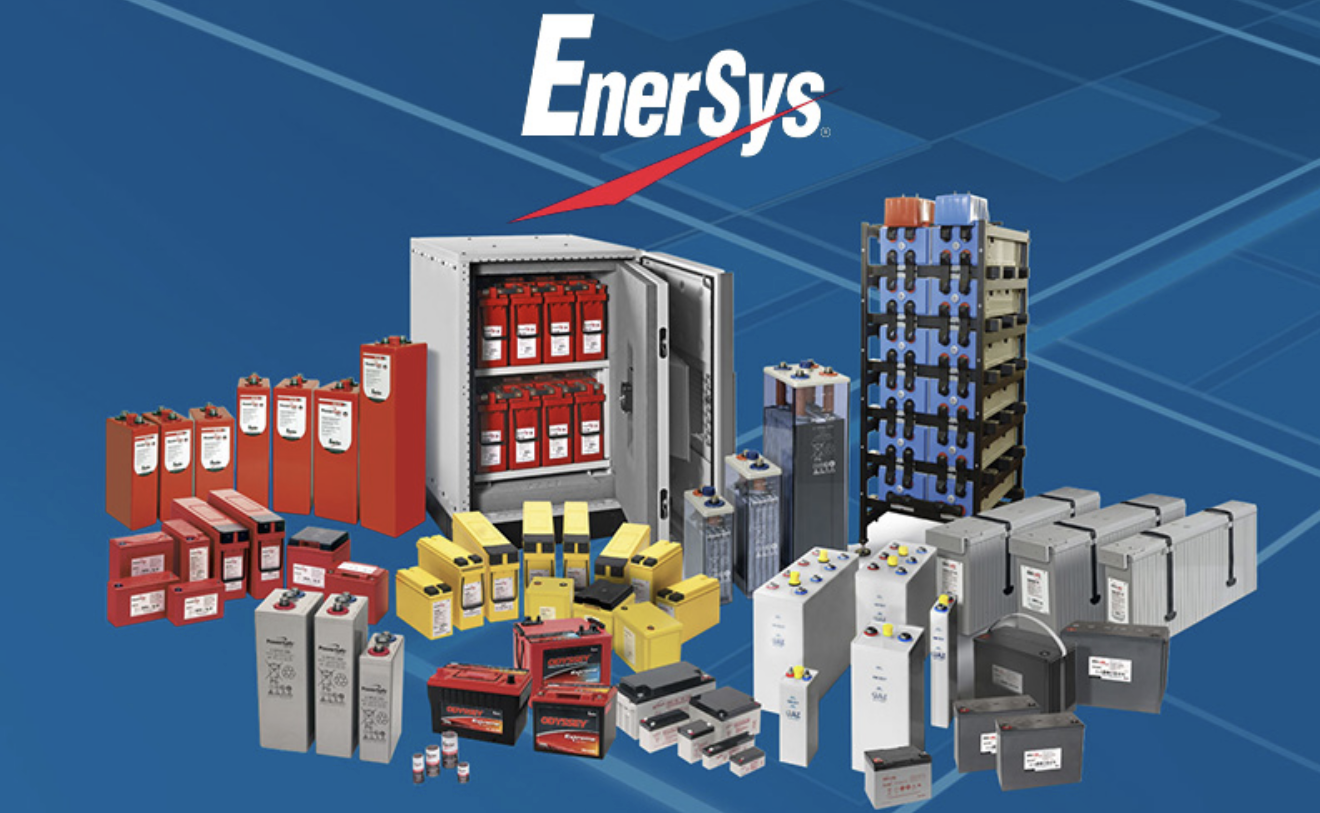
This week, we’re switching things up and bringing you a "Stock Spotlight" story, which is a format we’ve used in the past to highlight individual companies that caught our attention. Right now, there’s one "under the radar" name we’ve been digging into that we think is worth a closer look. Data centers, telecom networks, warehouses, and defense systems all depend on reliable energy storage and backup power, so as AI adoption accelerates, that dependency is only growing. That being said, there is one company that's quietly sitting at the center of this trend called EnerSys (ENS), and based on the company's fundamentals, the market may be severely underpricing its importance.
EnerSys is a U.S. based global leader in stored energy systems. Instead of consumer batteries, ENS builds large-scale battery and power management systems for data centers, telecom towers, industrial warehouses, military and aerospace applications. Think of EnerSys as the battery backbone behind critical infrastructure. Its systems keep operations online during grid failures using advanced lithium and lead acid batteries, increasingly paired with intelligent energy management software. Unlike speculative battery startups that burn cash, EnerSys is profitable, established, and growing. The stock currently trades around 1.4x sales and roughly 12x forward earnings. These are extremely low levels that are rare to come across in today’s battery and AI-adjacent market.
In addition, there is a powerful macro backdrop that makes this story compelling as well. AI data centers require enormous amounts of electricity and dependable backup power to operate 24/7. As companies like Nvidia (NVDA), Amazon (AMZN), and Microsoft (MSFT) continue expanding global data center capacity, demand for energy storage near the grid is accelerating. At the same time, governments are prioritizing domestic manufacturing and grid resilience. EnerSys sits directly at the intersection of AI infrastructure, electrification, and national security, providing power solutions for commercial and defense customers who cannot afford downtime. This is not a nice to have product, it is mission critical.
Recent government support further strengthens the thesis. EnerSys secured a $199 million Department of Energy (DOE) grant to build a large scale lithium ion manufacturing facility in South Carolina, focused on industrial and defense grade batteries. On top of that, the company is benefiting from Section 45X tax credits under the "Inflation Reduction Act", which significantly reduce manufacturing costs. EnerSys recently received a $137 million refund tied to these credits and now expects ongoing annual benefits that materially improve margins. These are real cash flows, not projections, flowing directly to the bottom line, which we view as bullish for the stock.
Despite all of this, EnerSys continues to trade at deep value levels while hype driven peers attract far higher valuations. For example, unprofitable battery companies such as EOS Energy (EOSE), trade at massive price to sales multiples, while ENS generates real earnings at a fraction of the valuation. But let’s compare valuations. First thing we need to note for our beginning investors reading this is some quick terminology of what is P/E and P/S. The P/E ratio compares the stock’s price to how much profit (earnings) it makes hence P (price) / E (earnings). So if you have a P/E of 10 that means you are paying $10 for every $1 of profit the company is earning that year. If a company is unprofitable it doesn’t even have a P/E because it goes negative. The P/S ratio compares the company’s stock price (or total value) to how much revenue it makes. So if you have a P/E of 10 that means you are paying $10 for every $1 of revenue the company is earning that year. Remember revenue and profit are two different things. Profit is after all your costs are factored in, which is why you can have a P/S even if you are not profitable and don’t have a P/E. The higher the multiple the more you are paying for the stock and the more expensive we consider it. In this space a 1-3x is what I would consider cheap, while anything above 10x is pretty expensive.
Now that we’ve explained that, let’s dive into the numbers: ENS trades at just a 12x P/E while EOSE doesn’t even have a P/E because they’re unprofitable. When we look at P/S ENS trades at 1.4x (extremely low) while EOSE trades at roughly 80x (EXTREMELY HIGH). When we look at stock performance over the past year ENS is up 57% and EOSE is up over 336%! So you tell me why the company that is unprofitable and trades at 80x P/S is getting more hype and price action, over the company that is profitable and trades at just a 1.4x P/S. This is just one of many examples and why I think there is a lot of hidden potential here. If the market begins rewarding profitable infrastructure plays tied to AI and grid resilience, multiple expansion alone could drive meaningful upside over time.
When you step back and look at the full picture, EnerSys stands out as the kind of company the market often overlooks until the story becomes impossible to ignore. It is profitable, deeply embedded in critical infrastructure, and positioned at the intersection of AI data center growth, grid resilience, and U.S. manufacturing priorities. With tangible government support, meaningful cash flow tailwinds, and a valuation that still reflects skepticism rather than opportunity, ENS represents a rare setup where fundamentals, macro trends, and timing are all moving in the same direction. Whether or not the market recognizes it immediately, this is exactly the type of quiet, high quality business that can compound value as these themes continue to play out.
"Super Investor" Spotlight: Mason Morfit of ValueAct Capital (Source)
Stocks mentioned: $AMZN, $CRM, $RBLX, $META, $V, $DIS, $RKT, $MDB, $LLYVK, $NSIT, $TOST
This week’s "Super Investor" Spotlight turns to Mason Morfit, the current co-CEO of ValueAct Capital and one of the most influential activist investors of the past two decades. For new readers, “Super Investors” are elite money managers who oversee billions of dollars and consistently outperform the market through skill, discipline, and long-term thinking rather than short-term speculation. Each quarter, these investors are required to file a 13F report, which publicly discloses their stock portfolio holdings. These filings give us a rare window into how some of the smartest capital allocators in the world are positioning their portfolios.
Mason Morfit is the co CEO and Chief Investment Officer of ValueAct Capital, a firm known for taking large, concentrated stakes in high-quality companies and actively engaging with management teams to unlock long-term value. Morfit himself has served on the boards of companies like Microsoft and Meta, which underscores how deeply involved ValueAct becomes once it commits capital. Over the long run, this activist, partnership-driven approach has produced strong absolute and relative returns, earning ValueAct a seat at the table with some of the most respected institutions in the world. When we look at ValueAct's performance over the past 3 years, they have returned a massive 140%, way outperforming the S&P500 which only returned 86% as can be seen below:

This is why we keep a close eye on any changes Mason Morfit makes to ValueAct's stock portfolio. With that being said, here is ValueAct’s Top 10 stock holdings:
- Amazon (AMZN): 13%
- Salesforce (CRM): 11.6%
- Roblox (RBLX): 10%
- Meta Platforms (META): 9.5%
- Visa (V): 9%
- Walt Disney (DIS): 8.5%
- Rocket Companies (RKT): 8.3%
- MongoDB (MDB): 6.2%
- Liberty Media Live (LLYVK): 5.8%
- Insight Enterprises (NSIT): 4.3%
What stands out immediately is the balance between durable mega-cap platforms and selectively chosen mid-cap opportunities. ValueAct added meaningfully to Meta and Visa, reinforcing confidence in global platforms with massive scale, strong cash flows, and long runways tied to advertising, payments, and AI-driven efficiency. MongoDB also saw a substantial increase, signaling conviction in enterprise data infrastructure as AI workloads and cloud adoption continue to grow. But he added one new stock to his portfolio this quarter and that stock is Toast (TOST). Toast is a play on payment platforms, specifically in the niche of restaurants. We actually like this buy a lot, we think Toast is attractively valued here. On the flip side, ValueAct trimmed positions like Amazon, Roblox, Disney, and several cyclical or consumer-exposed names. These reductions suggest disciplined capital recycling rather than a loss of faith, shifting weight away from fully valued or more cyclical stories toward areas where risk-adjusted returns appear more attractive.
The lesson for retail investors is clear: conviction does not mean complacency. Mason Morfit and ValueAct are willing to double down when long-term fundamentals strengthen, but they are just as willing to trim when upside becomes more limited or uncertainty rises. This portfolio reflects patience, selectivity, and an obsession with long-term value creation rather than short-term narratives. That combination is exactly why Mason Morfit remains a "Super Investor" worth following, and why his latest portfolio shifts offer a powerful framework for how serious investors should think about capital allocation in an increasingly complex market.

INSIDER STOCK TRADES FROM THE WEEK:
1. MGM Resorts (MGM) - Holding Company "IAC Inc", bought roughly $40,000,000 of MGM for $36.30/share on Dec. 5, 2025, but it was most recently reported to the public on Dec. 9, 2025. (Source)

2. Salesforce (CRM) - Mason Morfit, "Super Investor" and CIO of "Value Act Capital", bought roughly $25,000,000 of CRM at $260.58/share on Dec. 5, 2025, but it was most recently reported to the public on Dec. 8, 2025. (Source)

3. Global Payments (GPN) - Robert Baldwin, Director, bought over $1,000,000 worth of GPN at $80.25-81.42/share between Dec. 10-11, 2025, but it was most recently reported to the public on Dec. 12, 2025. (Source)

Over 2,000 people have already signed up for my FREE Masterclass video on how to unlock my exact strategies for finding winning stock/options trades! I'll share everything including how to find what Politicians and CEOs are buying. Don’t miss your chance to get in for FREE before spots fill up!

INFOGRAPHICS FOR THE WEEK:



CONTACT US: [email protected]
Responses