
TOP NEWS AFFECTING THE STOCK MARKET THIS WEEK:
Amazon Just Announced Major Partnerships With These 3 Stocks: Where We Stand On Each One ... (Source)
Stocks Mentioned: $AMZN, $SNPS, $CDNS, $GNRC, $QCOM
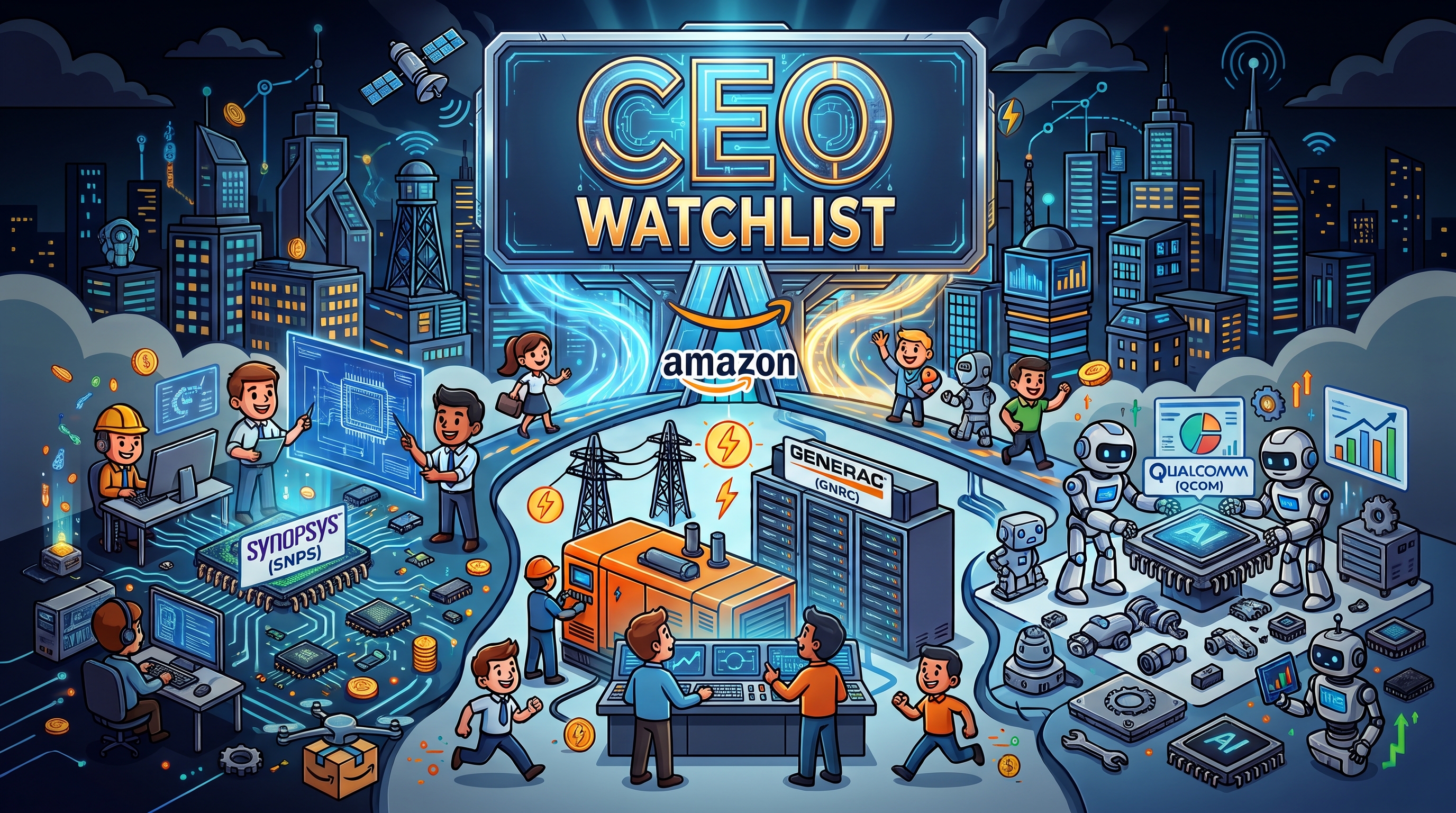
Ask most people what Amazon (AMZN) is and they'll tell you it's where the packages come from. That's the Amazon they know, the one with the brown boxes on the porch. But I think that picture is getting out of date fast. Amazon has been quietly building itself into a full blown tech giant, with cloud computing, its own AI chips, and a growing web of partnerships with some very important companies. Think of it like a kid who started out selling lemonade and now owns the orchard, the juicer, and the delivery trucks. Three new deals, with three undervalued stocks! I think all of these names are going to outperform the market over the coming years, so let's dive into each one of these new Amazon partnerships and why I think each stock can head higher from here...
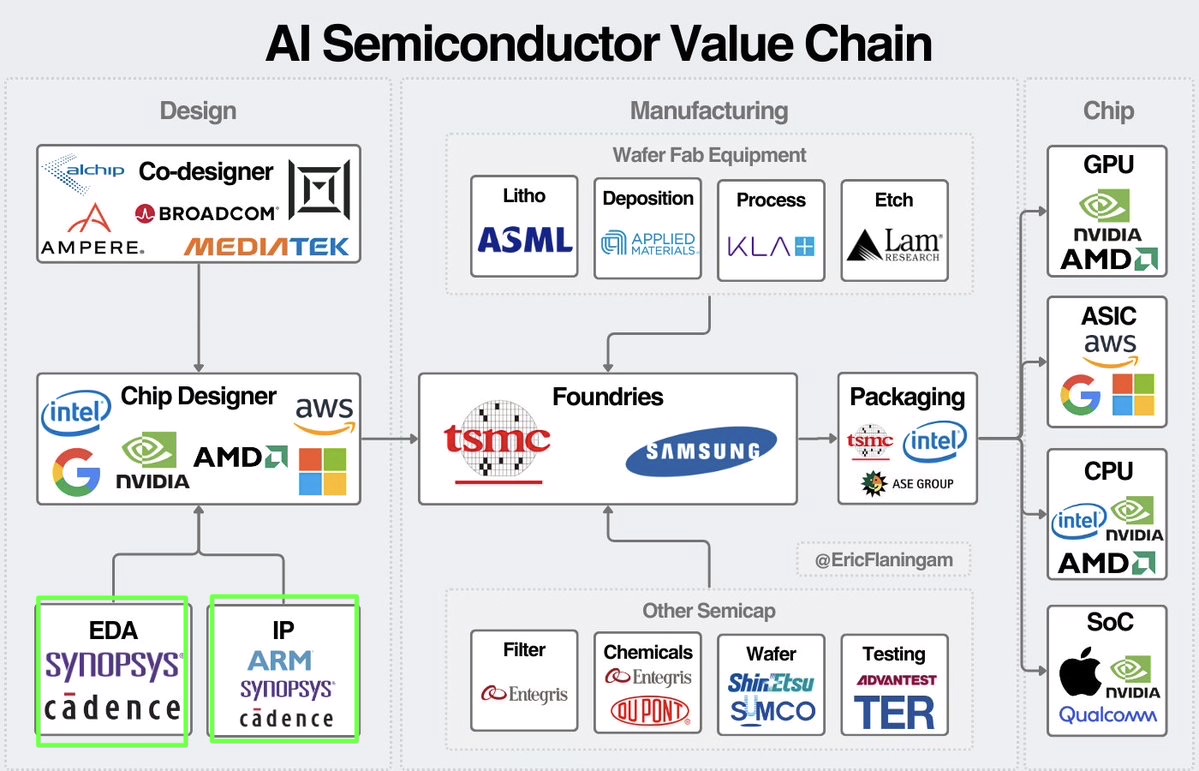
Let's start with Synopsys (SNPS), because I think this one is easy to overlook. Amazon Web Services just signed a multi-year deal worth more than $1 billion to license chip design technology from Synopsys, making Amazon the lead customer for its expanding chip IP business. Synopsys will also get paid a royalty tied to how many chips Amazon actually makes, so the more Amazon builds, the more Synopsys earns. Here's why that matters. Synopsys makes design software, the tools engineers use to draw and test a chip before it's built. Think of it as the architecture software for a skyscraper, except the skyscraper has billions of microscopic parts and one mistake can cost millions. Synopsys and Cadence (CDNS) are the two giants in this space, which makes it a duopoly. A duopoly just means two companies control most of a market. When there are only two real options and switching is painful (engineers spend years learning these tools), the companies have strong pricing power, meaning they can raise prices without losing customers. Strong pricing power usually means strong profits, and that's the reason this setup tends to be loved by investors. This deal adds another layer to that story. With the stock down 20% from its all time high, this name looks really attractive here. I would give SNPS a CEO Watchlist 5 out of 5!
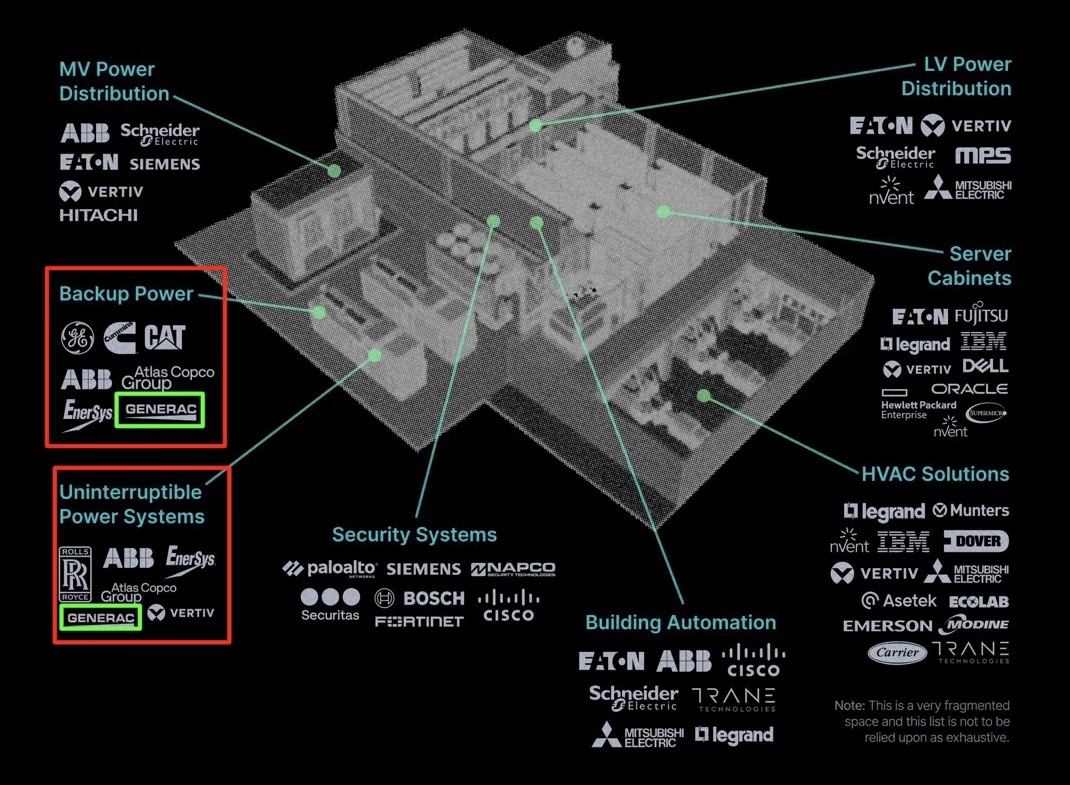
Next up is Generac (GNRC), and this is the one that jumped out at me the most. Generac just struck a deal with Amazon worth $8 billion. Generac has a market cap of only around $12 billion, so this single deal equals roughly 2/3 of the entire company's value! That's a massive swing for a business this size. This news broke a couple of weeks ago and I've been watching the price action since, and so far it's holding steady. The stock is still down about 30% from its 52 week highs, though I wouldn't call it a "cheap" name. As the name hints, Generac is mainly a generator company, and this deal is for backup generators at AI data centers. When billions of dollars of computing equipment are running, a power outage isn't an inconvenience, it's a disaster. It's like a hospital operating room: you don't hope the lights stay on, you make sure of it. And this isn't just an Amazon problem. Data centers are popping up everywhere, and every one of them needs reliable backup power, so I wouldn't be surprised to see similar deals down the road. That said, big contracts can be lumpy, deliveries take time, and a deal this size also raises the question of whether Generac can actually deliver on schedule. I would give GNRC a CEO Watchlist 4 out of 5!
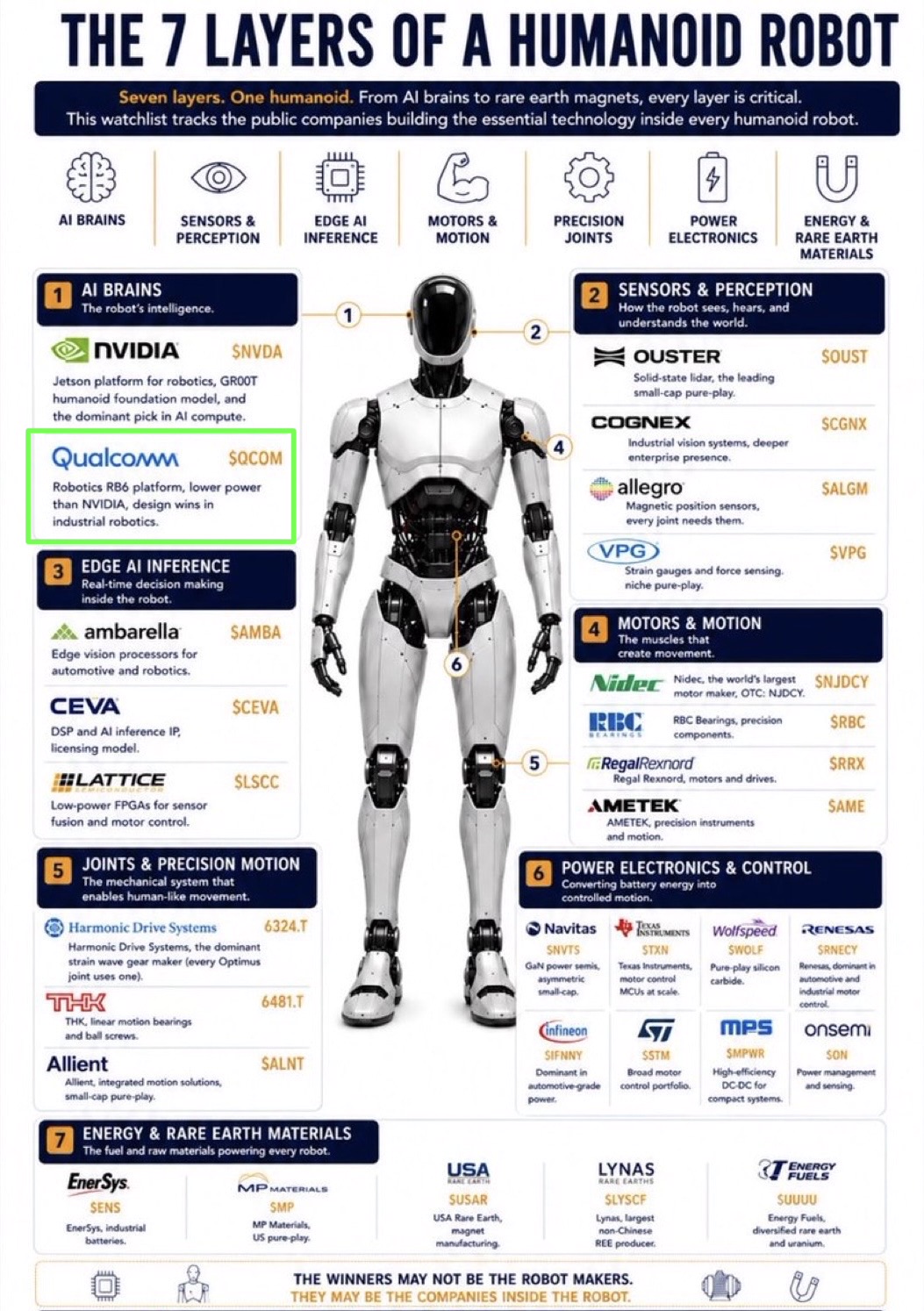
Finally, there's Qualcomm (QCOM), a stock that has badly lagged the tech trade for years even though it has its hands in just about everything: chips, robotics, AI, and more. It's a great all around company that just hasn't done much on the price chart. A couple of weeks ago, it announced a deal to provide Amazon with custom chips and data center products. For Qualcomm, this is a big deal for a simple reason. A huge chunk of its business has relied on Apple, since Qualcomm leaned heavily into smartphone chips, and Apple has been slowly shifting to chips it designs in-house. Imagine a restaurant where one customer buys half the food and then starts cooking at home. You'd want new customers fast, and landing a hyperscaler (a giant company running massive cloud data centers) is about as good as it gets. On top of that, QCOM trades at around 19x forward earnings, which is below the S&P 500. The risk/reward looks pretty good to me, and the stock has been consolidating (basically moving sideways and building a base) for some time. If the market gets a proper run up, this is a name that could catch a bid and break out. I would give QCOM a CEO Watchlist 4 out of 5!
So here's where I land. Amazon is not just a store anymore, it's a tech platform that needs chip design tools, reliable power, and custom silicon, and it's handing real money to the companies that provide them. Synopsys gets a lead customer and a royalty stream on top of an already powerful duopoly. Generac lands an $8 billion deal that's huge relative to its size, with a theme that could spread across the data center boom. Qualcomm gets the customer diversification it badly needs, at a valuation that looks reasonable. Ironic that the world's largest shopping platform is the one out there doing all the shopping recently. Amazon is spending a ton of money expanding their empire, which isn't just good for Amazon stock, but also these three names. I highly recommend everyone reading this to take the time to research every one of these companies because there is a lot of potential for upside gains.
Nvidia Hints At The Next Sector That Is Crucial To The Chip Trade: One Low Risk Name and One High Risk Name To Play The Space! (Source)
Stocks Mentioned: $NVDA, $MU, $GLW, $SHMD
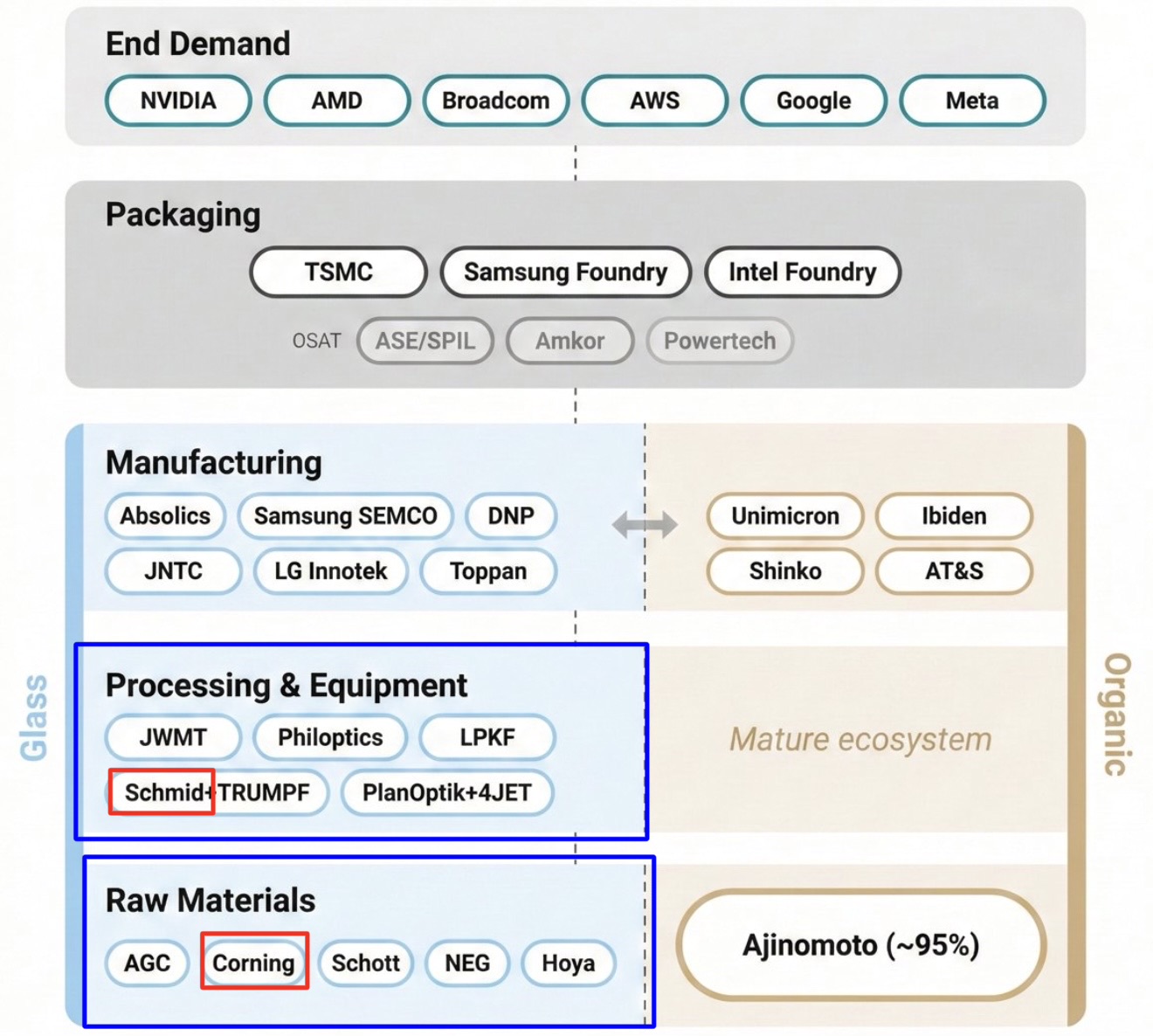
Every big tech cycle has a part nobody pays attention to until it becomes the thing holding everything back. Right now in AI, that part is the surface the chip sits on. Nvidia's (NVDA) GPUs get the headlines and the stock gets the attention, but these processors keep getting bigger, hotter, and packed with more memory from companies like Micron (MU) every generation, which causes the foundation underneath them to strain. That's why a set of recent reports caught my eye. According to Korean and Taiwanese outlets, Nvidia CEO Jensen Huang met with SK Group chairman Chey Tae-won to discuss next-generation chip technology. The same reports say Nvidia is considering the "adoption of glass substrates" over the plastic they are currently using. There are a handful of companies that would benefit from this switch and I have 2 in particular I am going to share with you today that I believe have the best risk-reward in the entire market (specifically for the transition to glass substrates).
First, what even is a glass substrate? A glass substrate is a smooth, ultra-flat glass base that acts as the physical foundation inside a computer chip (such as Nvidia's GPUs), holding all of its microscopic components together and wiring them to the rest of the machine. Simply put, it's the base of the chip. The problem is that today's chip relies on a plastic resin foundation instead and the issue with that is modern computers and devices are getting faster, therefore they are generating a lot more heat. That heat ends up warping and expanding that plastic base which creates issues in these devices over time. Most professionals agree that glass is vastly superior because it stays completely flat and rigid even at these higher temperatures. This allows much more efficiency, especially when you have millions of microscopic wires that don't have to worry about bending or breaking. Ultimately, glass enables chips to process data faster, consume less energy, and pack far more performance into the same amount of space. In my opinion, it's a no-brainer to switch to glass. After researching the space extensively, there are 2 names that stood out above the rest. One name is a mature, large-cap company that I would consider lower risk, while the other name is a much smaller-cap company that I believe is extremely high risk. Despite the risk difference, I believe both names have a lot of upside potential. So without further ado, here are those 2 stocks:
- Corning (GLW) - One of a small group of companies that make the ultra-pure, low-expansion glass this requires. It has already shown a glass core substrate with AUO and is working with partners to qualify the tech. This is the lower risk name of the two. Most people know it for the glass on their phone screens (Gorilla Glass), but it's also a major force in fiber optics and specialty materials, so this isn't a one-trick story. The bull case is the old picks-and-shovels logic. In a gold rush, the people selling shovels did fine whether or not any individual miner struck it rich. Raw low-expansion glass supply is concentrated in a small group of makers and building new glass production takes years, which gives Corning a real moat. If glass substrates take off, whichever chipmaker or packager wins will likely need that glass from somewhere. I call it lower risk because the business is diversified and already profitable, so a delayed glass timeline wouldn't sink it. The honest rebuttal is that lower risk is relative. The stock ran hard during the AI buildout, so plenty of optimism may already be baked into the price, and Corning hasn't announced a mass production timeline for glass substrates yet.
- SCHMID Group (SHMD) - A German equipment maker developing glass substrate solutions. Reports name it among the companies Nvidia is talking to, and its executives say the Nvidia, Intel and AMD supply chains are all eyeing glass cores. This is the higher risk name of the two. It's a relatively small Nasdaq-listed company that builds the specialized machines used to make advanced electronics, including equipment aimed at glass substrates. The bull case is simple. If Nvidia really does move to glass, somebody has to sell the tools that process it, and SCHMID is a small company with a direct line into that conversation. A small business catching even a slice of a giant shift can move a lot, especially when that stock only has a $300 million market cap and is nearly 60% off from its highs. That's also exactly why I call it higher risk. Small companies like this with risky narratives can swing up and down massively, notably when their results lean on a technology that isn't in mass production yet, and a delay on Nvidia's end would hit it far harder than it would hit a giant. But if everything goes well, it would not surprise me if this stock did a 10X!!!
Zooming out, here's how I see the whole picture. Chips keep getting bigger and hotter, and the plastic floor they sit on is slowly becoming obsolete, which is why glass keeps coming up in serious conversations across the industry. The case for the shift is strong, but nothing is guaranteed. Production could struggle, costs could stay elevated, and/or Nvidia could push the timeline back further than expected. That's why I find it useful to think of this as two different bets on one theme. SCHMID is the swing for the fences, with big upside if things go right and real pain if they don't. Corning is the steadier way to be exposed to the same trend, with less explosive upside and a sturdier floor of its own. I don't know exactly how the timeline plays out, but I do think the glass story is one to keep an eye on over the next few years.
"Super Investor" Spotlight: Dev Kantesaria (Source)
Stocks Mentioned: $FICO, $SPGI, $MCO, $MA, $ASML, $V, $INTU
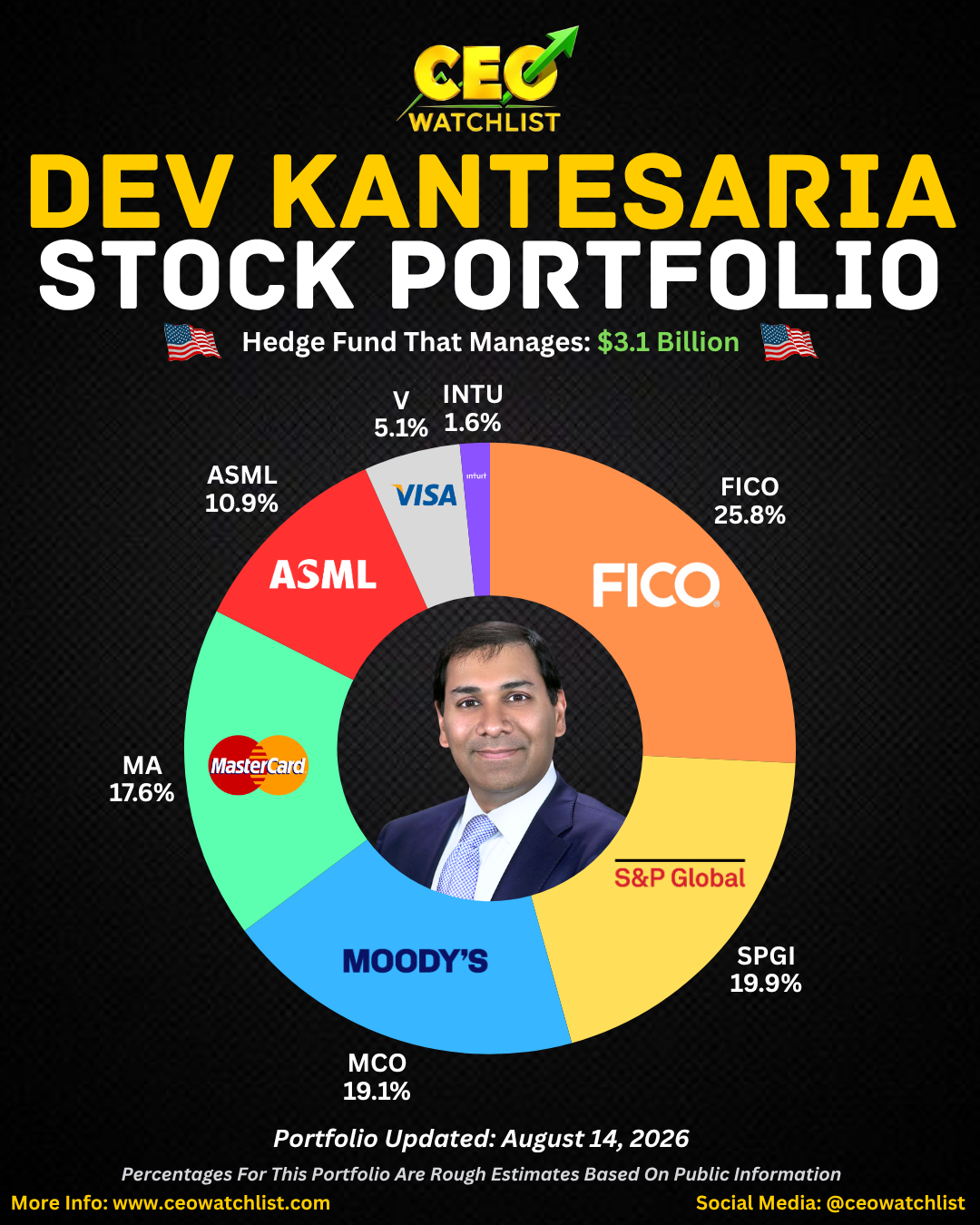
Most people in the investing world have started paying close attention to Dev Kantesaria, the founder of Valley Forge Capital Management, not because of his great stock picking skills, but rather his fall from fame over the past couple of years. To be fair, he's built a reputation as one of the most successful concentrated quality investors out there, running a book of just a handful of names that he believes are among the best businesses on earth. Like every major institutional player, Valley Forge is required to disclose its public holdings every quarter through a 13F filing. As a sidenote for newer readers, a "Super Investor" is just our term for a major institutional player, think massive corporations, elite hedge funds, or billionaire-run funds, whose quarterly stock disclosures give the rest of us a rare window into where the world's biggest capital flows are going. Kantesaria sits right in that group, and his filing is one of the most interesting to study because of just how concentrated and conviction-driven it is.
Kantesaria's whole philosophy is built around owning a tiny number of exceptional, capital-light businesses with enormous pricing power and holding them for the long haul. He's talked openly about preferring to concentrate heavily in his best ideas rather than spreading thin across dozens of positions and this has allowed Dev to massively outperform the market for many years, that is until more recently. The strategy of piling a bunch of money into a handful of names is great when your stocks move up, but it can absolutely be detrimental when they move lower. This is exactly what has happened to Dev over the past couple years, and because of this, his portfolio has taken a huge hit. The reason I'm covering Dev today is because I want to cover his portfolio in general but also look at some of these names that have either lagged the market or worse, underperformed, and see if there are any hidden gems among them. With that said, here's a full breakdown of every stock in Dev Kantesaria's public stock portfolio:
- Fair Isaac (FICO) – 25.8%
- S&P Global (SPGI) – 19.9%
- Moody's (MCO) – 19.1%
- Mastercard (MA) – 17.6%
- ASML Holding (ASML) – 10.9%
- Visa (V) – 5.1%
- Intuit (INTU) – 1.6%
First, to the elephant in the room, which is FICO. This has been his single largest position, and it's been through a nightmare recently. On September 29, 2026, Fair Isaac shares plummeted around 26.5%, and the stock is down over 70% from its all time high, which came down from $2,400/share! The trigger was an announcement from Bill Pulte, the head of the Federal Housing Finance Agency, that Fannie Mae and Freddie Mac will adopt a unified mortgage pricing model incorporating data from VantageScore, which competes directly with FICO's credit scoring system. In short, the market is worried that FICO's long-standing monopoly on mortgage credit scores may be ending, and when a company with a monopoly sees that monopoly erode, the stock can go through a major rerating. For a portfolio where FICO was once roughly 50% of the whole book, that kind of move stings. But it's not just FICO that's been in the gutter, many other stocks he owns have also underperformed, including: SPGI, MCO, MA, V, and INTU. Frankly, the only stock that has done well is his position in ASML.
The thing that makes this moment interesting, and the reason we wanted to revisit his holdings, is the question of whether this is a permanent impairment or a potential opportunity to find some hidden gems. When it comes to FICO, we believe that their monopoly erosion is still too fresh and that could mean a retracement in the stock price all the way down to the $400 level. If it was us, we would personally be betting against FICO, not in favor of them, at this time. I think at $400 per share, the name gets a lot more interesting, as there is a lot of technical support at that price level. The other name that is a "no-go" for us is Intuit. This stock is being disrupted by AI massively! We think this is another name that just stays in the gutter for a long time. This leaves us with 4 other underperforming names, and of those, Visa and Mastercard look like the best setups among the bunch. If we had to put money to work today in any of Dev's names, the winner would end up being ASML. Despite its massive OUTPERFORMANCE, we believe there's too much risk in the other stocks currently. We will be keeping our eyes on those other names over the coming months for possible reversal opportunities, but for now we are just adding them to our Watchlist of stocks. If and when we decide to buy them, we will make sure to alert CEO Watchlist Investment Club Members in the app, so make sure to have your notifications turned on!
We will continue to monitor Dev Kantesaria's portfolio, as well as dozens of other hedge funds and politicians and will continue to report on them every week to you all with updates on any new stock buys they make.
INSIDER STOCK TRADES FROM THE WEEK:
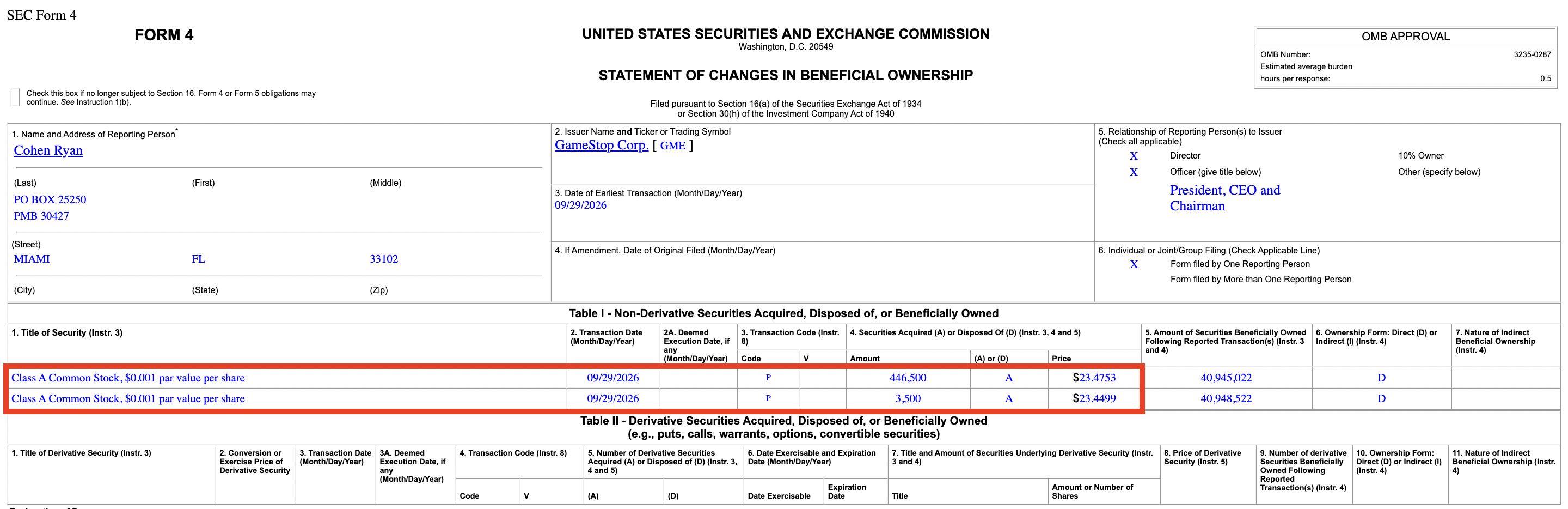
1. Gamestop (GME) - Ryan Cohen (CEO) bought over $36,000,000 of GME at an average price of $23.08/share between September 21-29, 2026, and it was most recently reported to the public on September 29, 2026. (Source)
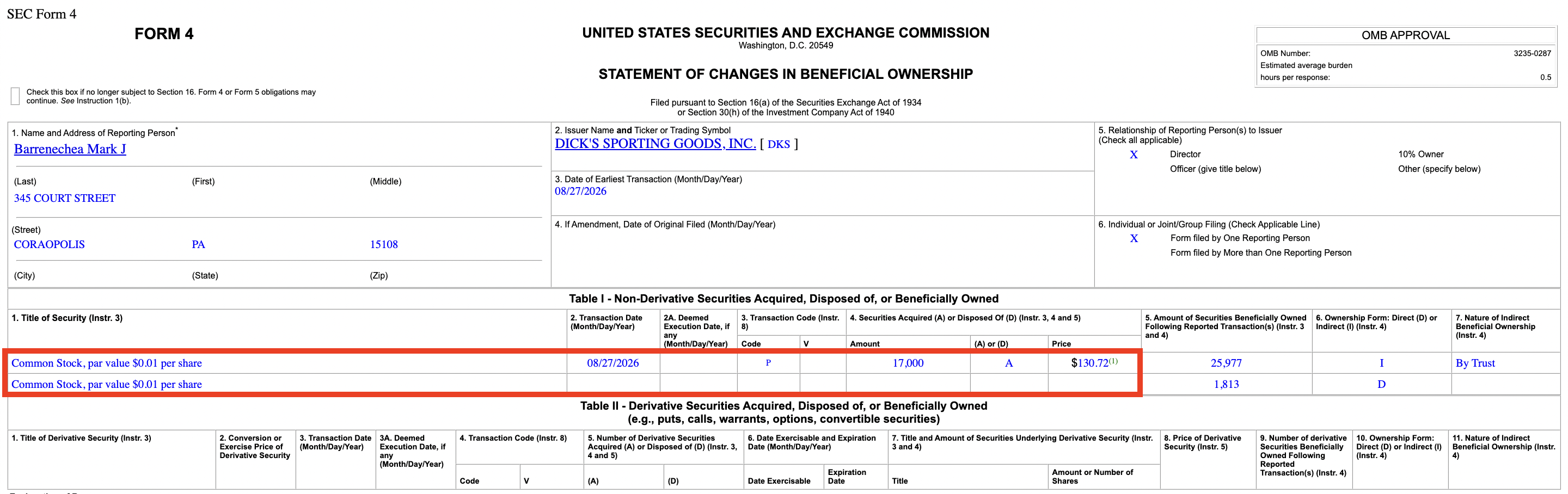
2. Dicks Sporting Goods (DKS) - Mark Barrenechea (Director) bought roughly $2,300,000 worth of DKS at an average price of $130.72/share on September 27, 2026, but it wasn't reported to the public until September 28, 2026. (Source)
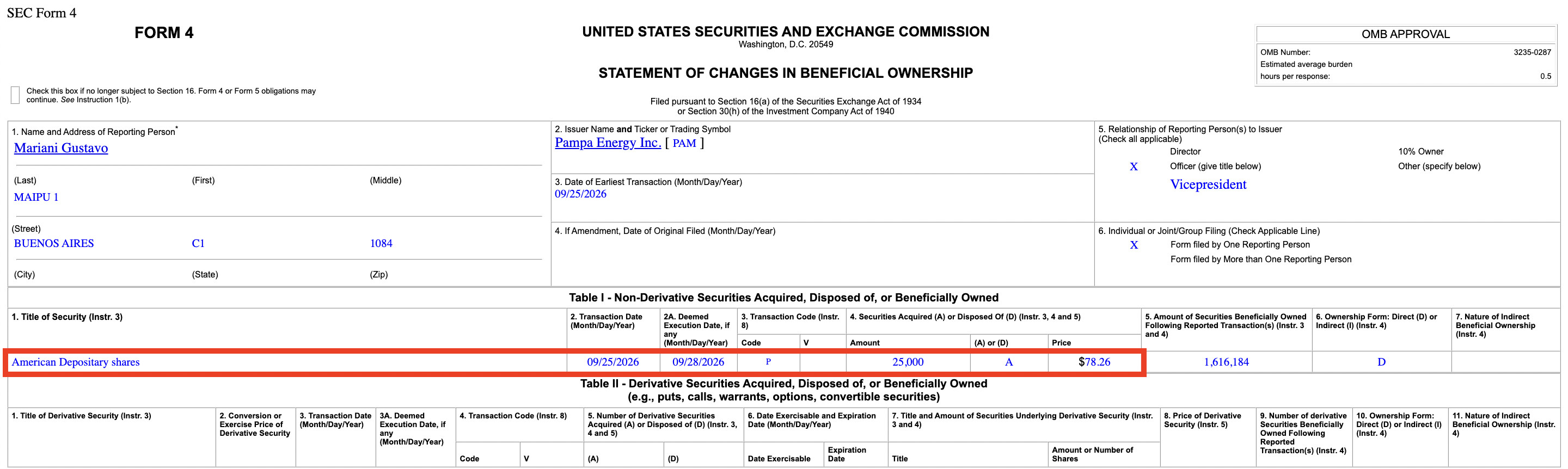
3. Pampa Energy (PAM) - Gustavo Mariani (Vice President) bought over $1,900,000 of PAM at an average price of $78.26/share on September 25, 2026, but it wasn't reported to the public until September 29, 2026. (Source)
Over 2,000 people have already signed up for my FREE Masterclass video on how to unlock my exact strategies for finding winning stock/options trades! I'll share everything including how to find what Politicians and CEOs are buying. Don’t miss your chance to get in for FREE before spots fill up!

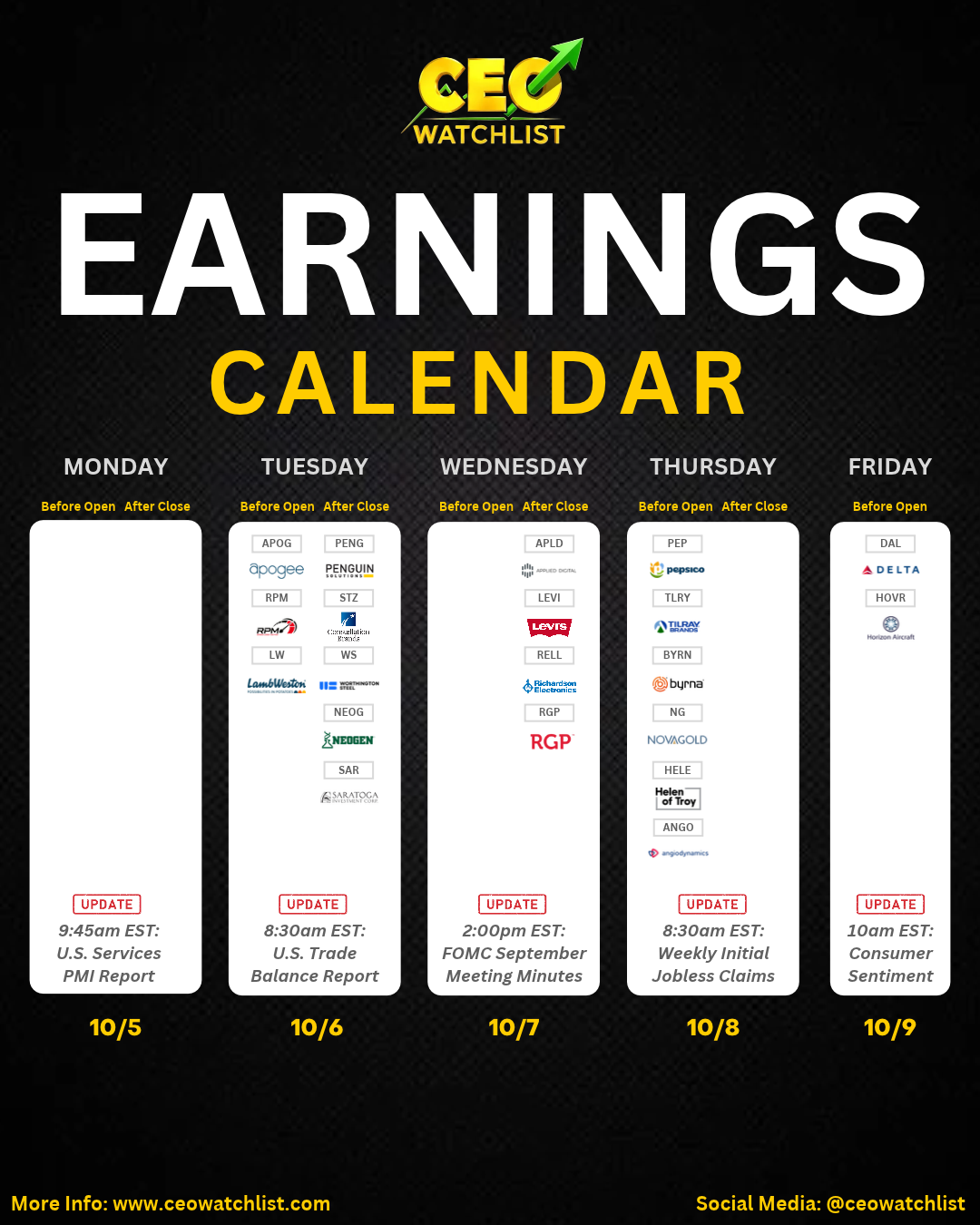
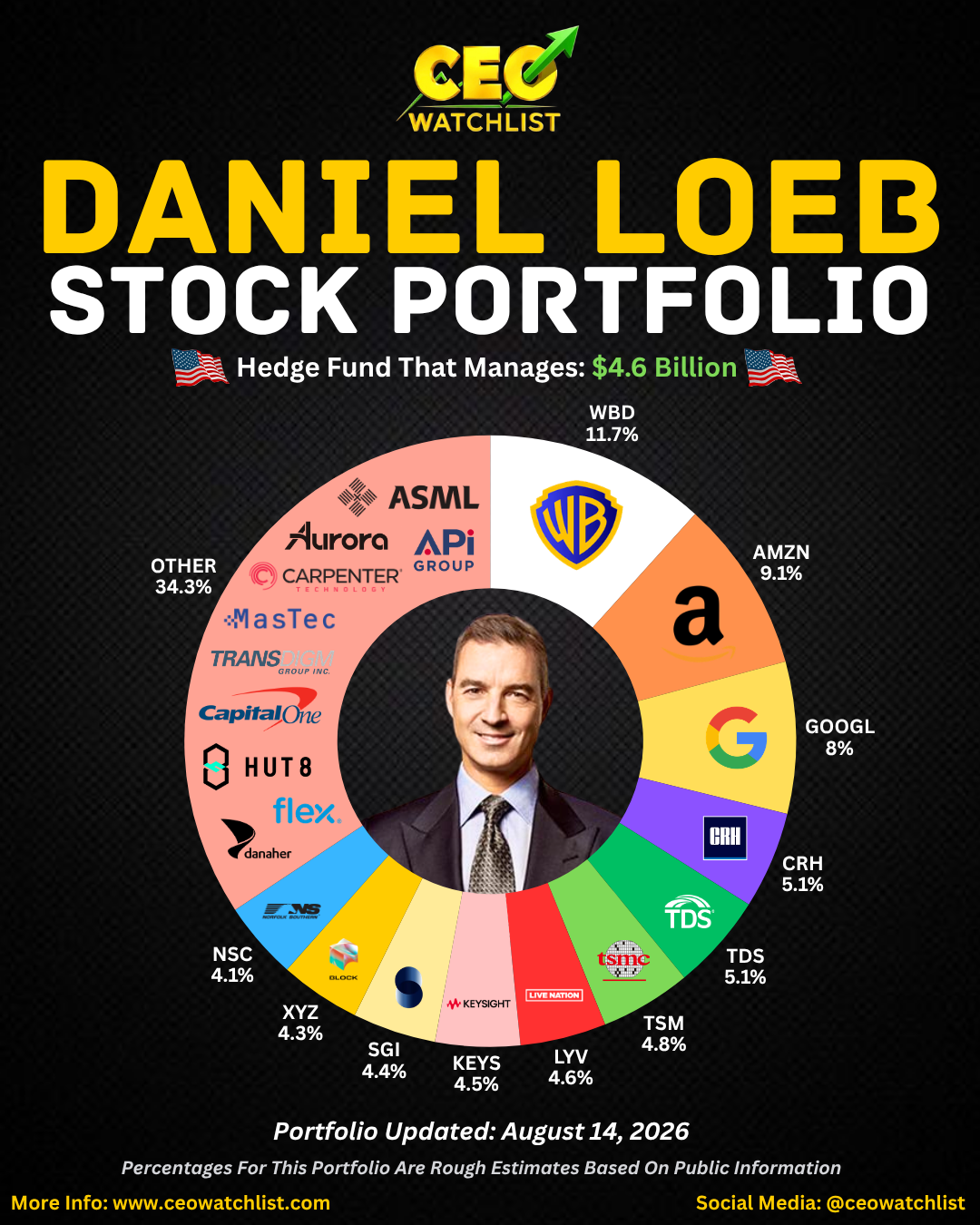
INFOGRAPHICS FOR THE WEEK:

CONTACT US: [email protected]
Responses