
TOP NEWS AFFECTING THE STOCK MARKET THIS WEEK:
JPMorgan Plans To Invest Over $1 Trillion, and These 5 Stocks Are Ideal Candidates... (Source)
Stocks mentioned: $JPM, $TSM, $NET, $TSLA, $AXON, $EOSE
This past week, JPMorgan (JPM) launched a new $1.5 trillion Security and Resiliency Initiative, which marks a profound moment in which Jamie Dimon, CEO of JPMorgan, might finally be flip-flopping from his usual negative state of the market to one that is more positive. For years, Dimon has warned of a bear market, but as the saying goes, "Don't listen to what they say, watch what they do." Despite his bearish rhetoric, noone would willingly invest over $1 trillion if they didn't feel like there was positive tailwinds for the market moving forward. But, JPM is not investing in everything, they have broken down their investment roadmap into select key sectors of the market, which can be seen below:
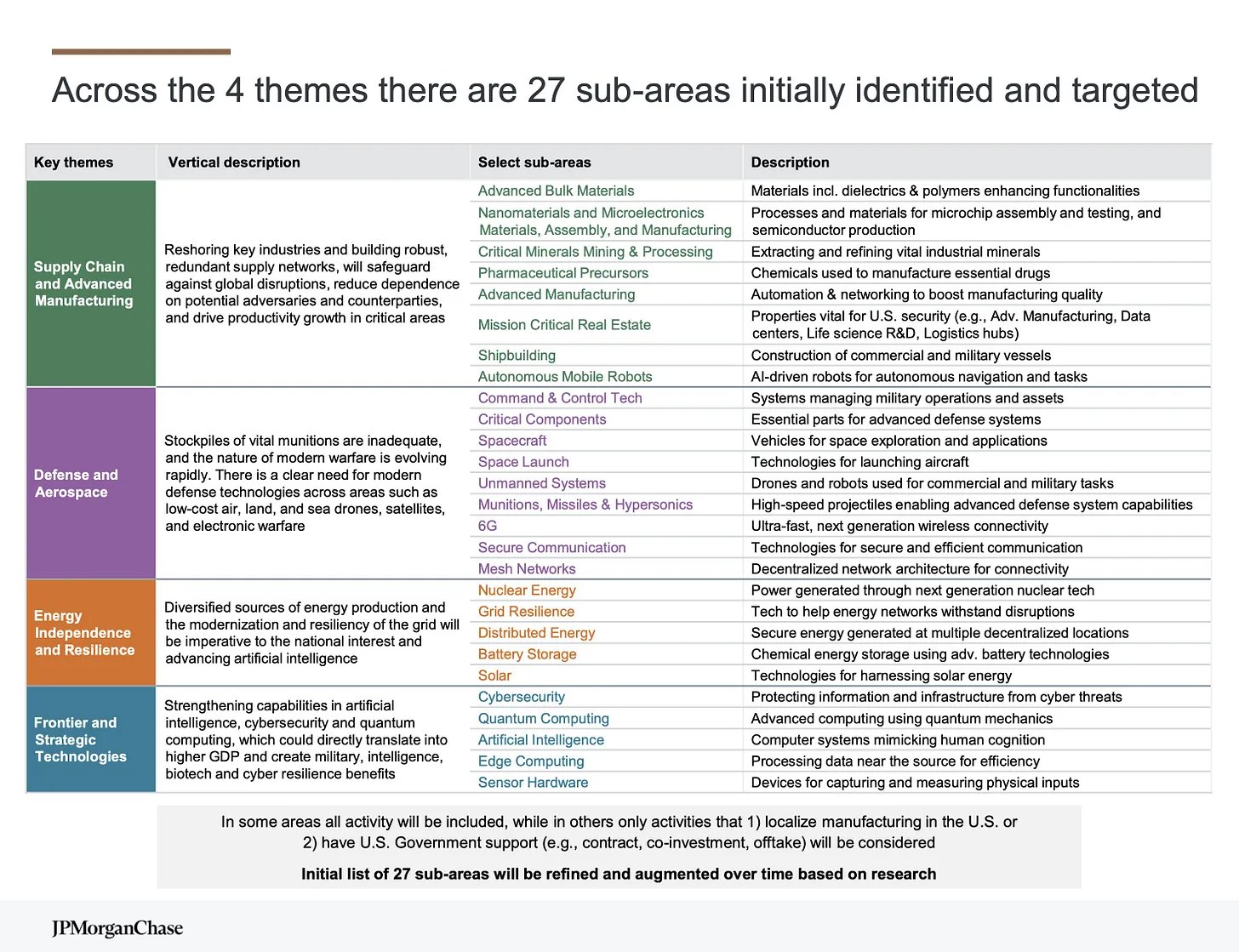
They're focusing on 4 main sectors, including: Supply Chain/Advanced Manufacturing (SC/AM), Defense/Aerospace (D/A), Energy Independence/Resilience (EI/R), and Frontier/Strategic Technologies (F/ST). These 4 main sectors can be broken down into 27 sub-sectors, of which a handful are interesting to us at CEO Watchlist. Of the 27 sub-sectors, our Top 5 include: Artificial Intelligence (F/ST), Cybersecurity (F/ST), Robotics (SC/AM), Unmanned Systems (D/A), and Battery Storage (EI/R). We have selected, what we believe, to be the best-positioned stocks of these 5 sub-sectors:
- Artificial Intelligence - Taiwan Semiconductor Manufacturing (TSM): The backbone of global chip manufacturing, TSM’s role in U.S. semiconductor resilience grows with new onshore facilities. It remains a critical player in America’s effort to secure advanced chip supply.
- Cybersecurity - Cloudflare (NET): As digital infrastructure becomes part of national defense, Cloudflare’s cybersecurity and network protection capabilities make it essential for both public and private sector resilience.
- Robotics - Tesla (TSLA): Beyond EVs, Tesla’s leadership in battery storage, grid integration, and robotics aligns directly with JPMorgan’s focus on energy independence and advanced manufacturing.
- Unmanned Systems - Axon Enterprise (AXON): A rising force in defense technology through body cameras, sensors, and cloud data systems. Axon is modernizing how information flows through the security ecosystem. But more importantly is their focus on drone technology.
- Battery Storage - Eos Energy Enterprises (EOSE): Specializing in long-duration energy storage, Eos helps address one of the most urgent challenges in energy resilience, bridging renewable power with reliability.
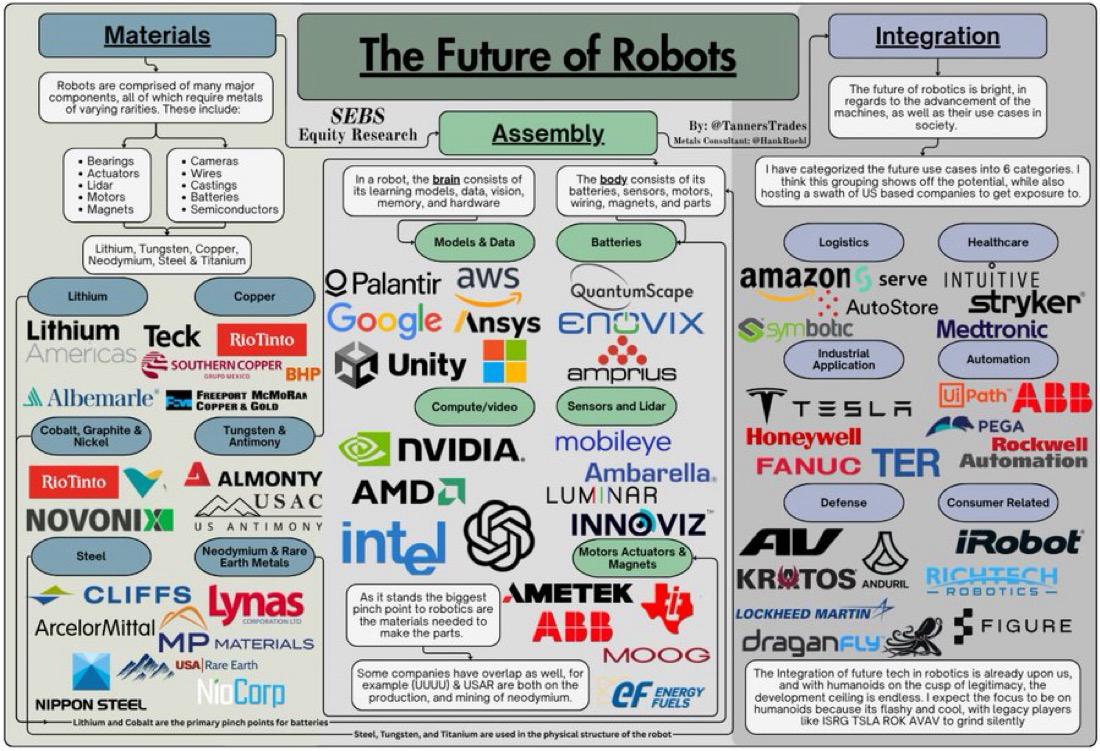
These are just a handful of stocks we like, but we are extremely bullish on many of these categories and many other stocks in these sub-sectors. Again, one of our favorite themes over the next decade is robotics. And although Tesla is one of the clear leaders in the space, there are so many other names that we like, and are currently invested in. Here is a great infographic for you guys to see the entire supply chain of the robotics industry:
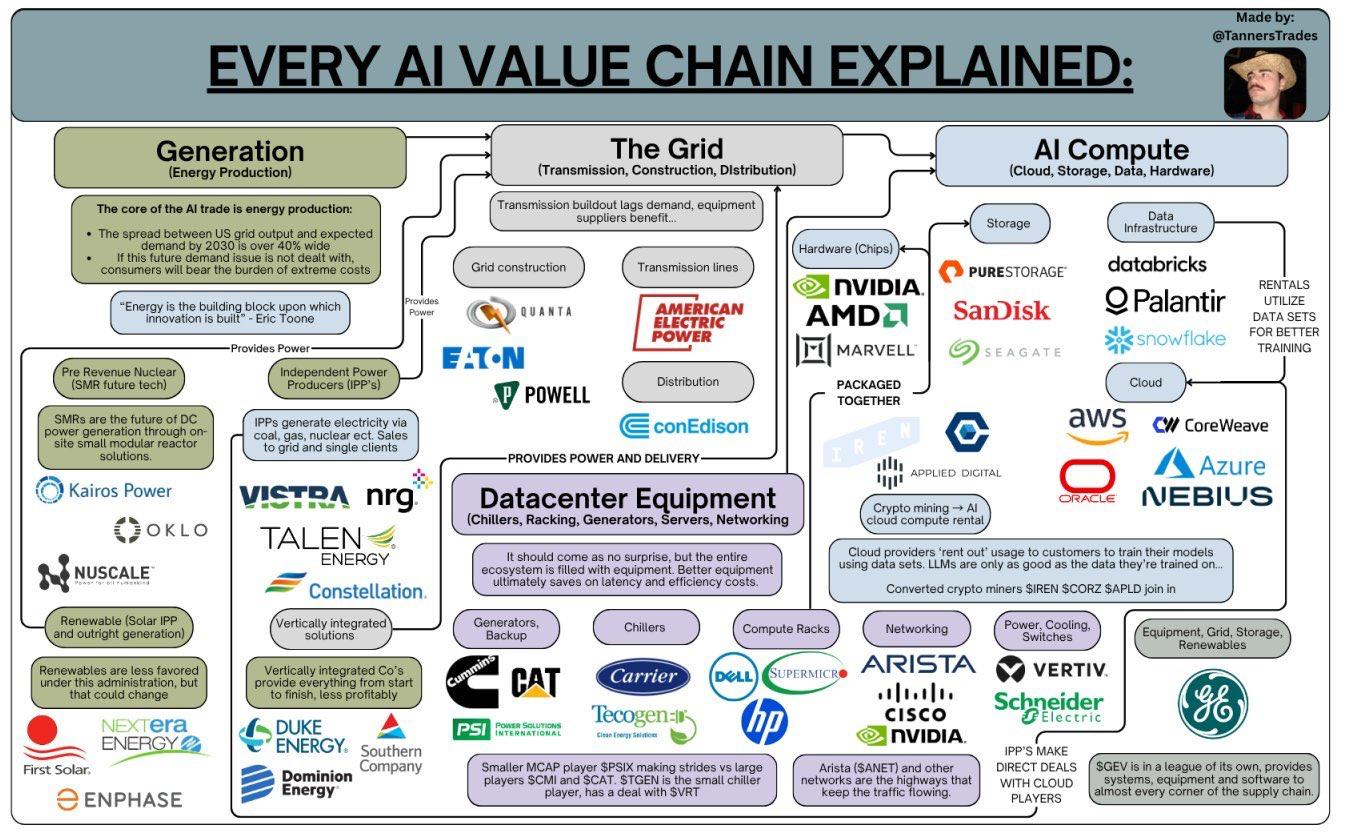
For those of you just as bullish on AI as we are, here is an infographic for you:
If you believe in the space and space travel narrative, here is an infographic for you:
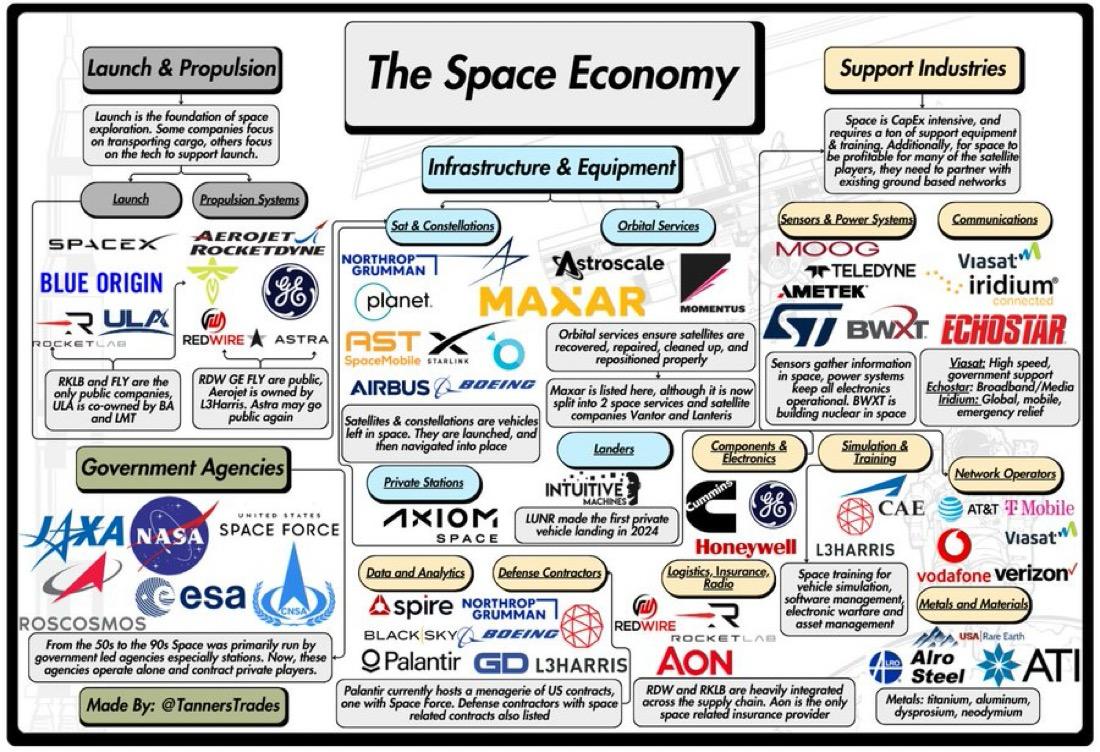
And finally, one of the most volatile sectors that we have been able to make a lot of great trades on recently is the critical rare earth and mineral stocks. Here is an infographic on that ecosystem:
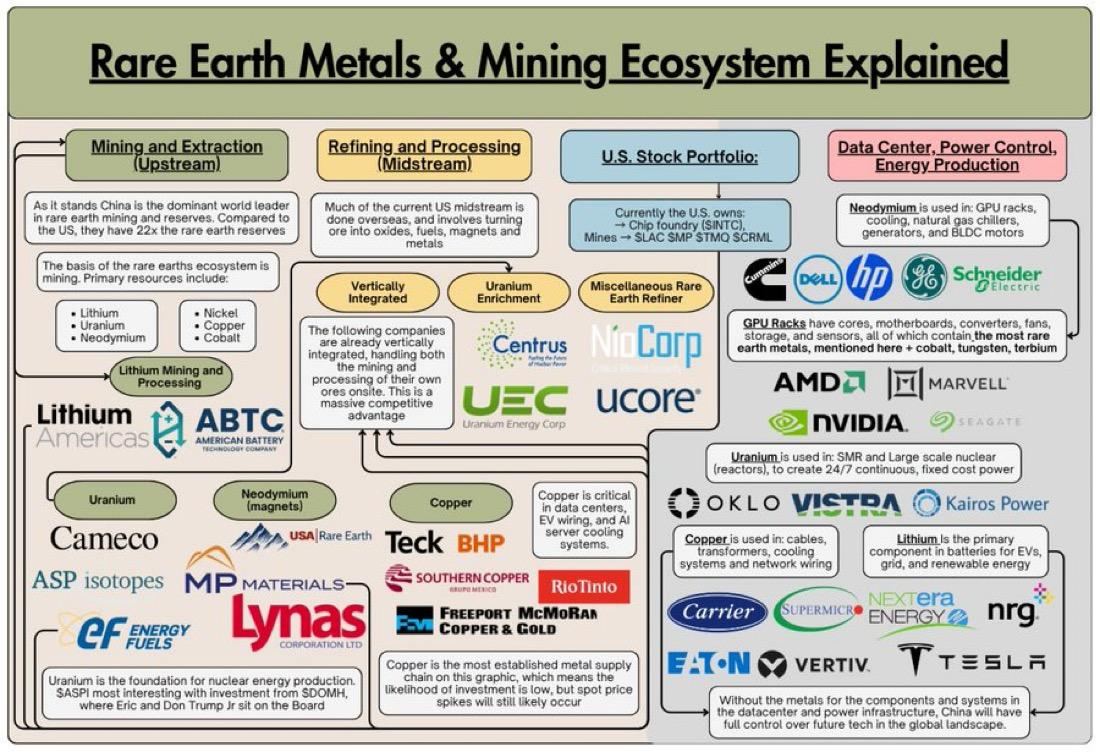
Clearly, as you can see, there are dozens of stocks that could fit in JPMorgan’s intiative for funding. This move by JPMorgan marks a strategic geopolitical shift in the way businesses are looked at today. With the Trump administration's shift to building in America and decreasing dependence on other countries, certain sectors of the stock market have new positive tailwinds benefiting them. JPMorgan can clearly see this shift is underway and wants to get ahead of it, hence this initiative. The bank is institutionalizing “onshoring” as an investable factor, signaling the start of a new capital regime where defense, AI, energy, and manufacturing trade not as sectors, but as the pillars of sovereignty. Investors who understand this rotation early stand to profit from what will soon be recognized as the next great, decade-long, Wall Street trade.
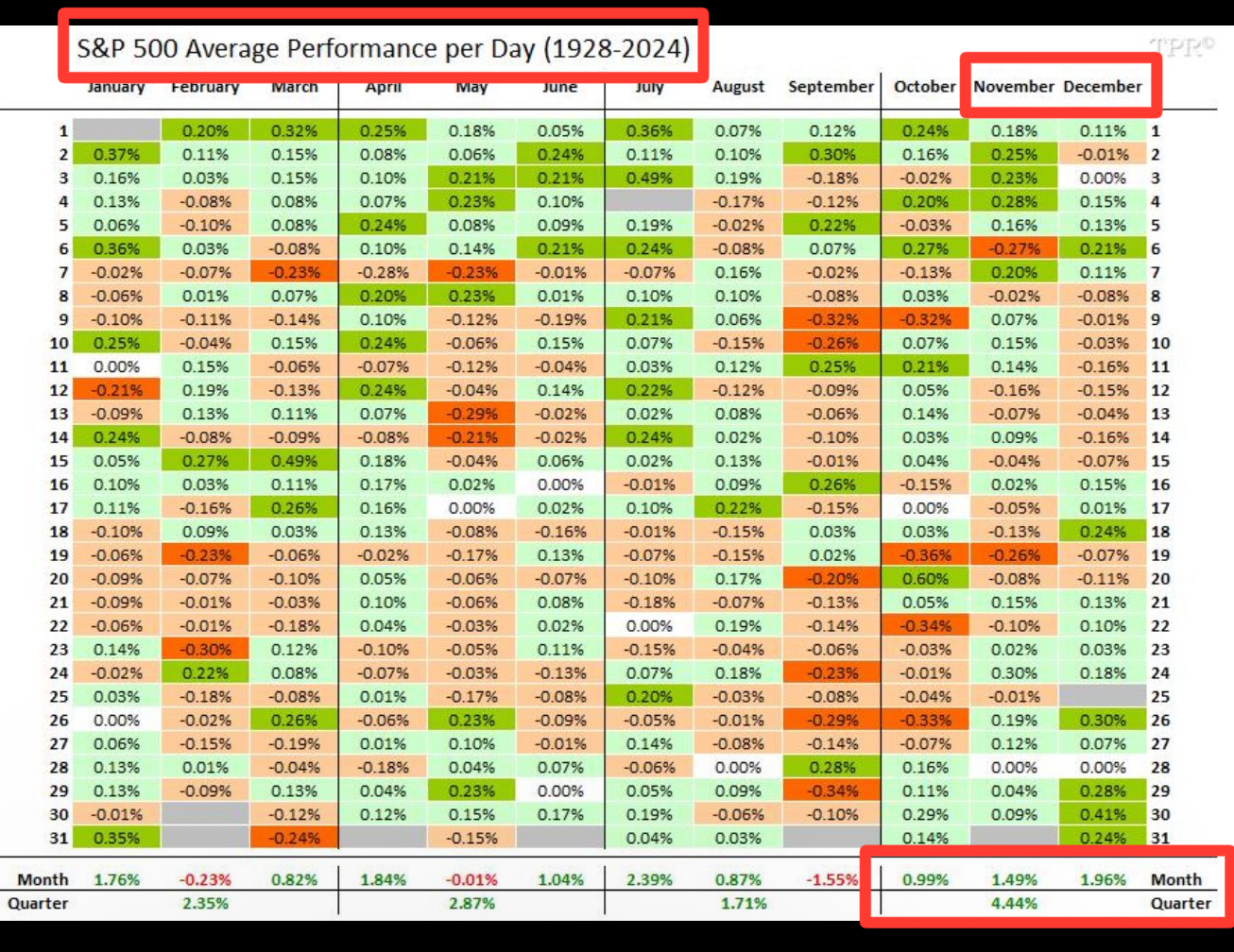
Researching dozens of companies across multiple sectors can take hundreds of hours, but we’ve already done the hard work for you. We recently uncovered a hidden gem during our research, that we believe fits all of JPMorgan's criteria, and could easily double in value. If you're an Investment Club Member, [CLICK HERE] to see the research on that stock, plus all the other new stock/options we bought this past week. If you're not a member yet, [CLICK HERE] to claim $200 OFF your CEO Watchlist Investment Club Membership today, before this offer expires. The next couple of months is going to be critical for structuring a winning portfolio, as most of the gains during a year is made during November and December (see chart below). That's why if you've been debating on joining the Investment Club, now is the time to do it. [CLICK HERE] to lock in your spot and begin trading with us as soon as tomorrow!
Extreme Fear Is Flashing, but This Is When Smart Money Gets Greedy (Source)
Stocks mentioned: $MSFT, $WM, $PG, $NEE, $UNH
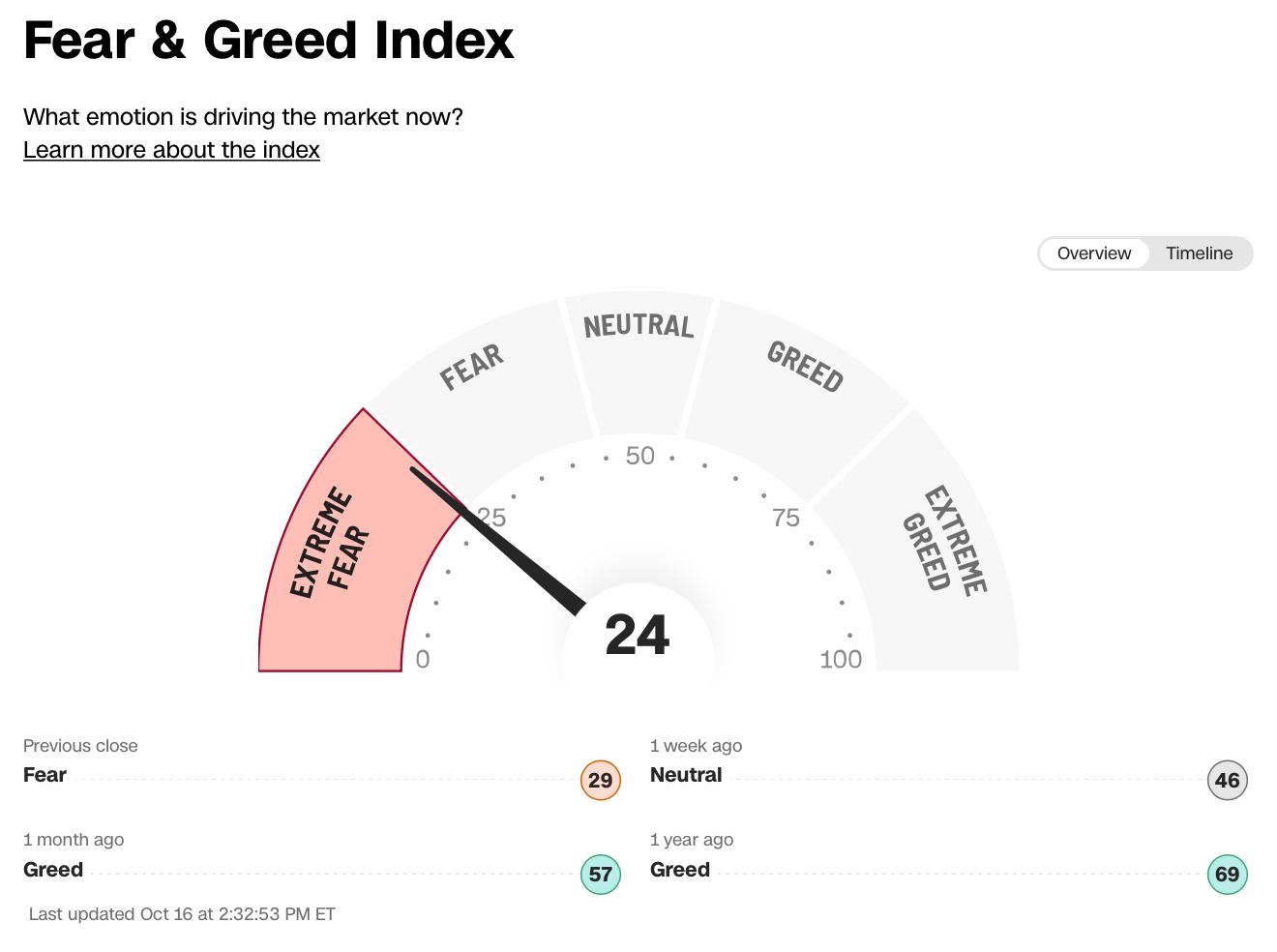
Most investors panic when markets flash “Extreme Fear,” but history tells a different story. The Fear & Greed Index, a composite that tracks investor sentiment through seven indicators like volatility, safe-haven demand, and market breadth, acts as a real-time psychological mirror of Wall Street. It’s designed to measure what investors are feeling. The index is on a scale of 0-100 where 76-100 represents "Extreme Greed" (investors are very optimistic and this is normally where markets are overbought), 56-75 represents "Greed", 45-55 represents "Neutral" (a balanced market with a good mix of bullish and bearish sentiment), 25-44 represents "Fear", and finally 0-24 represents "Extreme Fear" (investors are very pessimistic and this is normally where markets get oversold). When this index plunges into “Extreme Fear,” this is when there is a lot of selling going on in the market, and people are de-risking their assets (ex. selling quantum, rare earths, crypto, etc.) Because of this, most people assume it’s time to retreat. Yet, data shows that these moments often represent the best long-term buying opportunities. In short, fear can be a contrarian’s best friend.
Over the past decade, some of the market’s strongest rallies began during moments of widespread panic. During the 2020 COVID crash, the index hit “Extreme Fear” right before the S&P 500 launched into one of the fastest recoveries in history. Likewise, in late 2018 and 2022, similar sentiment collapses preceded multi-month rallies. The reason is simple: when everyone is selling, prices detach from fundamentals, and assets become mispriced. The irony is that the same emotion (fear) driving investors to flee, creates the opportunity for outsized returns due to stocks getting oversold. That said, “Extreme Fear” doesn’t always guarantee an IMMEDIATE rebound. In some cases, fear lingers, and markets can continue to selloff and remain oversold for prolonged periods of time before recovering. This is why patient capital often outperforms reactive capital. During prolonged fear cycles, smart investors use dollar-cost averaging to accumulate high-quality names while volatility is high. The opportunity lies not in predicting the bottom but in recognizing that every “Extreme Fear” phase marks the zone of maximum potential. Meanwhile, “Neutral” or “Extreme Greed” readings often represent crowded trades and diminishing returns, hence why the past month was an opportunity to trim some of our biggest winners.
If the index is correct in signaling that extreme fear has returned, it may be time to start looking at companies that thrive during sentiment resets and capital flight. These are firms with strong balance sheets, durable earnings, and exposure to secular trends that outlast market noise:
- Microsoft (MSFT): Cloud dominance and diversified revenue streams make it a fortress stock during market stress.
- Waste Management (WM): Essential infrastructure and steady cash flows make this one of the most reliable recession-resilient plays.
- Procter & Gamble (PG): Defensive consumer staple that benefits when investors rotate into safety.
- NextEra Energy (NEE): A clean energy leader positioned to benefit from long-term electrification and renewable investment tailwinds.
- UnitedHealth Group (UNH): A cornerstone of the healthcare system with consistent cash generation and defensive growth, even during economic slowdowns.
The broader message is clear: “Extreme Fear” is not a warning sign, it’s a signal flare for opportunity. As Warren Buffett famously said, “Be fearful when others are greedy, and greedy when others are fearful.” While the index may stay low for weeks or months, it almost always precedes a period of recovery. The market’s pulse may be weak today, but it’s during this weakness that value is born. For investors who can control emotion and focus on fundamentals, fear isn’t something to avoid, it’s something to buy. This is why we just launched our "CEO Watchlist Top 10 "Extreme Fear" Stocks I'm Buying". This is a list of stocks we have on our personal watchlists that we are eyeing to dollar cost average into. These names range from high-quality stocks that are starting to get discounted/oversold, to smaller high-risk, high-reward speculative names that could see over 100% return in a short time frame. If you're an Investment Club Member, [CLICK HERE] to access the full list of stocks, which is now available to you.
"Super Investor" Spotlight: ValueAct Capital (Source)
Stocks mentioned: $AMZN, $CRM, $DIS, $RBLX, $META, $V, $NSIT, $LLYVK, $SSD, $RKT, $MDB, $RDFN, $LYV
On this week’s edition of “Super Investor” Spotlight, we’re looking at ValueAct Capital, the $5.6 billion activist investment fund known for quietly reshaping corporate strategy from the inside out. Founded by Jeff Ubben and now led by Mason Morfit, ValueAct has built one of the strongest reputations in modern finance by taking concentrated stakes in high-quality companies and pushing management teams toward long-term value creation. Their disciplined approach and history of driving real change make them one of the most closely watched funds in the world of institutional investing.
Now, for anyone new to the newsletter, a “Super Investor” is someone whose consistency and conviction set them apart. By tracking their 13F filings each quarter, we can see where the smartest capital in the world is flowing and how these elite investors are positioning for the next big cycle. ValueAct, in particular, is famous for its activist style, meaning they often buy large enough stakes to influence company decisions from within. This quarter’s filing reveals a portfolio that blends durable growth, digital transformation, and strategic patience across a concentrated group of holdings.
ValueAct’s latest portfolio is made up of just over a dozen names, each with significant conviction behind it. Here’s a breakdown of their top 10 positions:
- Amazon (AMZN) – 15.2%
- Salesforce (CRM) – 14.1%
- Disney (DIS) – 11.3%
- Roblox (RBLX) – 8.9%
- Meta Platforms (META) – 8.2%
- Visa (V) – 7.9%
- Insight Enterprises (NSIT) – 7.1%
- Liberty Media Corp (LLYVK) – 5.8%
- Simpson Manufacturing (SSD) - 3.9%
- Rocket Companies (RKT) - 3.8%
Smaller holdings include MongoDB (MDB), Redfin (RDFN), and Live Nation (LYV), reflecting ValueAct’s growing interest in data, housing, and entertainment trends.
When analyzing ValueAct’s moves, one theme stands out: digital transformation with durable cash flows. While the broader market has been rotating between fear and euphoria, ValueAct has quietly doubled down on companies positioned to dominate both physical and digital ecosystems. Their top holdings show confidence in tech infrastructure (Amazon, Salesforce), media monetization (Disney, Meta), and consumer engagement (Roblox, Live Nation).
Skeptics might argue that this portfolio leans too heavily on growth in a high-rate environment. But ValueAct’s contrarian patience has been a winning strategy before. They don’t chase hype, they build positions early, work with management, and wait for fundamentals to catch up. For retail investors, this approach is a reminder that conviction and time horizon matter more than market noise.
The takeaway is clear: ValueAct Capital continues to play the long game, aligning itself with companies that have both pricing power and technological leverage. Their 13F reflects a careful blend of growth and stability, driven by a clear understanding of where the world is heading. That’s why we like ValueAct Capital. They’re not speculating on the next quarter’s rally. They’re investing in the next decade of corporate transformation.

INSIDER STOCK TRADES FROM THE WEEK:
1. Hycroft Mining (HYMC) - Eric Sprott, director of HYMC, bought roughly $50,000,000 of HYMC stock on Oct. 14, 2025, but it wasn't reported to the public until Oct. 16, 2025. (Source)

2. Heico, Corp. (HEI) - Victor Mendelson, Co-CEO, as well as 7 other insiders, bought over $1,200,000 of HEI on Oct. 10, 2025, but it wasn't reported to the public until Oct. 14, 2025. (Source)

3. Zenas BioPharma (ZBIO) - SR One Capital Management, Venture Capital Firm and 10% owner of ZBIO, bought roughly $2,400,000 of ZBIO stock on Oct. 9, 2025, but it was most recently reported to the public on Oct. 14, 2025. (Source)

Over 2,000 people have already signed up for my FREE Masterclass video on how to unlock my exact strategies for finding winning stock/options trades! I'll share everything including how to find what Politicians and CEOs are buying. Don’t miss your chance to get in for FREE before spots fill up!

INFOGRAPHICS FOR THE WEEK:



CONTACT US: [email protected]
Responses