
TOP NEWS AFFECTING THE STOCK MARKET THIS WEEK:
Earnings Season Week 2: The 6 Stocks We're Watching and Why We're Staying Cautious On The Market... (Source)
Stocks Mentioned: $JPM, $BAC, $TSM, $ASML, $NFLX, $SPCX, $TSLA, $META, $LRCX, $BE
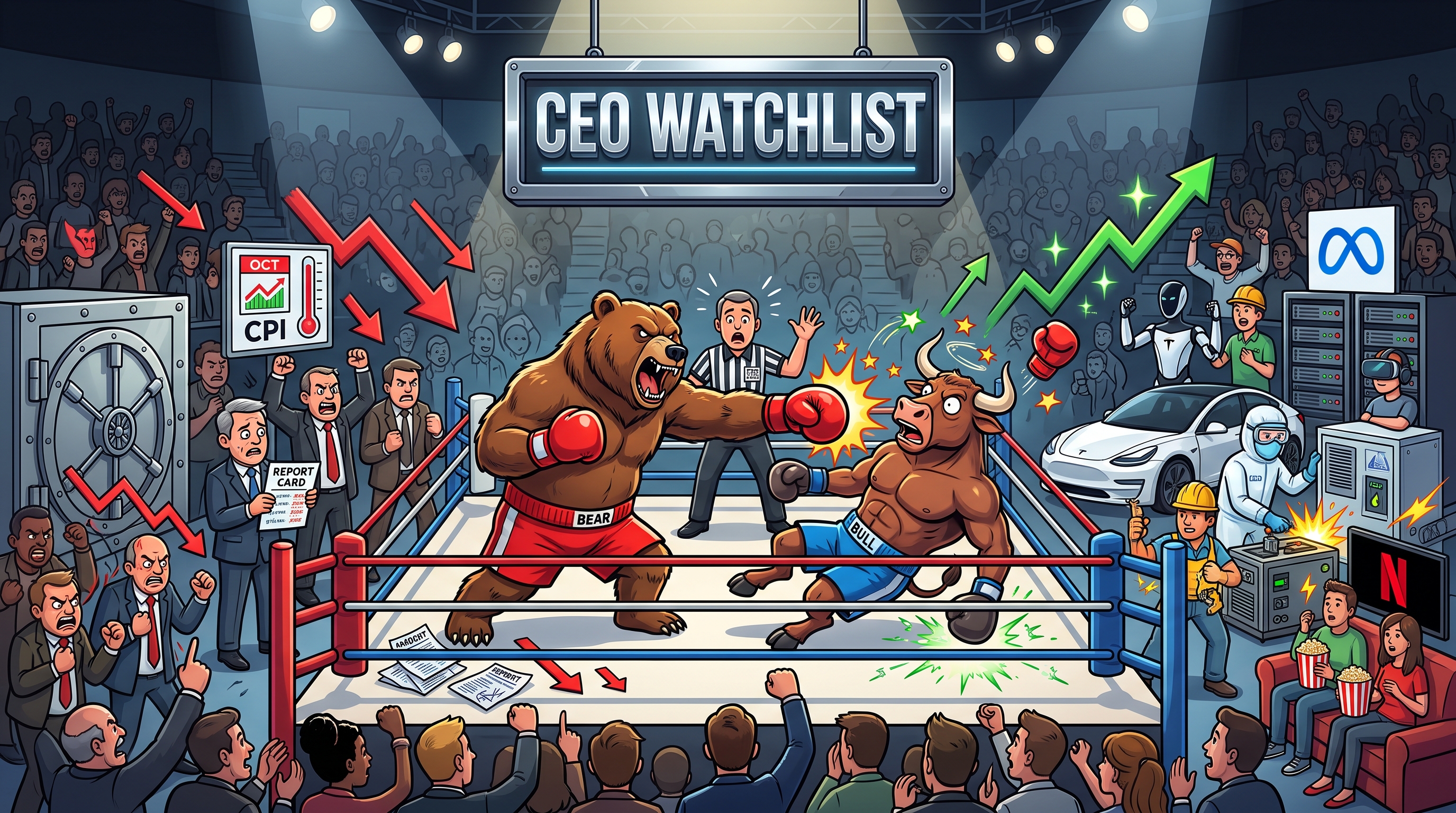
The first week of earnings season is in the books, and the report card came back split. The banks had a rough week. JPMorgan (JPM) reported its first quarterly earnings miss since the fourth quarter of 2023, and Bank of America (BAC) missed with $0.91 per share against a $1.10 estimate, right after the Treasury Department fined it $1.2 billion. Big tech told a much better story. Taiwan Semiconductor (TSM) brought in $46.72 billion in revenue, up 41.2% from a year ago, beating its own forecast, and ASML (ASML) raised its full-year revenue outlook to €44.5 billion. Chip stocks still got caught up in the selling, but the businesses themselves keep delivering. Nothing crazy, but the AI spending wave is clearly still building.
The real headline of the week was inflation, and it ran hot. Hot inflation is bad for stocks. So with the CPI (key inflation measurement) coming in at 3.7% versus 3.6% expected, this was the first red flag for the markets this week. Then to make matters worse, PPI (another key inflation measurement) rose 1.3% in a single month and 6.3% from a year earlier, well above the 5.3% analysts were looking for. This one was the one that sealed the market's fate this past week.
You may be asking why do these measurements hurt stocks, and what does this mean for our portfolios? To keep it as simple as possible: when inflation increases = the value of your money decreases. This is mainly because the things you want to buy become more expensive. There's not much more to it than that. The way it affects our portfolios is more complicated but I'll do my best to explain it in a way that's easy to understand. We have a committee of people called the FOMC. These people are in charge of monetary policy AKA they manage the money supply to control the economy. So when inflation starts to rise, like we're seeing now, one of the tools they use to keep it under control is called "interest rates". By raising these interest rates, they are able to keep inflation down, which in turn makes your money more valuable. The problem with this is that it also hurts the stock market. To keep it simple without going into too much detail, all you need to know is higher rates = bad for stocks and lower rates = good for stocks.
With all that said, this is why the unexpectedly hot inflation reports we got this week will inevitably lead to higher interest rates, and therefore stocks sell off because like I said above, higher rates = bad for stocks. And the market felt it right away, as the S&P 500 fell 1.1% and the Nasdaq dropped 1.9% on October 14, their worst days since July. That was until Friday of this past week, October 16, when the S&P 500 fell another 1.09% and the Nasdaq dropped 2.5%. Needless to say, inflation and interest rates are controlling the market's direction right now, and more than likely that won't ease up until after the midterm elections in November, so expect a lot of volatility until then.
That's enough about last week, now is the time to look forward to the stocks reporting earnings this week. I’m watching these 6 companies:
- Netflix (NFLX) - The biggest streaming service in the world, and now an advertising business too. I picture a movie theater that figured out it can sell popcorn on top of tickets. Subscriptions are the tickets, ads are the popcorn. It reports after the close on Tuesday, October 20. Netflix guided for about $0.82 per share on roughly $12.86 billion in revenue, while analysts expect $0.83 on $13.02 billion. The stock fell nearly 9% after last quarter’s report on weaker guidance, even as Netflix kept its target of about $3 billion in ad revenue for 2026. I’ll be watching whether ads are on pace and whether guidance finally moves higher.
- SpaceX (SPCX) / Tesla (TSLA) - These are two of Elon Musk’s biggest companies, and I find it hard to talk about one without the other. Tesla is the electric carmaker that many investors now value as an AI and robotics company. SpaceX is the rocket and Starlink company that just became public. Tesla reports after the close on Wednesday, October 21. Analysts expect about $0.44 per share on $27.8 billion in revenue, and deliveries were down 2.1% from a year ago. SpaceX isn’t on the calendar until early November. In its first report as a public company back in August, it beat on both lines, bringing in $7.81 billion in revenue against a $6.87 billion estimate. This time analysts are looking for roughly $12.3 billion to $12.8 billion in revenue. With Musk on the mic Wednesday, the call usually matters more than the numbers. I’ll be listening for real timelines on robotaxis and Optimus, plus anything that hints at what SpaceX’s quarter could look like.
- Meta (META) - The parent of Facebook, Instagram and WhatsApp, and one of the biggest AI spenders on the planet. It also reports after the close on Wednesday, October 21. Meta guided for $61 billion to $64 billion in revenue and expects to spend $130 billion to $145 billion on capital projects this year. Last quarter, free cash flow shrank to just $784 million as AI spending soared, and the stock dropped after hours. With rates rising, I’ll be watching whether that spending plan holds, grows or gets trimmed.
- Lam Research (LRCX) - If ASML owns the printing press that draws the chip design, Lam makes the tools that carve and stack the layers of the chip. It’s the next link in the same supply chain we covered last week. Lam reports after the close on Wednesday, October 21, with analysts expecting $2.17 per share, up 72% from a year ago, on $8.12 billion in revenue, up 52%. After strong reports from TSMC and ASML, I see Lam as the confirmation step.
- Bloom Energy (BE) - Bloom makes fuel cells that generate power right on site, which has made it a go-to for AI data centers that can’t wait years for the grid. Think of it as a power plant in a box. It reports after the close on Thursday, October 22. Last quarter it posted record revenue of $1.065 billion, up 166%, and raised full-year guidance to $3.9 billion to $4.2 billion. Bloom has beaten estimates in each of its last 6 quarters, so the bar is high this time.
So here’s my recap heading into the week ahead. Banks disappointed last week while big tech delivered, but hot CPI and PPI readings put another Fed hike back on the table just as the midterms approach, which has me leaning more cautious. Tuesday brings Netflix, Wednesday is the heavyweight night with Tesla, Meta and Lam Research all reporting after the bell, and Thursday wraps up with Bloom Energy. After that, all eyes turn to the Fed on October 28 and the midterms on November 3, and I’ll be watching every print. We currently have elevated cash levels and are hedged going into the end of the month. This is not the time to be a hero in this market and take on excessive risk which is why we are being extremely cautious in this market. Don't get greedy, sit on your hands, and wait out the mid-term election volatility until the beginning of November and then reassess.

Why This Private Company May Be The Reason For a Stock Market Selloff!!! (Source)
Stocks Mentioned: $SOXX
Another week, another gut punch for tech. It feels strange to say that when the Nasdaq was printing record highs about ten days ago, but here we are. Under the hood, the AI names that carried this market got hit the hardest, with the iShares Semiconductor ETF (SOXX) falling for a ninth straight session on Friday. Zoom out globally and over $1 trillion in market value was erased among the top 20 AI and semiconductor companies. To be fair, there’s more than one culprit here, since hotter-than-expected September consumer prices triggered rate hike fears. But the headline that really lit the match, for these tech stocks, came from a company that isn’t even public yet...Anthropic.
On Wednesday, Anthropic, the company behind the Claude AI models, opened its books to prospective investors ahead of its IPO. At an investor meeting at its San Francisco headquarters, it reported that annualized revenue is now reportedly expected to end 2026 around $78 billion, short of the more than $100 billion several backers had previously anticipated. “Annualized revenue” just means taking a recent stretch of sales and multiplying it out to a full year, kind of like guessing your yearly paycheck from one good month. The fallout was immediate: some existing and prospective investors are now considering a valuation of around $1.5 trillion, down from the roughly $2 trillion previously anticipated. That’s half a trillion dollars of expectations gone after one investor presentation.
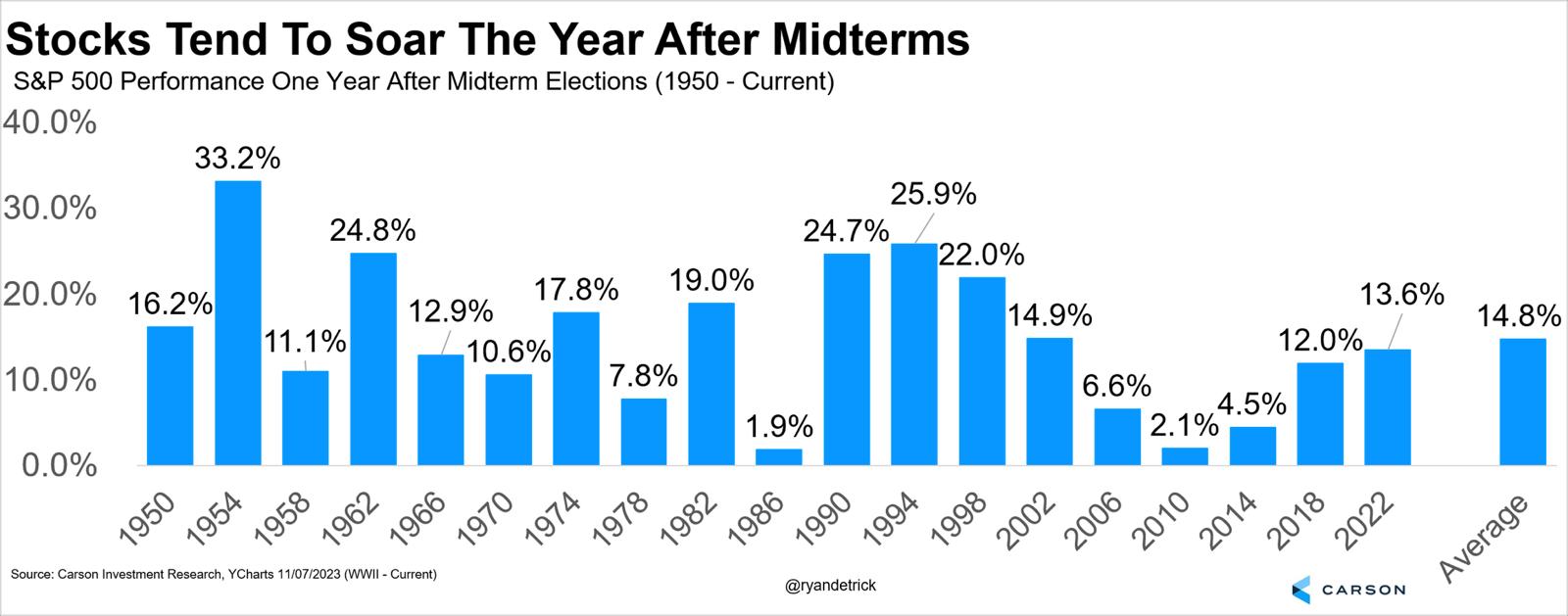
So why would a private company’s numbers drag down public stocks? Because in markets, it’s not just about speed, it’s about acceleration. Picture a car doing 100 mph. Still fast, right? But if the driver just eased off the gas, everyone who bet on 150 mph has a problem. The AI trade was priced like the pedal would stay on the floor. And Anthropic sits near the top of a long food chain. Businesses pay Anthropic, Anthropic pays cloud providers for computing power (the company has committed hundreds of billions of dollars in future spending under long-term agreements for cloud services, computing and infrastructure), and those cloud providers turn around and buy chips, memory, servers and electricity. Think of it like a gold rush. The shovel sellers only win as long as the miners keep finding gold. When the biggest miners start reporting that they're finding 25% less gold than they used to, fears around the gold mine drying up increases, and therefore lower shovel sales if people think the rush is over. That’s why many investors see Anthropic’s revenue numbers as a bellwether for the broader AI market, and it’s spilling into debt too, as investors have begun selling off the bonds backing some data centers, primarily over fears that AI revenues won’t be sufficient to cover the massive sums borrowed. The timing makes all of this even more interesting, because the selloff is landing right before the midterm elections. Historically, midterm years have a pretty reliable rhythm: shaky before, strong after. So a messy October like this one actually fits the historical script.
So here’s where I land. As I mentioned in the first article, I'm staying cautious for the next few weeks until the midterm elections because I think there's a good chance that stocks could sell off. During that same time, I have built a high-conviction watchlist of a dozen+ stocks and are waiting for them to reach my price targets to begin buying them. I think the next few weeks will offer some great dip-buying opportunities on some of the best tech names for the next decade. My reasoning is that the fear right now is surrounding rates and inflation caused by the Iran War, not growth disappearing. I also see a couple of potential catalysts lining up. One is the election itself clearing out uncertainty. The other is that Anthropic is being valued ahead of its planned November initial public offering, and right now the true profit and growth metrics of the company are still just guesswork until it actually goes public. Real, audited numbers could cut either way, but clarity tends to calm markets down. If inflation keeps running hot or AI spending genuinely rolls over, this dip could get deeper before it gets better. But volatility like this is the price of admission for the biggest tech shift of my lifetime, which is why I currently have a bunch of cash on the sidelines and a hedged portfolio towards safety, so I can take advantage of the stock market pullback that I think we could see over the coming weeks.
"Super Investor" Spotlight: Carl Icahn (Source)
Stocks Mentioned: $IEP, $CVI, $UAN, $CTRI, $IFF
Most people in the investing world know Carl Icahn as the original activist investor, the man who built his name taking big, aggressive stakes in companies and then pushing hard for change. He’s run Icahn Enterprises for decades, and his reputation as a corporate raider turned legendary dealmaker makes him one of the most recognizable figures in the entire market. Like every major institutional player, Icahn is required to disclose his public holdings every quarter through a 13F filing. As a sidenote for newer readers, a “Super Investor” is just our term for a major institutional player, think massive corporations, elite hedge funds, or billionaire-run funds, whose quarterly stock disclosures give the rest of us a rare window into where the world’s smartest capital is flowing. Icahn is one of the most iconic names on that list, and his filing is always a fascinating one to study because it looks nothing like the diversified books we usually cover.
Icahn’s reputation is built on concentration and control, and this portfolio is about as concentrated as it gets. What jumps out immediately is just how much of the book sits in a single name. More than half of the entire portfolio is Icahn Enterprises itself, his own publicly traded holding company, which tells you everything about how he operates. This isn’t a manager spreading bets across dozens of positions. It’s a tight cluster of companies where Icahn often holds major influence or outright control, concentrated heavily in energy and a handful of industrial and consumer names.
Here’s a full breakdown of the Top 5 stocks in Carl Icahn’s public stock portfolio:
- Icahn Enterprises (IEP) – 54%
- CVR Energy (CVI) – 23.7%
- CVR Partners (UAN) – 5.6%
- Centuri Holdings (CTRI) – 5.3%
- International Flavors & Fragrances (IFF) – 4.1%
The clearest theme here is Icahn betting on himself and on energy. Icahn Enterprises making up 54% of the book is the headline, and it reflects the fact that his personal fortune and his investment vehicle are deeply intertwined. Right behind it sits CVR Energy at nearly a quarter of the portfolio, and when you add in CVR Partners, the fertilizer and nitrogen business tied to the same complex, you can see just how large the energy and refining footprint is in this book. Together, those CVR-related names plus IEP account for the overwhelming majority of everything he holds.
The rest of the portfolio is a classic Icahn mix of situations where he’s taken a stake and often gotten involved. Centuri Holdings and International Flavors & Fragrances round out the named positions, while the “Other” bucket is packed with recognizable turnaround and activist-style names like EchoStar, JetBlue, Bausch & Lomb, and Caesars. These are the kinds of companies Icahn has historically targeted, situations where he believes there’s value to be unlocked through pressure, restructuring, or strategic change. We will continue to monitor Carl Icahn’s portfolio, as well as dozens of other hedge funds and politicians and will continue to report on them every week to you all with updates on any new stock buys they make.

INSIDER STOCK TRADES FROM THE WEEK:
1. Gamestop (GME) - Ryan Cohen (CEO) bought over $22,700,000 of GME at an average price of $26.98/share on October 13, 2026, and it was reported to the public later that same day. (Source)

2. Inhibrx Biosciences (INBX) - Mark Lappe (CEO) bought roughly $850,000 worth of INBX at an average price of $84.56/share on October 14, 2026, and it was reported to the public later that same day. (Source)

3. Saratoga Investment Corp (SAR) - Christian Oberbeck (CEO) bought over $445,000 of SAR at an average price of $14.86/share between October 8-9, 2026, but it wasn't reported to the public until October 13, 2026. (Source)

Over 2,000 people have already signed up for my FREE Masterclass video on how to unlock my exact strategies for finding winning stock/options trades! I'll share everything including how to find what Politicians and CEOs are buying. Don’t miss your chance to get in for FREE before spots fill up!

INFOGRAPHICS FOR THE WEEK:



CONTACT US: [email protected]
Responses