
TOP NEWS AFFECTING THE STOCK MARKET THIS WEEK:
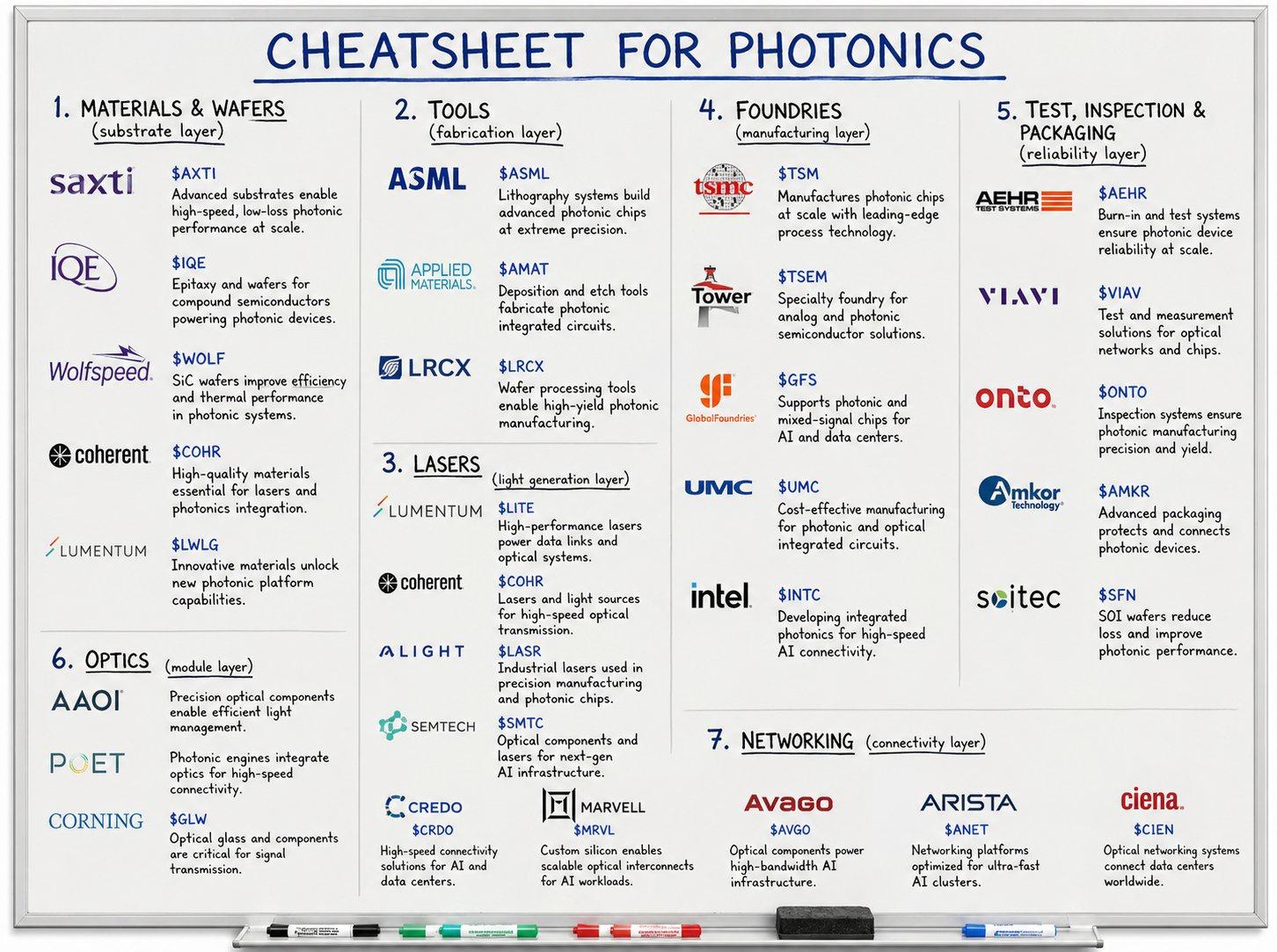
Why We Believe Photonics Is the Next Trillion Dollar Sector (Source)
Stocks Mentioned: $LITE, $MU $NVDA, $COHR, $FN, $VIAV
Every time someone asks an AI chatbot a question, a ridiculous amount of data has to fly between thousands of chips sitting inside a data center. For decades that data mostly traveled as electricity over copper wire. The problem is that copper is hitting a wall. Push more data through it, faster and farther, and it heats up, loses signal, and burns through power. Photonics is the fix. In plain English, photonics just means using light (photons) instead of electricity (electrons) to move information, usually through hair-thin strands of glass called fiber optic cables. Think of copper as a two-lane country road and fiber as a bullet train line. Same destination, completely different speed and capacity. The lasers, chips, and little plug-in modules called transceivers (devices that translate electrical signals into light and back again) are the on-ramps to that bullet train, and every new AI cluster needs a lot more of them. Here’s the part we can’t stop thinking about: GPUs have gotten all the headlines in this AI build-out, but a GPU is basically useless if it can’t talk to the other GPUs fast enough. We believe the companies that make the light are the next bottleneck and the next big winners, and we think photonics has a real shot at becoming the next trillion dollar sector of the stock market.
This week we got the loudest signal yet. On October 9, Lumentum (LITE) CEO Michael Hurlston told Bloomberg in Tokyo that the company’s optical parts are sold out through nearly 2029, saying there’s “no end in sight.” He added that Lumentum can’t fill roughly 70% of demand for some products next year, and other products will still be about 30% short into 2028. Six months ago that sold-out window only stretched to 2028, so in half a year demand pushed it out by almost a full year. Obviously this is extremely bullish news when the CEO of one of the top photonics companies is telling you that they're essentially sold out for the next 3 years. The last time I heard talk like this about a sector, it was Micron (MU) with the memory sector and we've seen how incredible that stock has done. We’ve been bullish on LITE because it sits at the very start of the optical supply chain, and when you’re sold out for years, you get pricing power. The numbers back it up: fiscal 2026 revenue hit $3.01 billion, up 83% from the year before, and Nvidia (NVDA) put $2 billion into the company back in March. It’s also been one of the best performing stocks in the entire market, going from $368.59 at the end of 2025 to about $1,106 this past week, a gain of roughly 200% year to date! Now that's a lot of gains in a short time frame, but even so, the stock still trades under a $100 billion market cap. Long term, we could easily see this stock over $500 billion. That's a 5x from here! Moreso than Lumentum though, I think there are a lot of other opportunities in this sector and I want to cover 3 of them with you today:
- Coherent (COHR) - Coherent makes both the laser chips and the finished transceivers that plug into AI servers, including the newest 800G and 1.6T models (that number is the speed, so 1.6T moves twice as much data per second as 800G). We like it because it’s one of the few players that owns both ends of the process, so the same shortage lifting Lumentum lifts Coherent too. Data center and communications already make up roughly three quarters of its revenue, and Nvidia put $2 billion into Coherent this year as well. We give COHR a CEO Watchlist 4 out of 5.
- Fabrinet (FN) - Fabrinet is the factory behind the brands. It’s a contract manufacturer, mostly based in Thailand, that assembles and tests complex optical gear for companies like Nvidia, Cisco, and Lumentum, kind of like how Foxconn builds iPhones for Apple. Our bull case is simple: when everyone’s designs are sold out, somebody still has to build them, and Fabrinet gets paid on volume no matter whose logo is on the box. It’s also roughly flat on the year and about 39% below its all-time high as of early October, so it hasn’t run like the rest of the group. This may be the best risk-reward stock in the entire photonics sector, while it sits at just under an $18 billion market cap. We give FN a CEO Watchlist 4 out of 5.
- Viavi Solutions (VIAV) - Viavi makes the equipment that tests and monitors fiber links and high-speed network gear to make sure everything actually works before it goes live. Picture the building inspector who has to sign off on every new house in a booming neighborhood. We’re bullish because every new AI data center and every faster transceiver has to be tested, and data centers are now Viavi’s biggest market at about 45% of its network business. It also picked up Spirent’s high-speed Ethernet testing unit, adding roughly $200 million in yearly revenue aimed right at this boom. Again, this is just another name we really like that isn't directly in the photonics sector, but we consider it "photonic-adjacent". We give VIAV a CEO Watchlist 4 out of 5 as well.
Here’s what really gets us fired up: for an industry this important, these are surprisingly small companies. Lumentum just touched roughly $100 billion in market cap (market cap is just share price times the number of shares, basically the price tag on the whole company), Coherent sits somewhere in the $70 billion range, Fabrinet is under $20 billion, and Viavi is around $12 billion. Almost every name in the space is under that $100 billion line, while Nvidia, the company whose chips all this light is connecting, is worth several trillion dollars by itself. Stack the whole photonics group together and it’s still a fraction of one mega cap, which is exactly why we think this could be the next trillion dollar sector. It wouldn’t take a miracle, just the market waking up to how essential these companies have become. That’s why we believe photonics offers one of the best risk to reward setups we see right now as a long term, higher-risk investment case. Right now we already have about a dozen photonics names on our watchlist that we’re looking to buy, and we’ll be alerting our Investment Club members on the ones we pick up. Club Members can always access our portfolios to see exactly which photonic names we’re buying to play this setup by [CLICKING HERE].
Putting it all together: AI runs on data, more and more of that data travels as light, and the companies that make the light can’t keep up. Lumentum’s CEO just said its parts are sold out through nearly 2029, the stock is up about 200% this year, and we see that as a readthrough for the entire photonics sector. Beyond Lumentum, we’re bullish on Coherent (COHR), Fabrinet (FN), and Viavi (VIAV), three companies that make, build, and test the gear powering AI data centers. All of these names are still under $100 billion, which is why we think the risk to reward looks so attractive and why we believe photonics could be the next trillion dollar sector of the stock market. The risks are real, from sky-high expectations to the industry’s boom and bust past, but we’re leaning in. We’ll be alerting Club members as we buy names from our watchlist, and our portfolios are always open for members who want to follow along.
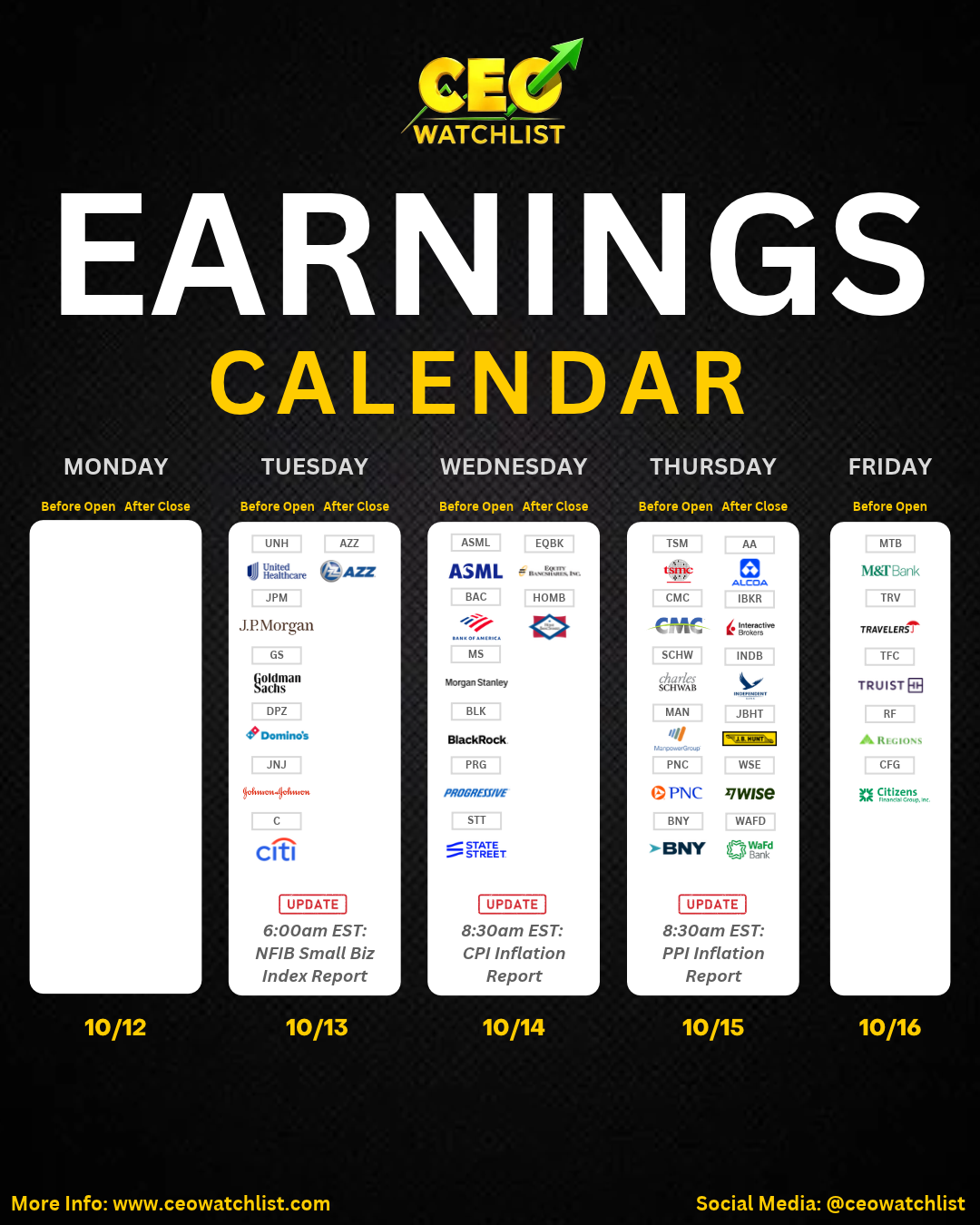
The Last Earnings Season Of The Year Is Finally Here! These Are The 3 Stocks That We Are Watching... (Source)
Stocks Mentioned: $JPM, $ASML, $TSM
We are officially stepping into the final earnings season of the year, and the lineup could not be more loaded for an opening act! Every 3 months, Wall Street gets its report card, and we call that earnings season. Public companies have to tell the world how much money they made over the last quarter and, just as important, what they think the next few months look like. For anyone newer to investing, I like to picture a restaurant that opens its books to the public four times a year. We get to see how many tables were full (earnings), how much it cost to run the kitchen (liabilities), and whether the owner thinks business is picking up or slowing down (forward guidance). A stock price is really just a bet on future profits, so when a company finally shows its real numbers, those bets get repriced fast, sometimes by 5% or 10% in a single day. Remember that the first batch of reports usually sets the mood for everything that follows for the rest of the season.
This time, though, earnings aren't showing up alone. Right in the middle of the week we get two of the biggest economic reports on the calendar: the Consumer Price Index (CPI) on Wednesday, October 14, and the Producer Price Index (PPI) on Thursday, October 15. CPI tracks how fast prices are rising for regular people at the checkout line, things like groceries, rent, gas and car insurance. PPI tracks the same thing one step earlier, meaning what businesses pay for materials and supplies before those costs trickle down to us. Why does this matter for our portfolios? Interest rates. The Federal Reserve watches these numbers closely when it decides where rates go, and rates act like gravity on stock prices. Hotter inflation usually means rates stay higher for longer, which pulls stock prices down. Cooler inflation gives the Fed room to ease up, which tends to lift just about everything. The most recent CPI reading showed prices up 3.4% from a year earlier, still well above the Fed's 2% goal, and with the next Fed decision landing on October 28, this week's data carries real weight.
Now for the part I'm most excited about. Three of the most important companies on the planet report this week, and the more I look at them, the more they feel like one story told from three different angles:
- JPMorgan Chase (JPM) - The biggest bank in the country, sitting on roughly $5 trillion in assets. It holds deposits, makes loans, runs one of the largest credit card businesses around, and helps major companies raise money and do mergers through its investment bank. It reports before the market opens on Tuesday, October 13. Analysts expect around $5.86 to $5.88 in profit per share on roughly $50.8 billion in revenue, up from $5.07 per share a year ago. Management has already said it expects investment banking fees and trading revenue to grow by a mid-to-high teens percentage. I see JPMorgan as a checkup on the whole economy. If consumers are paying their credit card bills and companies are busy doing deals, it shows up here first.
- ASML Holding (ASML) - A Dutch company and the only one in the world that makes extreme ultraviolet (EUV) lithography machines, the tools used to print the tiniest, most advanced patterns onto computer chips. If chips were books, ASML would own the only printing press on Earth that can handle the smallest font. It reports Wednesday, October 14, before the U.S. market opens. The company guided for third-quarter revenue of €11 billion to €12 billion, a big jump from €9.33 billion in the second quarter, and it raised its full-year outlook to €43 billion to €45 billion. That's an aggressive target with very little wiggle room. This stock also tends to swing hard on earnings days, around 7% on average, so I'll be watching whether it lands in that range and what it says about orders heading into 2027.
- Taiwan Semiconductor (TSM) - The world's largest contract chipmaker. Companies like Nvidia, Apple, AMD and Broadcom design chips, but TSM is the one that actually builds them. Think of those companies as the architects and TSM as the construction crew pouring the concrete. Its results come out Thursday, October 15, with the call at 2 a.m. Eastern. TSM guided for $44.6 billion to $45.8 billion in revenue, compared with $33.1 billion a year earlier. Analysts are sitting right at the top of that range at $45.8 billion, with earnings around $4.39 per share. The company also raised its budget for new factories and equipment this year to $60 billion to $64 billion. Any change to that number, in either direction, tells us how confident TSM feels about how long the AI boom lasts.
Here's why I think this week matters more than a typical kickoff. Put these 3 side by side and we're looking at a supply chain. ASML sells the machines, TSM uses those machines to make the chips, and a lot of the money paying for data centers, bond deals and corporate expansion runs through banks like JPMorgan. All three are telling the same story about how much the world is spending, just from different seats at the table. The catch is that expectations are sky-high. When analysts park their estimates at the very top of a company's own forecast, "good" stops being good enough. It's like a team favored to win by 20 points. Winning by 10 still disappoints everyone who bet on the spread. We already saw a version of this in July, when JPMorgan posted record profits and the stock still dropped. That's what investors mean when they say something is "priced in." To me, the numbers themselves matter less this week than the guidance, meaning what management says about the next 6-12 months is what really matters. If ASML and TSM sound confident about 2027 while CPI and PPI come in calm, I think that's a powerful combination for stocks to move higher. If inflation runs hot on the same mornings that guidance comes in cautious, I expect some real turbulence to the downside.
So here's what I'm looking forward to in the week ahead. Tuesday gives us the first real read on the American consumer and Wall Street dealmaking from JPMorgan, with other big banks typically reporting that same week. Wednesday is the heavyweight day, with CPI at 8:30 a.m. and ASML's results landing the same morning. Thursday brings TSM overnight, then PPI at 8:30 a.m. with September retail sales right alongside it, which shows whether shoppers are still opening their wallets. By Friday, I think we'll have a much clearer picture of three things: whether the AI spending wave is still building, whether consumers are holding up, and whether inflation is cooling enough to give the Fed some breathing room before October 28. Earnings season runs for another month or so after this, but weeks like this one are where the story for the rest of the quarter gets written, and I'll be watching every print.
"Super Investor" Spotlight: Terry Smith (Source)
Stocks Mentioned: $MAR, $SYK, $WAT, $V, $UBER, $MA, $GOOGL, $CHD, $PG, $MSFT
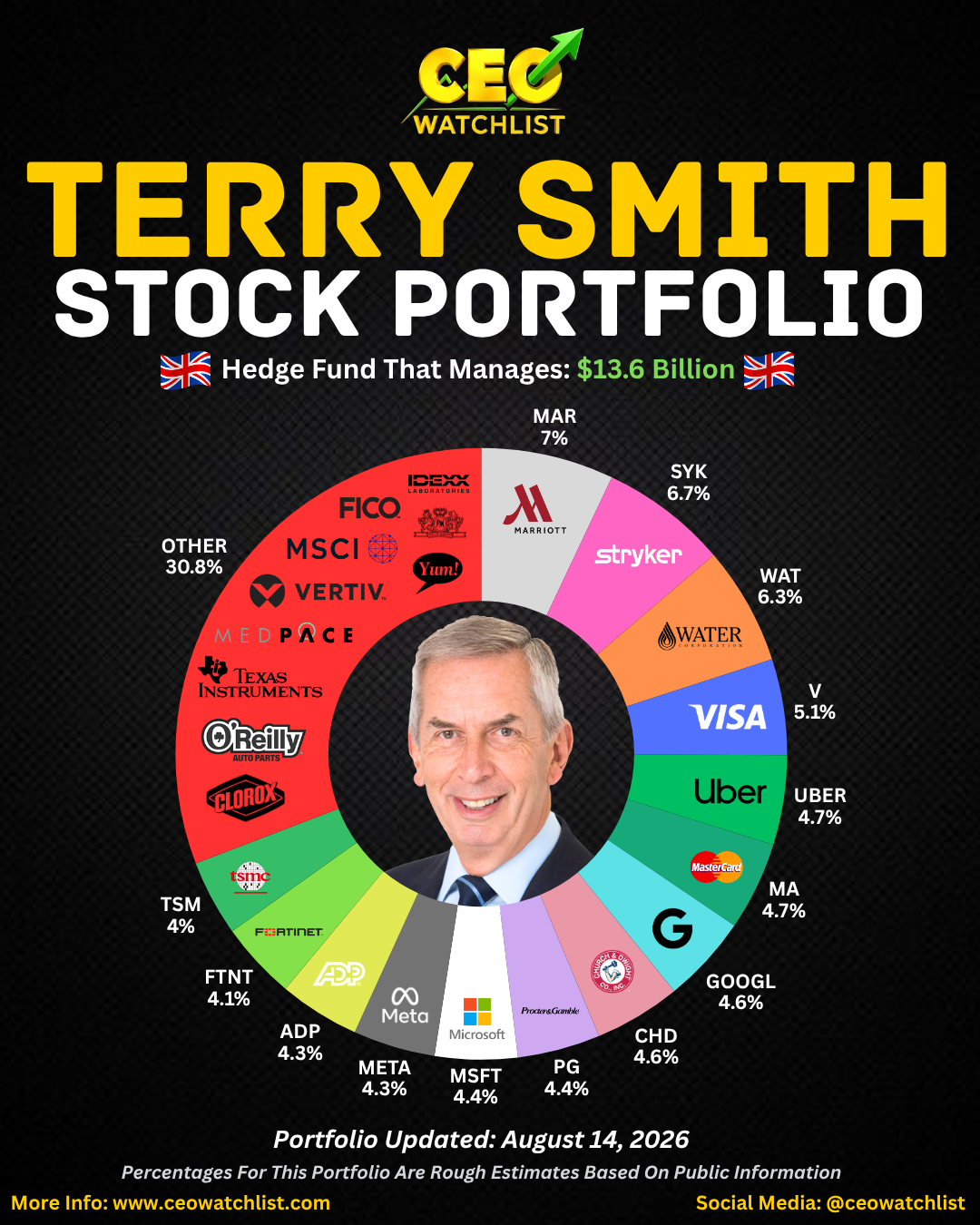
Most people in the investing world know Terry Smith as one of the UK’s most famous fund managers, often described as “the English Warren Buffett.” He’s the founder of Fundsmith, and he built his reputation on a philosophy so simple he’s repeated it for years: buy good companies, don’t overpay, and then do nothing. Like every major institutional player with U.S. holdings, Fundsmith is required to disclose its positions every quarter through a 13F filing. As a sidenote for newer readers, a “Super Investor” is just our term for a major institutional player, think massive corporations, elite hedge funds, or billionaire-run funds, whose quarterly stock disclosures give the rest of us a rare window into where the world’s smartest capital is flowing. Smith is one of the clearest examples of that philosophy in action, and his filing is always a great one to track because it embodies long-term quality investing at its purest.
Smith’s reputation is built on patience and a focus on business quality. His whole approach centers on owning a concentrated set of resilient, high-return companies that can keep compounding for decades, and then resisting the urge to tinker with them. That shows up loud and clear in this portfolio. It’s a spread of consumer staples, healthcare, payments, and quality technology names, the kind of durable businesses that can keep growing through almost any market environment. What stands out to me is how well diversified across sectors this book is while still staying true to the quality theme, which is classic Fundsmith.
Here’s a breakdown of the Top 10 stocks in Terry Smith’s portfolio:
- Marriott (MAR) – 7.0%
- Stryker (SYK) – 6.7%
- Waters Corporation (WAT) – 6.3%
- Visa (V) – 5.1%
- Uber Technologies (UBER) – 4.7%
- Mastercard (MA) – 4.7%
- Alphabet (GOOGL) – 4.6%
- Church & Dwight (CHD) – 4.6%
- Procter & Gamble (PG) – 4.4%
- Microsoft (MSFT) – 4.4%
The theme running through this portfolio is high-quality compounders across defensive sectors. At the top you’ve got Marriott, Stryker, and Waters, which blend hospitality, medical technology, and life sciences instruments, all businesses with strong competitive positions and reliable demand. Right alongside them sit Visa and Mastercard, the payment network duopoly that quality investors around the world gravitate toward for their pricing power and tiny-cut-of-everything business model. Then you get the consumer staples backbone that Smith has always loved, with Church & Dwight and Procter & Gamble bringing the kind of steady, recession-resistant cash generation that anchors a long-term book.
The “Other” bucket is huge here at nearly a third of the portfolio, and it’s packed with the quality names Smith is known for holding over long stretches. In there you’ve got IDEXX Laboratories, MSCI, Texas Instruments, and O’Reilly, a collection of wide-moat businesses spanning veterinary diagnostics, financial data, semiconductors, and auto parts retail. We will continue to monitor Terry Smith’s portfolio, as well as dozens of other hedge funds and politicians and will continue to report on them every week to you all with updates on any new stock buys they make.
INSIDER STOCK TRADES FROM THE WEEK:
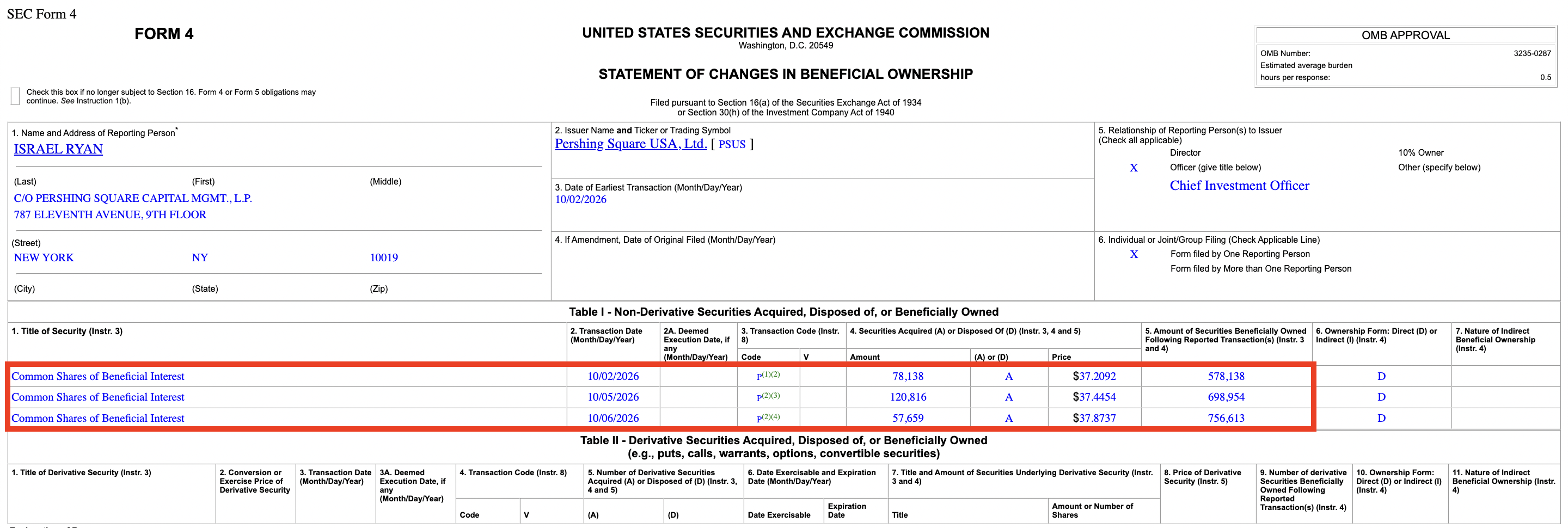
1. Pershing Square (PSUS) - Ryan Israel (CIO) bought over $9,600,000 of PSUS at an average price of $37.47/share between October 2-6, 2026, and it was most recently reported to the public on October 6, 2026. (Source)
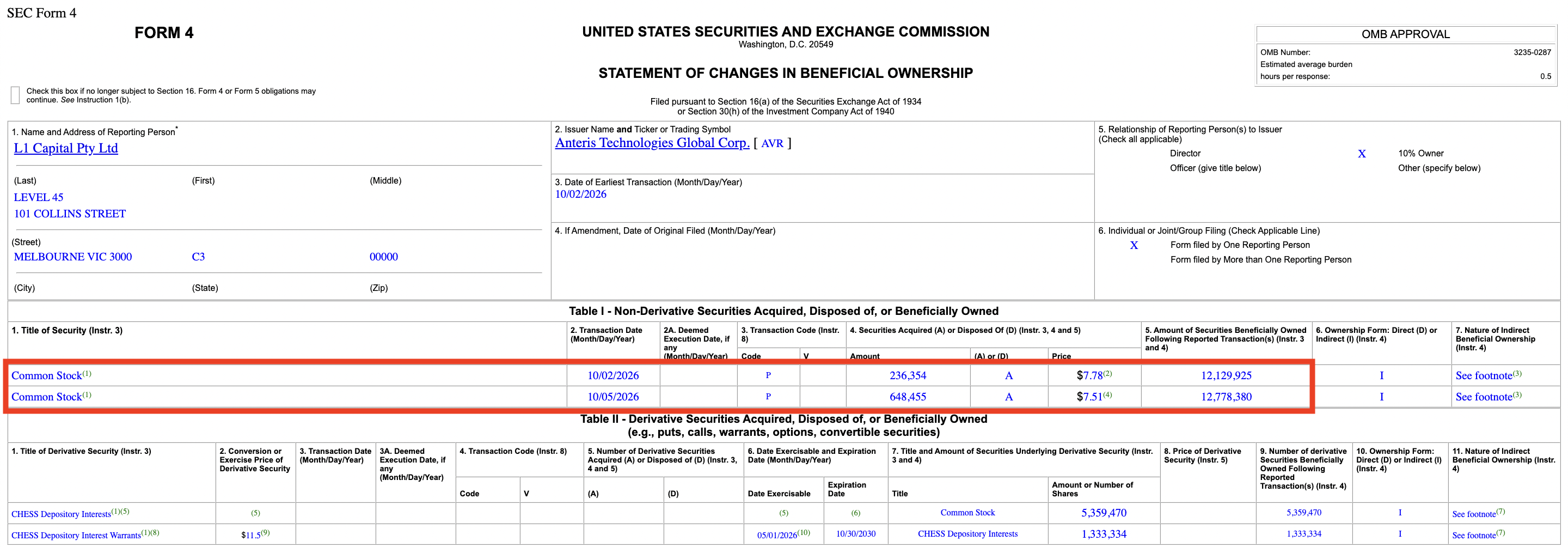
2. Anteris Technologies (AVR) - LL Capital (Hedge Fund) bought roughly $6,700,000 worth of AVR at an average price of $7.58/share between October 2-5, 2026, but it wasn't reported to the public until October 6, 2026. (Source)
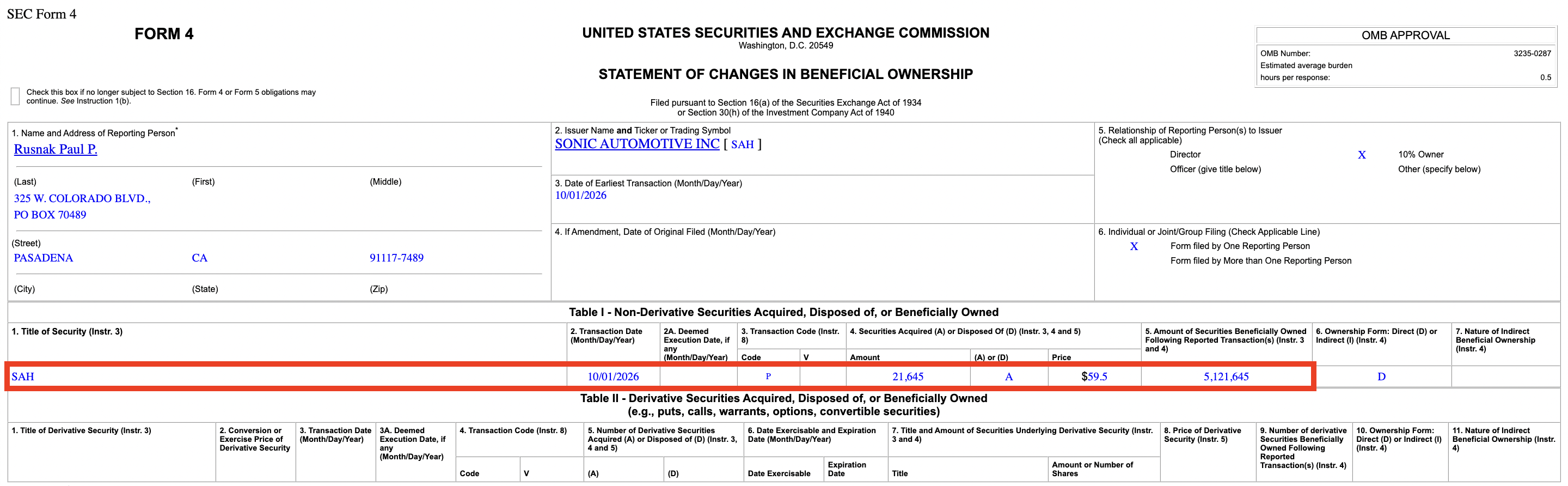
3. Sonic Automotive (SAH) - Paul Rusnak (Director) bought over $1,200,000 of SAH at an average price of $59.50/share on October 1, 2026, but it wasn't reported to the public until October 6, 2026. (Source)
Over 2,000 people have already signed up for my FREE Masterclass video on how to unlock my exact strategies for finding winning stock/options trades! I'll share everything including how to find what Politicians and CEOs are buying. Don’t miss your chance to get in for FREE before spots fill up!

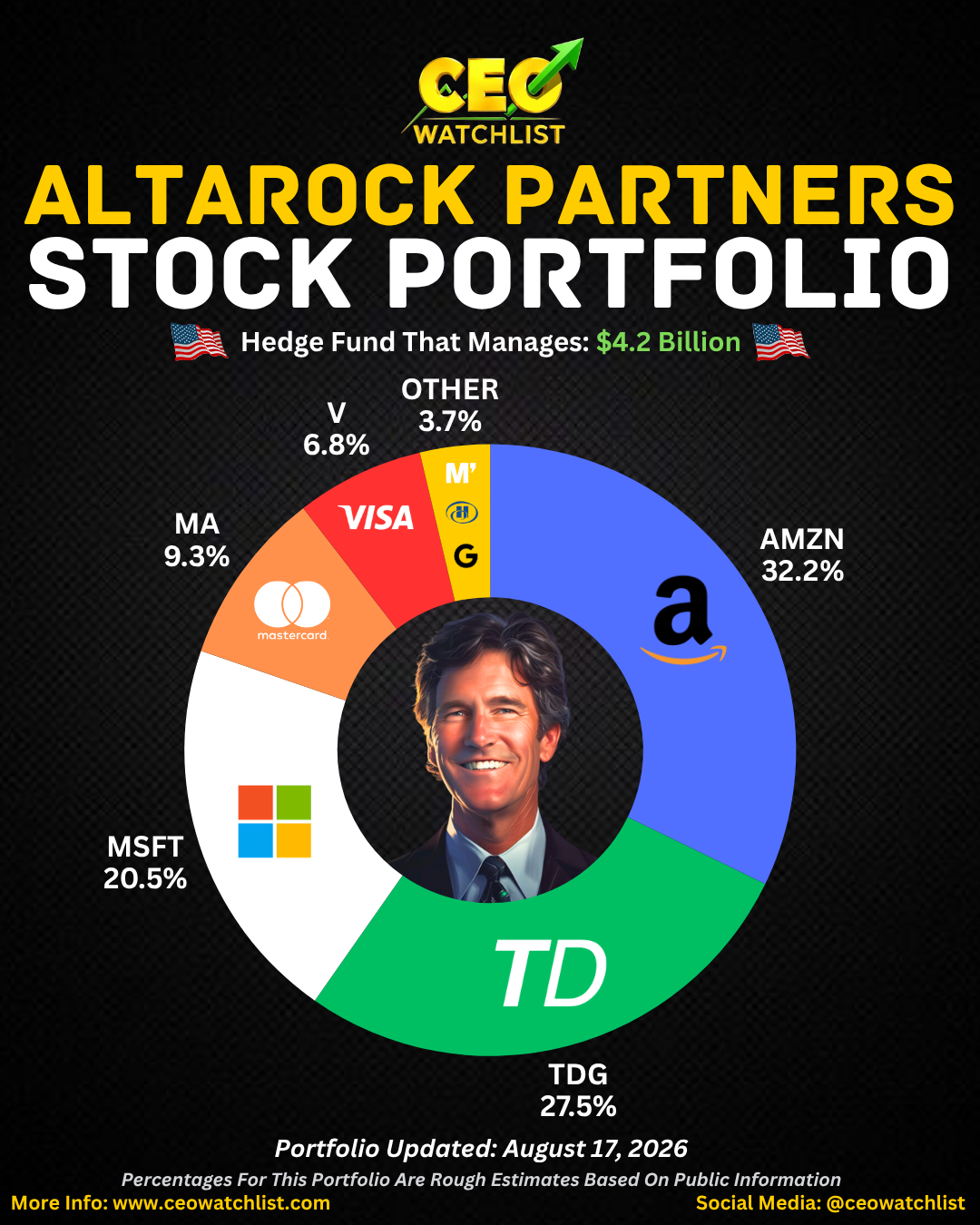
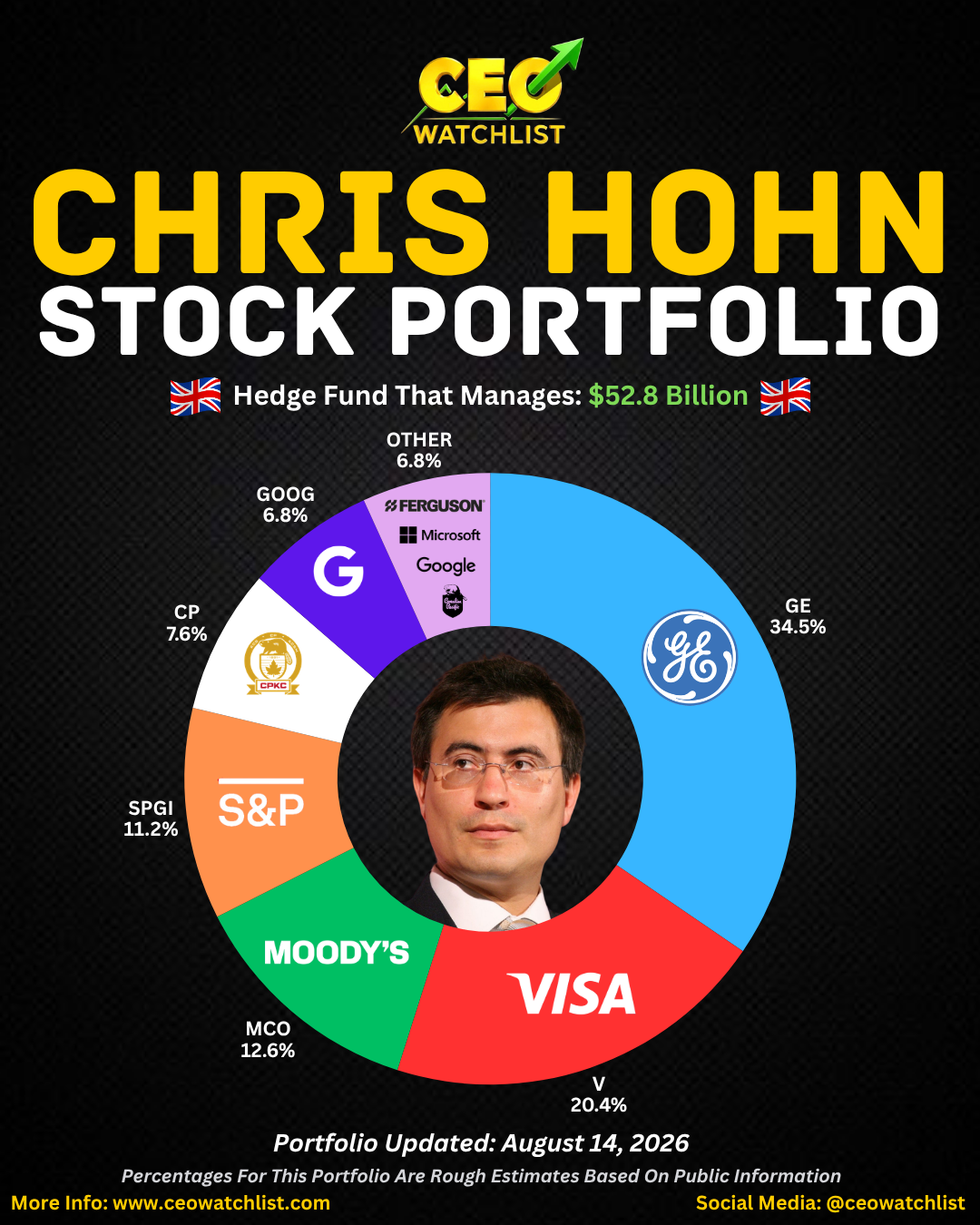
INFOGRAPHICS FOR THE WEEK:

CONTACT US: [email protected]
Responses